
Blame and Control

Photo by Adi Goldstein on Unsplash

When we start asking God to handle areas in our life where we are experiencing bondage, it’s often a painful process. When God wants to deal with a hidden area of our life, He starts to draw it out in the open. We are confronted with things in our life that we would rather not face….things we would prefer remain hidden, but God doesn’t work like that. John 3:19-20 says: “This is the verdict: Light has come into the world, but people loved darkness instead of light because their deeds were evil.  Everyone who does evil hates the light, and will not come into the light for fear that their deeds will be exposed.” It’s hard to face the things we don’t want to face. It’s hard to see the Truth sometimes–hard to face our sin and call it what it is. But when we partner with God to expose those hidden things and let God deal with them completely, we are set free. It always works out for our good when we partner with God because every good gift comes from Him.

When we’re seeking change in our life, we often think that if we just try hard enough to change our behavior or if we could just change our environment, then our problems would be over, but that’s not a way to achieve lasting change. Our behavior ultimately flows from the beliefs in our heart. Our thoughts about change have to move from our head to our heart. When our thoughts move to the level of beliefs in our heart, then real change is possible. Before that can happen, though, we have to be willing to be open, honest, transparent, and vulnerable with the Lord. When our lives are out of control or there is a lot of hurt in our past, it’s often easier to resort to blame than to allow God to expose the things He wants to change in us.

We all have a tendency to hide or to blame rather than embrace our responsibility for things. Think of the story of Adam and Eve in Genesis. After they ate from the Tree of the Knowledge of Good and Evil, their first act was to hide from God. Genesis 3:8 says: “Then the man and his wife heard the sound of the Lord God as he was walking in the garden in the cool of the day, and they hid from the Lord God among the trees of the garden.” That’s Satan’s first plan. He wants us to feel so guilty and condemned for what we have done that we hide from the one person who can do anything about it. If He can’t get us to hide from God, then he’ll attempt to get us to pass the blame onto someone else.

Look at what happens when God draws Adam and Eve out into the open. Genesis 3:11-13 continues the story: “And he said, ‘Who told you that you were naked? Have you eaten from the tree that I commanded you not to eat from?’ The man said, ‘The woman you put here with me—she gave me some fruit from the tree, and I ate it.’ Then the Lord God said to the woman, ‘What is this you have done?’ The woman said, ‘The serpent deceived me, and I ate.'” Humanity’s first response when confronted with sin is to blame someone else. It’s easy to blame others for our problems. Choosing to blame others causes actions in our own life. It leaves us powerless. The past can hinder your relationships, your job, and your life when you fail to take responsibility for your past.

What does blame sound like? Blame says:

  • “I’m angry. It’s your fault, and I’m going to pay you back.”
  • “I’m not okay. It’s your fault.”

Anytime how I am doing or feeling is someone else’s responsibility, that is blame. Anytime my internal reality is subject to the choices of other people, choices I have no control over and therefore no responsibility for, I am operating in blame. Everyone has power over me but me when blame is at work.

Blame often walks hand in hand with control. When blame and control are working together, it sounds something like: “You need to change and do what I want so that I will be okay.” Control springs from a root of fear. It’s a lie that says we can control our fear by controlling the people around us. It’s a lie because the truth is that the only person I can actually control is me. I answer to me and ultimately to God, but I don’t answer to other people. Other people answer to God as well, but they don’t answer to me.

Control is characterized by what we give and what we withhold. We may do things that try to tip the scale in favor of our feelings. When we are operating in a spirit of control, we may work to manipulate the circumstances or the people around us in an attempt to remove the weight of our fear. The inner lack of control that we feel can manifest as anger or as the silent treatment. Our control might masquerade under the thoughts: “I’m just trying to help them.” or “I’m making it better.” Control means we are looking to outside sources to fill the needs that only God can fill.

God’s model looks completely different from our model. We think if we can just control the people around us or the environment around us, then things will be better. If the other person changes, then we will be okay. But in God’s model, responsibility is power. When I realize that I’m in charge of my own heart and that my feelings are up to me, I can begin to gain control of my situation. I can rebuke thoughts of fear and anxiety and replace it with God’s truth. God’s truth says that we have unlimited access to God’s heart, and God will meet all of our needs out of the abundance of His heart for us.

It all comes down to God’s love for us. Love says, “I’m in this relationship to benefit you at my cost. I don’t need you to change for me to be okay.” Love gives up control. It is sacrificial by nature. The opposite of love is fear. We often think that the opposite of love is hate, but that’s not true. That’s why 1 John 4:18 tells us: “There is no fear in love. But perfect love drives out fear, because fear has to do with punishment. The one who fears is not made perfect in love.” When a person is desperate for control, their reactions are often unpredictable and creates a lot of fear in those around them.

The first place we can find healing is in taking responsibility. When we apologize and take responsibility, we begin the process of letting God deal with the things in our life that He wants to deal with. We can’t force forgiveness from those around us, but we can be sure that God always forgives. He can bring restoration and healing, not only to our hearts, but also in our relationships that may have been damaged by our cycle of blame and control. We want to move from being people who react out of our emotions to becoming responders, those who respond out of God’s truth and our security in our identity in Him. When we respond to situations instead of reacting to them, we take the time to seek God’s view of what’s going on and to hear God’s Word on what we should do in the situation. It gives us the opportunity to react in love instead of in fear and to break the cycle of blame and control by getting rid of the fear that drives it.

ACTIVATION

Ask God the following questions, and wait for Him to respond. Remember that God speaks to us in a variety of ways. You may hear an audible voice. You may get a picture in your mind. You may just have a persistent feeling or impression. God is an incredibly creative communicator. He speaks in a variety of ways, but He always speaks in a way where you can hear and understand.

Ask God:

  • Is there anyone that I am blaming for a situation in my life? If God reveals something to you, take responsibility for your actions. Ask for God’s forgiveness. Forgive the person that you have been blaming.
  • Is there a lie that I’m believing about myself?
  • Am I believing a lie about a situation in my life or about another person?
  • Am I avoiding taking responsibility for my own feelings or actions?
  • What do You want me to do with this, God?
  • Is there someone I am misunderstanding?
  • How do You see that person in my life?
  • Is there someone or something I am trying to control?
  • What would my life look like without my need for control? What would my home look like? What would my day look like?
  • What would my home look like without strife?
  • Father, what would You say about me?
  • What do You love about me, God?
  • Has there been any area in my life where I have opened the door and given place to the enemy?

Whatever God reveals to you while you are asking these questions, take responsibility for it. Repent of any wrong thinking or wrong actions you may have ad. Break any agreement with any lies you may have believed. Ask God’s forgiveness for these areas. Agree with God about what He has to say.

Father, I thank you that I can come to you for Truth. I don’t have to react out of my emotions or my fear or my needs. I can take a breath, ask you about it, and respond instead. Father, come into the hurt places in my life. Come into the places where fear has been allowed to operate and replace it with your perfect love. I know your perfect love casts out fear. I don’t want to operate in a spirit of fear anymore. You have not given me a spirit of fear, but of power, love, and a sound mind. Help me to break my agreement with the lies the enemy has told me. I don’t need to control those around me. I can trust You to take over control of my life. I can trust you to deal with the situations that come into my life that spark fear. I take responsibility for my choices and my actions. I know that when I blame others, I shut the door to Your ability to work in my heart. I don’t want to shut that door any longer, Father. Instead, I want to open the door to your transforming work in my life. When you go to work on my heart, real change happens. Thank you for your perfect love for me and for your forgiveness. In Jesus’ Name, Amen.

We Get By With A Little Help From Our Friends

Photo by Hannah Busing on Unsplash

1 Thessalonians 5:11

Therefore encourage one another and build each other up, just as in fact you are doing.

We all need encouragement in our lives. Life gets heavy. It gets hard. As the days move forward toward the return of the Lord, there is more and more evil around us. It’s easy to become discouraged. Many of us are facing struggles and spiritual warfare on a level we have never encountered before. In certain parts of the world, there is widespread persecution of Christians. The world is a very dark place.

The Lord told us that the days would grow very dark, but He also told us that we are the light of the world. If you’re in a bright room and you turn on a light, you hardly notice. The brightness of the room detracts from the brightness of the light itself. When you’re in a dark room, turning on that light makes a difference. You suddenly notice the presence of the light. As the room gets darker, the light makes a bigger impact.

When Paul wrote his letter to the Thessalonians, he closed by telling them that the day of the Lord was coming like a thief. He encouraged them to live as those who are in the light. Then he reminded them to encourage one another and to build each other up. It’s important that we encourage each other. It’s important that we bear one another’s burden. On a personal level, we all need encouragement. We are built for community, and we need friendship and encouragement when life gets hard. On a larger level, we need to encourage each other to stand in faith and shine our light in the midst of a dark culture. This is what God has called us to do, and it’s what will make the biggest impact on our world.

Father, I thank you that you created me for community. I thank you for placing good friends in my life. I thank you that I can go to those friends when life gets hard, and we can share one another’s burdens and encourage one another to keep standing in faith and keep shining our lights in a dark world. Father, I thank you that you also encourage us through the promises in your Word. Your promises never fail. They are truth, and they can be counted on. Help me to be an encouragement to those around me and to shine my light brightly so that those who are in the dark may see that light and be pointed to You. In Jesus’ Name, Amen.

The Church of Pergamum: A Study of Revelations

Photo by Cosmic Timetraveler on Unsplash

We’re in week three of our seven week series looking at the letters to the churches in Revelations. You can catch up on weeks one and two here and here. Quick review: The apostle John wrote the book of Revelations while exiled on the island of Patmos. In chapter one, Jesus appears to John and tells him to send a letter to each of the seven churches. Each church discussed in Revelations has a message for us today. In week one, we covered the Church of Ephesus, the educated church. In week two, we covered the Church of Smyrna, the suffering church. This week, we’re going to take a look at the Church of Pergamum, the worldly church.

Pergamum was a rich and powerful city in Mysia. It was about 16 miles from the Aegean Sea on a promontory on the north side of the river Caicus. Pergamum was a major cultural center of the Greek world. It regularly vied with both Smyrna and Ephesus for the title of “first city of Asia.” Pergamum was the northernmost church of the seven churches mentioned in Revelations. Because of it’s location, Pergamum was a city with a strong inland character. This was a contrast to Ephesus and Smyrna because Ephesus and Smyrna were both port cities. The massive city wall surrounding Pergamum encompassed 220 acres of land and boasted a population of roughly 200,000 people.

Pergamum sought to be the second Athens. It even boasted an acropolis fashioned after the famous acropolis in Athens. It had a library second in importance only to the library of Alexandria, which was one of the wonders of the ancient world. Pergamum was most famous for developing parchment as an alternative to papyrus. Rome gained control of Pergamum in roughly 133 BC when it was included in the bequests of Attalus III upon his death. It was considered a free city at that time, but by 88 BC Pergamum was no longer granted free city status.

In addition to its acropolis and library, Pergamum was known as a center of healing. It had a therapeutic spa dedicated to the god Asclepius. People who desired healing and had a condition for which a cure existed could enter the spa and sleep in a dormitory surrounded by nonvenomous snakes. The snake was a symbol of Asclepius. It was believed that if a snake slithered over you in the night it was a sign that the god would heal you. Pergamum also had the first psychiatric hospital. It was a political center, with many of the rulings of Pergamum expanded the rest of the Roman world. It was kind of like the way the Supreme Court of the United States determines the law of the land for the United States of America.

The name Pergamum comes from the Greek word gamos, meaning marriage, and in the case of the church of Pergamum for Revelation it symbolizes a church that has become married to the world rather than a church that is the bride of Christ. If Ephesus was the educated church and Smyrna was the suffering church, the church of Pergamum was the compromising church. Pergamum was the first city to build a temple to Caesar and engage in emperor worship. It had more idolatry than any other area, and this idolatry included an obsession with sexual immorality. Pergamum possessed three main temples to the emperor, a temple for Athena, and a temple called the “altar of Zeus,” where human sacrifices took place. It is this area, the altar of Zeus, that many scholars believes Jesus is referring to when he talks about the “throne of Satan” in Revelation 2:13. In 663, Pergamum was captured by the Arabs. Today, there are no known churches in the region of Pergamum, but there are some Christians in the surrounding areas.

The letter to the church of Pergamum which begins in Revelation 2:12 follows the pattern of the letter to the church of Ephesus from Revelation 2:1-7. Jesus tells the members of the church what they are doing well, and then tells them what He has against them as a means of correcting their error and bringing them back in line with His purposes for them.

“These are the words of him who has the sharp, double-edged sword. I know where you live–where Satan has his throne. Yet you remain true to my name. You did not renounce your faith in me, not even in the days of Antipas, my faithful witness, who was put to death in your city–where Satan lives.”

Revelation 2:12-13

In each of the letters to the churches of Revelations, Jesus describes a different attribute of Himself to the church. For the church of Ephesus, He was “Him who holds the seven stars and walks among the golden lampstands.” For the church of Smyrna, He was “Him who is the First and the Last, who died and came to life again.” For the church of Pergamum, He is “Him who has the sharp, double-edged sword.” Pergamum is the compromising church. The only way we can prevent compromise from creeping into our lives is by holding firm to the standards of God. We find those standards in His word, and the writer of Hebrews tells us that “the word of God is alive and active. Sharper than any double-edged sword, it penetrates even to dividing soul and spirit, joints and marrow; it judges the thoughts and attitudes of the heart” (Hebrews 4:12). Jesus is saying that we need to have that double-edged sword of his word at the ready all the time if we hope to escape the temptation of compromise in our lives.

Jesus lets the church know that He understands their circumstances. He knows where they live. He knows their surroundings. Not only is the “throne of Satan” a reference to the altar of Zeus located in the city of Pergamum, but the Greek text here tells us that the city itself was a space where Satan thrived. It was his home–a place where he felt completely comfortable and had dominion. That isn’t surprising given the level of idolatry and pagan worship going on in Pergamum. But the church has done something well here. They have held tightly to their devotion to Jesus. They have not renounced their faith.

The amazing thing here is the mention, by name, of a martyr of Pergamum–Antipas. Antipas was bishop of Pergamum. He was ordained by John the Apostle. According to Rick Renner in an interview about the church of Pergamum:

“The pagan priests went to the Roman governor and complained that the prayers of Antipas were driving their spirits out of the city and hindering their worship. As punishment, the governor ordered Antipas to offer a sacrifice of wine and incense to a statue of the Roman emperor and declare that the emperor was lord and god.”

As expected, Antipas refused. He was killed on the altar of Zeus. The altar of Zeus had a large bronze bull statue that towered over it. This statue was hollow inside. Antipas was tied and placed in the bull in such a way that his head would have been down into the head of the statue of the bull. A fire was then lit under the bull. As the fire burned, Antipas was roasted alive inside the bronze statue. By doing this, the moans of the person could be heard and would appear as if they were coming from the bull itself. This gave the illusion that the bull itself was alive. Anitpas died in 92 AD all the while praying for the church.

“Nevertheless, I have a few things against you: There are some among you who hold to the teaching of Balaam, who taught Balak to entice the Israelites to sin so that they ate food sacrificed to idols, and committed sexual immorality.”

Revelation 2:14

Now Jesus begins to address the issues of compromise that have taken place in the church at Pergamum. The story of Balak and Balaam is found in the book of Numbers. Numbers 22 tells us that Balak, king of Moab, was afraid of Israel because of their victory over the Amorites. Balaam was hired by Balak to curse the Israelites. You may remember the story of Balaam’s donkey that begins talking and warn him of an angel that seeks to kill him. Of course, God does not allow Balaam to curse Israel. Instead, He uses Balaam to bless the nation of Israel seven times! After this, the Israelite men began to mix with the Moabite women. They committed sexual immorality with them, and the women led the men astray by enticing them to worship their idols. Jesus was saying that the compromise of Israel with the Moabites was being repeated here in his church. There was a mixing of Christians and non-Christians, including participation in some of the pagan practices that thrived in Pergamum, namely eating food sacrificed to idols and committing sexual immorality.

“Likewise, you also have those who hold to the teaching of the Nicolaitans. Repent therefore! Otherwise, I will soon come to you and will fight against them with the sword of my mouth. Whoever has ears, let them hear what the Spirit says to the churches. To the one who is victorious, I will give some of the hidden manna. I will also give that person a white stone with a new name written on it, known only to the one who receives it.”

Revelation 2:15-17

Now we come to the second thing that Christ has against this church. They have begun to accept and hold to the teachings of the Nicolaitans, but who are the Nicolaitans? Some historians suggest that the Nicolaitans were authoritarian clergy who sought to oppress the laity of the church. Christ’s warning, therefore, would be interpreted as relating to manipulative leaders within the church. Rick Renner has another explanation. In the August 27th entry of Sparkling Gems From the Greek Volume 1 he gives this explanation:

Ireneus and Hippolytus, two leaders in the Early Church who recorded many of the events that occurred in the earliest recorded days of Church history, said the Nicolaitans were the spiritual descendants of Nicolas of Antioch, who had been ordained as a deacon in Acts 6:5. Acts 6:5 tells us that this Nicolas was “a proselyte of Antioch.” The fact that he was a proselyte tells us that he was not born a Jew but had converted from paganism to Judaism. Then he experienced a second conversion, this time turning from Judaism to Christianity. According to the writings of the Early Church leaders, Nicolas taught a doctrine of compromise, implying that total separation between Christianity and the practice of occult paganism was not essential.

Now we understand why Jesus will fight against those who hold to the teachings of the Nicolaitans with the sword of His mouth. These were teachings that said there didn’t have to be a separation between your new life as a Christian and your old life as a pagan. Nicolas was advocating for a melding of the two worlds. He was actively teaching against the concept of sanctification that is necessary to have an empowered, effective faith. The only correction for that kind of compromise is the truth of the Word of God! Their compromise made them guilty of sin, but repentance would allow Jesus to give them the white stone of acquittal from their sins and a new identity in Him.

CORPORATE APPLICATION

There is a huge amount of pressure on the Church as a whole to give up “outdated” or “antiquated” ideas and to embrace modern culture. This can be seen on a spectrum of churches who have compromised their original tenets. We can see it in the Catholic church ruling to allow divorced person to receive the sacrament of the eucharist, something that previously was against church doctrine. We can see it in churches that allow practicing homosexual clergy or even atheist clergy in their pulpits. We can see it in churches that have exchanged traditional ideas of worship services for something that looks far more like modern day entertainment instead of a church service. Now, I’m not judging the various positions of any one denomination or saying that this is proof of the church’s condemnation. I’m simply using examples where a church taught a specific doctrine that they believed was supported in the Word of God, and then under pressure from modern culture decided to compromise their stance in order to attract more people to their services.

No matter what our particular denominations doctrine includes, we must be sure that it is fully supported by the unchanging Word of God. We have to make sure that our overall church experience remains separate from the modern world’s entertainment industry. We need to cultivate and encourage the ideas of sanctification and separateness in our congregations. Too much compromise leads to a church like the one at Pergamum, a church wedded to the world instead of to Christ.

INDIVIDUAL APPLICATION

This is one of the easier letters to the churches of Revelation to apply to myself on a personal level. There are lots of areas in my life where I can find myself in danger of compromise. If I claim to be a Christian, a disciple of Christ, then there should be a huge difference between the way my life looks and the way the life of an unbeliever looks. I can’t afford to compromise the Word of God as my standard of Truth. Doing so robs me of my effectiveness as a witness and a servant of God. It puts me in danger! Like those who held to the teachings of the Nicolaitans, if I keep some of my “pagan” practices in play and try to straddle the “church world” and the “secular world” and think that it won’t affect me, I’m in danger of a guilty verdict when it comes to sin. I need to maintain a separateness from the world around me. I am to be in the world but not of the world.

This often plays itself out in the form of living life one way on Sunday and another during the rest of the week. Or it might look like a person who associates Christianity with those things that take place at the church building itself. Such a person neglects their call to be a witness to those around them because they feel that evangelism belongs to the church building and not to them as an individual. Jesus doesn’t just desire my heart on Sunday. He wants my life to be an ongoing relationship with Him.

This is best seen in the analogy of a marriage, just like the one alluded to by the name of Pergamum. I am supposed to be the bride of Christ. What bride can spend only one day a week with her husband and expect to have a healthy, satisfying marriage? What would we say about a bride who lived apart from her groom or decided that she could still live as if she were single and it wouldn’t be an issue? When put in these terms, it’s easy to see the call Jesus has placed on my life. I am His bride. I need to be spending time with him the same way I would with my husband. I need to be living as if I’m a married woman instead of the way I lived before I came to know Jesus. There should be a difference in my life, and it should be a difference that others notice!

It’s time for me to assess my heart again. Am I clinging to the standard of God’s Word? Am I taking every potential area of compromise back to God’s standard and weighing it out? If I’m not, I need to start. Only that double-edged sword is able to cut away the entrapments the devil wants to use to hinder my relationship with Jesus. It’s time to reassess my stance on popular topics in the light of what God’s Word says. It’s time for me to start living like a woman married to the Lord. Every single area of my life should be lived with an awareness of the presence of Jesus.

Closer than a Brother

Photo by Limor Zellermayer on Unsplash

Proverbs 17:17

A friend loves at all times, and a brother is born for a time of adversity.

We’ve all heard about fair weather friends. They’re the kind of friends who are nice to you and encourage you when life is going good, but when you’re down on your luck or facing adversity, these friends are nowhere to be found. They’re like the friends in the prodigal son parable. They’re around when the money is flowing and their needs are being met, but when the shoe is on the other foot and they have to give….nothing. They disappear. Good friends, of course, can be depended upon. They are available at any time. Rain or shine. Good fortune or bad. When you are blessed and standing on top of the mountain, they are rejoicing right along with you. When you are down and out and in the deepest valley, they are mourning right along with you. You can count on them to be there.

No matter how great and dependable your friends are, there’s a group of people who stick even closer–family. If your friends stick close, a brother sticks closer. He’s there in the midst of the battle. A friend might eventually be pushed too far, but never a brother. Blood is thicker than water, after all. A brother goes all the way with you, no matter what. The Bible tells us that we have a friend that sticks closer even than a brother: Jesus. There is absolutely nothing that can separate us from the love of Jesus. Adversity might separate us from our friends. Death will separate us from our family. But NOTHING…absolutely NOTHING can separate us from God when we are in Christ.

What a wonderful promise! There is nowhere we can go. There is nothing we can face. That will be too much for Jesus to handle right along side us. There is nothing we can do that could ever diminish God’s love for us. Absolutely nothing!

Father, Thank you that you are the friend that sticks closer than a brother. Thank you that there is nothing at all that can separate me from your love and your ability to be with me. Your Word says you will never leave me nor forsake me. Even if I find a time when my friends turn away. Even if something were to happen to my family. You will always be there. Right beside me. Thank you, Lord. In Jesus’ Name, Amen.

Homemaking: Meeting With God

crosswalk.com

There are times in my life when I get discouraged about my spiritual walk. There is so much to do around the house and so much to do with raising children and homeschooling that I feel like I just sit down to pray after getting everyone to bed and I fall asleep myself. Cue that deceptive little voice that tells me God is disappointed in the fact that I can’t stay awake and pray for even a little while. These are the moments when I really really struggle. I feel like such a failure. I can’t seem to find the time to pray. Can’t seem to find the time to read my Bible. Can’t seem to find the time.

It can be extremely discouraging to feel this way. Life goes in seasons, and some seasons seem to be much busier than others. I know that I have a better day when I get time with God, but no sooner do I sit down to pray or read my Bible then there is some kind of commotion with the kids. Sometimes they climb all over me during my “quiet time,” and I find myself spending more time trying to keep calm than actually receiving from God. It’s times like these I think about taking a vacation to find some time with God. I think about going away to the mountains or joining the nunnery!

There are stories in the Bible about men going away to the mountains and communing with God. Abraham went to the mountain with Isaac to worship God. Moses went up on the mountain to meet with God face to face. David often went off into the hillside to commune with God. Even Jesus got away from the crowds to find time for God. When I look at these stories, I often feel more discouraged. When am I ever going to find time to get alone with God when I can barely find time to shower or go to the bathroom by myself?!

But then I came across a meme shared on Facebook by a friend of mine. It was the picture of a woman, harried and worn out, busily washing a sink full of dirty dishes. The caption talked about all the times men went away to meet with God, but then the narrative changed. The writer pointed out all the times that God met with women. You see, when the Bible talks about God or His angels meeting with women, they aren’t off by themselves in the mountains some where. They were doing their normal everyday life. They were working and taking care of things as women often do. It may take getting away for men to meet with God, but God comes to women where they are.

He met with Hannah while she was praying at the temple during her normal annual pilgrimage. He met with Sarah while she was working in her tent as Abraham was outside with the three strangers. He met with Mary while she was about her everyday work to tell her that she would carry Jesus. He met with Martha at her home while she was busy working and cleaning and preparing the meal. He met with the Samaritan woman while she was drawing water from a well. In each of these cases, He came to those women in their every day lives. He came in the midst of their normal chores. He didn’t ask them to take a pilgrimage or offer a sacrifice or get away to the mountains. He came to them!

And suddenly, my life didn’t seem so discouraging. If I can’t find a few quiet moments away from my every day work in order to commune with God, I can welcome Him into the tasks that I am already busy doing. I can pray while I wash the dishes or cook the meals. I can read the Bible in between homeschooling lessons or listen to it while I’m cleaning. It’s okay if the kids are climbing all over me while I try to get some morning quiet time. I can use it as an opportunity to teach them about the importance of seeking God’s face first thing in the morning. We can turn on worship music and greet Him together.

I’m going to try to be more intentional in my daily life. I’m going to welcome God into the busyness of my life. I’m going to welcome Him into the mess and into the craziness and into the hectic atmosphere of life with small children. There will be a day when they are grown, and I will have all the time in the world then to seek and pray. I am finding that out now with my children in foster care. I have plenty of time now to read my Bible. Plenty of time to pray. Plenty of time to watch sermons on TV or attend conferences. Plenty of time. And I miss the busyness of my life with children. I miss those ministry moments that I had in my daily life.

Whatever season you find yourself in, remember that God meets us where we are at. He meets us in the every day. He meets us in the mess. He stands at the door and knocks. All we have to do is let Him in.

Keep Your Edge

Photo by Malte Wingen on Unsplash

Proverbs 27:17 (MSG)

You use steel to sharpen steel, and one friend sharpens another.”

Our friendships matter. We often become like the people we hang around with most. If we’re hanging around good people who are serving the Lord and on different parts of the same path that we are on, we are encouraged in our walk with Christ. These people are like steel sharpening us. Those who are ahead of us on the journey encourage us to pick up the pace and keep growing in the Lord. Those who are a bit behind us on the journey give us the opportunity to sharpen them by being the ones encouraging them to keep on keeping on. That’s the way God intended for us to walk.

Jesus said to go and make disciples of all nations. When you are a follower of Jesus, you are His disciple. That means you are following His teachings in your life. You’re trying to walk in His footsteps, but you are also called to make disciples. That means you’re supposed to be leading others and teaching them how to follow in Christ’s footsteps as well. We’re all walking the straight and narrow path. Sometimes that path goes around huge obstacles in our lives. When that happens, it helps to have a person further up the road who can reach back, grab your hand, and help to guide you to make sure you keep a sure footing on the path and don’t stumble and fall.

So what kinds of friends are you keeping around you? Are they friends that sharpen you and challenge you to grow in the Lord? Or are they comfort friends who make you feel good but aren’t necessarily good for you?

Father, I thank you that you had a plan for us to walk life’s hard road. You intended for us to work together, bringing others along with us, so that none of us would fall. I thank you for my godly friends. I thank you that they are there to encourage me to grow. Father, help me to find more godly friends to encourage me along life’s road, and help me to be a godly friend to others. I want to sharpen them the same way I am being sharpened. In Jesus’ Name, Amen.

Planting Your Garden: Pulling Weeds

Photo by CDC on Unsplash

Last week, we talked about planting our gardens by discussing the kinds of seeds we allow to be planted in our hearts. We discussed how not only is it important that our hearts contain the right kind of soil–good soil, willing and ready to receive the seeds that are planted in it–but how it’s also important to be discerning with the type of seeds we plant. Our hearts won’t discriminate between a good seed and a bad seed. Whatever we plant in the soil of our heart will eventually take root and grow and produce fruit. That’s wonderful when the seed we’ve planted is patience or when the seed we’ve planted is love, but what happens when the seed we planted was unforgiveness? Well, then instead of a wonderful lush bush full of good fruit, we’ve got ourselves a harvest of weeds. Today, I want to talk about pulling the weeds we find in our gardens.

If you’ve ever planted a garden, you know that weeds can appear at any time without notice. They seem to be everywhere at once. Weeds grow up around good plants and choke them. If you’ve ever mowed a lawn full of dandelions, you know that cutting the tops off of a weed doesn’t get rid of it. You have to dig deep and pull it up by the roots. It’s the same way in our spiritual gardens. If we don’t pull up those spiritual weeds by their roots, we will just be treating surface symptoms. Not only will our problems not go away, but they may even spread and grow just like those physical weeds spread and grow when you don’t get to the root of the matter.

What happens when we allow weeds to grow in the fertile soil of our hearts? Romans 8:6-8 talks about being spiritually minded (having good fruit growing) versus being carnally minded (having weeds growing). It says: “The mind governed by the flesh is death, but the mind governed by the Spirit is life and peace. The mind governed by the flesh is hostile to God; it does not submit to God’s law, nor can it do so. Those who are in the realm of the flesh cannot please God.” When our hearts are full of weeds, we are living in our flesh. That fleshly heart allows our minds to stay fleshly as well. We are planting the wrong seeds, and we are thinking on the wrong things so we are watering those seeds with our wrong thoughts. What grows is not the fruit of the Spirit that we are hoping will grow, but rather the fruit of a fleshly life. This verse tells us that if our hearts and minds are set on wordly things, we can’t please God!

The Bible talks about various “bad” fruits that can grow in our lives. Hebrews 12:15 says: “See to it that no one falls short of the grace of God and that no bitter root grows up to cause trouble and defile many.” So we see that bitterness is a root or a weed that can grow in the gardens of our heart. Unforgiveness is another weed that grows in our hearts. Ephesians 4:31 lists some more weeds in our gardens: “Get rid of all bitterness, rage and anger, brawling and slander, along with every form of malice.” Basically, any thought or emotion or choice that goes against the Fruit of the Spirit or against the Word of God becomes a weed in the garden of our hearts. If we’re not careful to take care of those wrong thoughts and pull those weeds up by their roots, the good seed being spread by reading our Bible, listening to sermons, and seeking God will be choked out by the bad fruit in our hearts. That’s not the outcome we want!

So what do we do about weeds? Well, the first thing we can do is make sure that the seeds of weeds do not get planted in the soil of our heart. 2 Corinthians 10:5 says: “We demolish arguments and every pretension that sets itself up against the knowledge of God, and we take captive every thought to make it obedient to Christ.” By taking every thought captive and making it obedient to Christ, we are grabbing those seeds before they are planted and asking ourselves whether they are good seeds or bad seeds. Remember, our heart’s soil does not discriminate between good seed and bad seed. That’s our job as the cultivator. The heart’s soil will grow whatever we allow to be planted there. If we aren’t taking our thoughts captive and instead we’re allowing negative thoughts to come in, we’re planting bad seed.

Philippians 4:6-7 gives us another way to tackle those weeds once we realize they’re growing in our hearts. In the Message translation it says: “Don’t fret or worry. Instead of worrying, pray. Let petitions and praises shape your worries into prayers, letting God know your concerns. Before you know it, a sense of God’s wholeness, everything coming together for good, will come and settle you down. It’s wonderful what happens when Christ displaces worry at the center of your life.” Another word for displace is uproot. When we take our issues to God, Christ uproots those worries from our lives. In other words, we can turn to God and allow Him to uproot the weeds that are growing in the gardens of our hearts. It makes sense that the best way to tackle weeds is through prayer. After all, in the physical realm, we tackle weeds by getting down on our needs and pulling them out by the roots. In the spiritual realm, we tackle weeds the same way–down on our knees!

It’s time for us to take a good, long look at the state of our hearts. We can find out the state of our hearts by looking at our thoughts, our feelings, our behaviors, and our lives. Do we demonstrate the Fruit of the Spirit in our everyday lives? Are we meditating on God’s Word? Are we showing Jesus with our actions? If we aren’t, or if we could improve, we probably have a weed problem. So take a look at the thoughts you are thinking, take care to take those thoughts captive and to make sure only good seed gets planted and watered. As we continuously work with God to weed our gardens, we will gradually grow gardens ripe with the fruit of the Spirit.

Sacrificial Love

Photo by Aw Creative on Unsplash

John 15:12-14

My command is this: Love each other as I have loved you.  Greater love has no one than this: to lay down one’s life for one’s friends.  You are my friends if you do what I command.

Oftentimes, when we read these verses of Scripture, we think about our friends and how much we love them. We think about whether or not we would be willing to die for them. Yes, laying down your life for your friend might include actually dying to protect them, but more often than not, we are asked to do something much smaller and much harder. It’s easy to think about what we would do in life or death scenarios. One of the reasons it’s easier is because we hardly ever find ourselves in life or death scenarios. That makes it easier to daydream about what kind of hero we would be. No one really knows what kind of heroic act they will perform until they come face to face with the need for a heroic act, and there are many people who have performed heroic acts, including dying for others, for complete and total strangers.

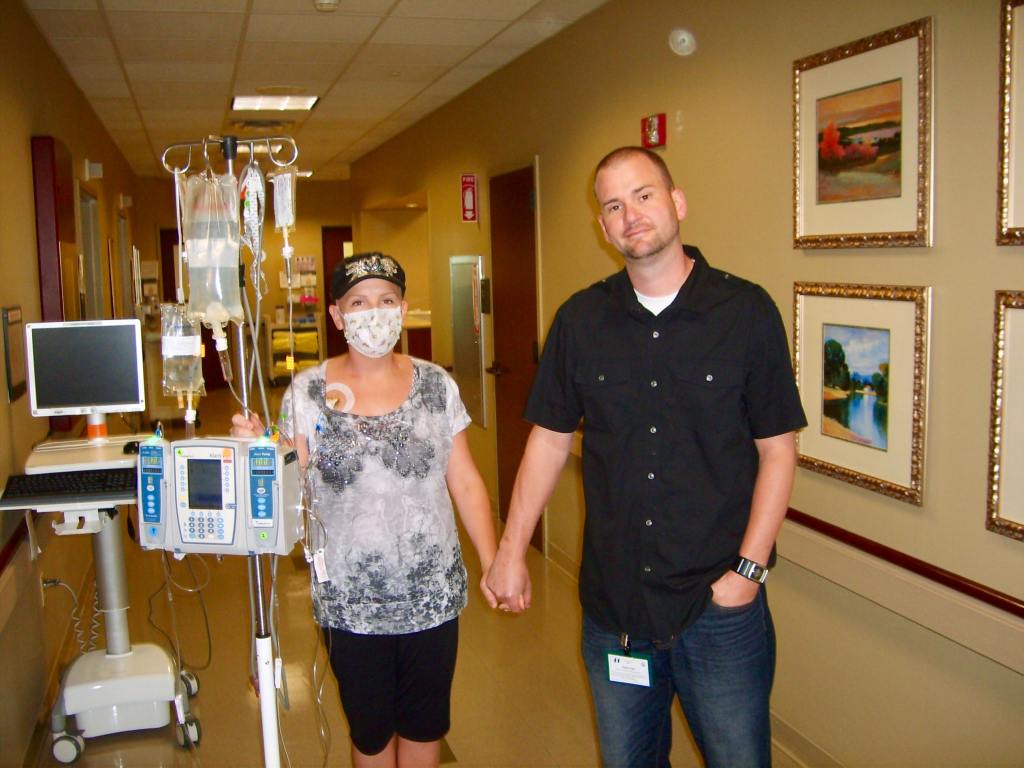
I think the harder thing here is when something happens in our relationships that causes us to die to ourselves. In the every day trials and tribulations that we all go through, are we will to lay down our life–are we willing to give up our own plans for our day, our own dreams for our lives, our own needs and wants and desires–for someone else who needs us? Are we willing to lay down our every day conveniences for our friend? Are we willing to put things on the line that aren’t quite life or death but are important to us? Will we get up at 3 am to counsel a friend who needs us, knowing that we have to be up early for work in the morning? Will we walk with a friend through the ups and downs of chemotherapy?

Will we give up our need to be “right” in an argument just to keep that relationship alive? Are we willing to go without some of our needs being met out of love for someone else so that their needs can be met? That’s what Jesus would do. It’s what Jesus did, time and time again with His disciples and followers, long before He went to the cross. Jesus walked long miles to preach the gospel. He had no real home or place to sleep. He was often inconvenienced, but He was always moved with compassion for the people around Him. Ultimately, Jesus laid down His actual life for us, and He tells us that we are His friends–the ones He gave His life for–if we do what He commands. And what does He command? He commands us to love the way that He did. Every day. In the big things and in the little things. He commands us to love.

Jesus, I thank you that you were willing to give up your physical needs and desires just to make sure that I had the chance to hear the good news about why you came to earth. I thank you that no inconvenience was too big and none was too small for you to go out of your way to demonstrate your love for each and every one of us. I want to be considered your friend, Jesus. I want my life to reflect you. Help me to love well, not just in big things but in the small everyday things. Help me to learn how to lay down my everyday life for my friends, just the way you did. In Jesus’ Name, Amen.

The Last Days

crosswalk.com

In Acts 2 when Peter is preaching to the crowd he tells them that what is happening among them is in fulfillment of the prophecy of Joel which says: “In the last days, God says I will pour out my Spirit on all people. Your sons and daughters will prophesy, your young men will see visions, your old men will dream dreams.” Peter preached this message nearly 2,000 years ago. If it was the last days when Peter preached, how much more so is it the “last days” now?!

My husband and I were talking about this just the other day. He said that there was so much talk about the last days, especially now with COVID and all that it had lost all meaning. He felt that we should stop focusing on the last days so much. In a way I agree. I mean the more we sound false alarms by saying such and such day will be the end of the world, the more we help Satan set the trap of complacency. It gets harder and harder to get anyone to take you seriously that Jesus is coming back soon if everyone is sounding false alarms about the end of the world. I think that’s just what Satan wants. He wants us complacent.

It reminded me of the parable of the ten virgins. All the virgins had prepared for the wedding feast of the bride and groom. All of them had lamps trimmed and filled with oil. All of them were waiting for the bridegroom to appear, but the bridegroom took longer than they expected. Sound familiar? Since the day Jesus ascended into heaven, believers have all been waiting for His return. We’ve been studying the Scriptures and scanning the local headlines in an attempt to understand when He will be back. This is a good thing because we are reading and waiting, but the longer it takes, the easier it is for us to allow compromise and apathy to slip in. We go from eagerly pressing our faces against the window looking for some sign in the heavens to scoffing at those who preach end time messages.

Five of those virgins knew that they didn’t really know what to expect. Sure, they knew the wedding was planned. They knew the bridegroom was coming. They knew it would be after dark and that they would need their lamps in order to see, but they didn’t know exactly when. They didn’t want to be caught off guard, so they brought a bit of extra oil along with them. It was prudence. It was wisdom. We know he’s coming. We don’t know when. Let’s make sure we don’t run out of what we need. All the virgins fell asleep. When the trumpet sounded to signal the bridegroom’s arrival, only the ones who had planned ahead were ready and able to get in. Because for all their talk about the bridegroom coming, they didn’t let his delay lull them into unpreparedness.

As a church, we tend to put a lot of things off. There’s a lot of talk about doing it tomorrow. Getting it right tomorrow. Making better choices tomorrow. Sometimes it’s easy to believe that Jesus coming back is a long way off. But the truth is that every day that coming gets a little bit closer. One of these days, those dire predictions is going to prove true, and we’re going to be so lulled into sleep that we will wake up to that trumpet and find ourselves completely unprepared. I don’t know about you, but I want to be prepared. I want to have that extra oil on hand when I need it.

Do I think COVID-19 is the herald of the apocalypse? Maybe. I mean the first horseman is holding a crown, and coronavirus does get its name from a word that means “crown.” We’re talking about prophecy here so there’s no way to know in advance how literal we’re supposed to take the images of the Book of Revelation. If COVID-19 is the first horseman, we can expect that the second will be war. Looking at the headlines today, it doesn’t look too far fetched that war might be around the corner. The thing is that we don’t know what the first horseman will be. We don’t know when he will appear on the world scene. We don’t even know how much time passes between each horseman. What we do know is that every day is one day closer to the day that Jesus returns.

I could spend my life running around in fear that this is it. I could over do my preparation and have a bunker full of expiring food and stockpiled ammunition. I could easily slip into complacency and live my life sloppily, hoping that I will have tomorrow to get things in order. Or….. I could live my life in expectancy. I could live as if COVID is the start. I could make sure I have extra oil of the Holy Spirit on hand now. I can make sure that I have my life in order now. I can pray to God to help me make the changes I need to make in my life now. If I live out my entire life at that level of expectancy, so be it. I won’t have lost anything. At least that way, I can be sure that when the bride groom arrives I will not be out of oil and left in the dark!

Working Together

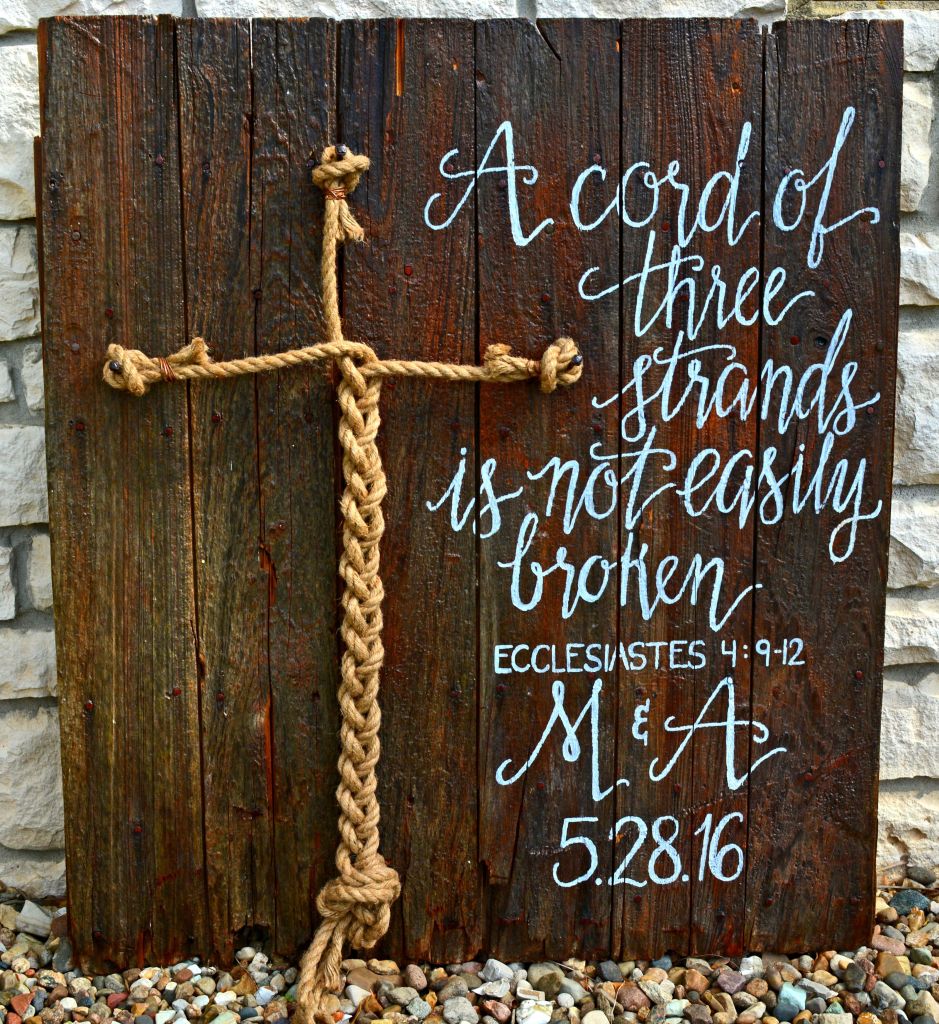
Ecclesiastes 4:9-12

Two are better than one, because they have a good return for their labor: If either of them falls down, one can help the other up. But pity anyone who falls and has no one to help them up. Also, if two lie down together, they will keep warm. But how can one keep warm alone? Though one may be overpowered, two can defend themselves. A cord of three strands is not quickly broken.

God designed us for community. He designed us for relationships. Way back in Genesis, we are told that it “was not good for man to be alone.” That’s when God decided to make a helpmate for Adam: Eve. This passage is often used in wedding ceremonies, but I think it can apply to all types of relationships. It’s obvious that if we’re all alone, we’re going to run into circumstances that will challenge us and possibly overwhelm us. We could be injured or sick, and who would care for us? We could struggle to provide food, shelter, and warmth for ourselves. We may be easily overpowered, but with a friend by our side, they can offer support.

If you’re married, you know the joy of having someone on your side. Someone who works with you to overcome the obstacle life throws in your path. Even if you’re still single, you know the joy of having friendships and other godly relationships. You might have close friends who chip in when you need a hand or check on you from time to time. You may have prayer partners that lift you up to the Lord when you need it. The Lord wants us to have support in our lives. The more support the better.

Of course, the “third” strand in any relationship should be God. When God is in the picture, good things happen. God holds each person accountable for their part of the relationship. If each member of the relationship also has a relationship with God, then there’s a good likelihood that they will forgive offenses, work to reconcile differences, and show love when it’s needed. No one is perfect, but with God in the mix, you have a far better chance of building healthy, strong relationships than when you leave Him out of the picture altogether.

Father, I thank you that you made me for relationship. First and foremost, you designed me to have a relationship with you. You love me, and you want to be my close, intimate friend and my loving Heavenly Father. You also designed me for relationship with others. I thank you for all the godly men and women you have placed in my life as friends, neighbors, coworkers, prayer partners, and mentors. I know that one or more of these people will help me in difficult times and surround me in love and prayer when I need it. They are a blessing in my life! Father, help me to honor you in all my relationships. Give me wisdom to choose godly friends and associates and a godly spouse if necessary. I know with you at the center of each relationship, I will have strong, healthy relationships throughout my life. Thank you, Father, that even if another person lets me down, you will never leave me or forsake me. In Jesus’ Name, Amen.