“In prayer there is a connection between what God does and what you do. You can’t get forgiveness from God, for instance, without also forgiving others. If you refuse to do your part, you cut yourself off from God’s part.”
Sometimes when we read verses like this about forgiveness, we get the idea that God is holding grudges against us. We read a verse that says God can not forgive you for your sins unless you forgive others, and we instantly get a negative picture of who God is. But the Messages translation of this verse makes things a bit more clear.
You see it isn’t that God is sitting up in heaven waiting to hold all your sins against you. He isn’t. The Bible makes it clear that Jesus’ death and resurrection paid the price for all sin. All sin. All. Any sin that had ever been committed before His death as well as any sin that would be committed after His death. The penalty has already been paid. That means God is no longer holding our sins against us. That debt has been paid in full.
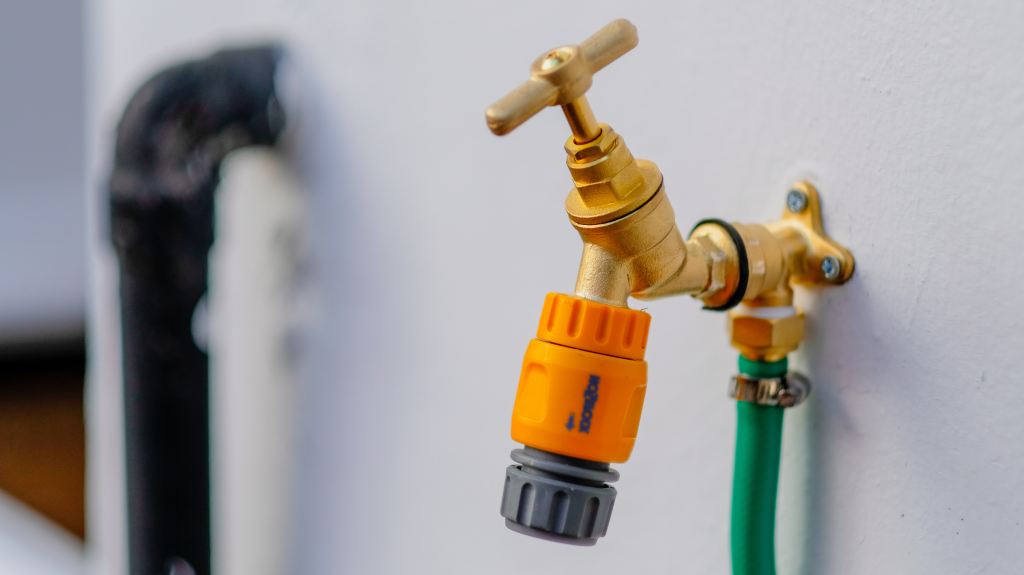
What this verse is telling us is that we control the flow of blessings in our life. God provided the blessing of forgiveness for us. It’s like the city water supply. It’s there. It’s there in abundance. But just because the city water supply is more than sufficient and is ready to flow down the pipes and into your home doesn’t mean water runs in your home constantly. No. You have to turn on the tap. You have to allow the water to flow.
Forgiveness works the same way. God has an abundant, overflowing, never-ending supply of forgiveness ready to flow into your life and meet any need you have, but YOU are in control of the tap. If you harbor unforgiveness towards others, that tap stays in the “off” position–not because God is withholding forgiveness from you, but rather because your own actions have stopped up the flow of His blessings in your life.
So turn on the tap. Open your hands and release the hurt that you are holding on to. You aren’t excusing the behavior. You’re just making sure it doesn’t have power over you any more. You’re opening your hands and handing it to God. You’re turning on the tap. And when the tap is turned on, God’s abundant, over-flowing, never-ending, and all-sufficient supply of forgiveness can run into your life to cover all your sins and run through you to cover the sins of the people around you. It’s up to you. Is your tap on or off?
Father, I thank you that you gave your Son Jesus to die for my sins. I thank you that as a result of His sacrifice, you no longer hold any sins against us. You aren’t that kind of God. You are a loving God who has blessed us with EVERY spiritual blessing through Jesus Christ. I thank you that when I have a hurt in my life, I can open my hands, release it to you, and receive your divine forgiveness flowing through me to let that hurt go and forgive the person who caused it. I thank you that when I do that, your forgiveness for me becomes more real in my life, and I can experience your blessings to a greater level. Thank you, God. In Jesus’ name, Amen.
“Bear with each other and forgive one another if any of you has a grievance against someone. Forgive as the Lord forgave you.”
Forgiveness is a tough thing to offer sometimes. When someone hurts us, it’s hard to let it go. Forgiveness doesn’t say that what the person did was okay. It doesn’t minimize the damage caused or the pain felt. Forgiveness simply hands it over to God. When we forgive we are essentially carrying the sin of another to the cross and putting it under the blood of Jesus. We are handing our need for justice over to God to handle on our behalf.
Forgiveness frees us from the consuming feelings of hurt and pain. It unties the binds that our offender placed around our heart. It sets us free! In relationships, we’re going to do things intentionally or otherwise that cause the other person pain. We are human, after all, and we make mistakes. We don’t think things through. We speak before thinking. Forgiveness is a gift of God’s grace.
God expects us to give what we have received. He expects us to share with the rest of the world the gifts He has given us. This includes forgiveness. So if someone has wronged you in some way, take it to the Lord. Lay it at His feet, and leave it there. Allow His forgiveness to flow through you to that other person. It won’t stop the hurt, but it will set you free.
Father, I thank you that you have forgiven all of my sins. There is not one sin that I have committed or that I will commit that is too big for you to forgive. Since you have wiped my debt clean, I am able to let your forgiveness flow through me to the people who have hurt me. I choose to forgive. Even though I don’t want to, even though it still hurts me, I give it to you, Lord. I know you will handle it on my behalf. In Jesus’ name, amen.
It’s the last day of January. Check in time. How are you doing on those New Year’s Resolutions you made? If you’re like most people, they’ve gone by the wayside about a week ago. According to research, only about 40% of the people who set New Year’s Resolutions are still successful 6 months later. Most people slip up in January. Some of them climb back on the wagon, while others are just content to let things go. It’s hard to make changes in our lives. That’s a given. There are lots of reasons why change is hard. It could be the level we’re trying to change. It could be the reason we’re trying to change. It could be the tools we’re using. So we’re going to take a deeper look at how we can make sure that the changes we want to see in our lives last.
“It is for freedom that Christ has set us free. Stand firm, then, and do not let yourselves be burdened again by a yoke of slavery.” Galatians 5:1 (NIV). We can all use more freedom in our lives. We may not be struggling with addiction or mental illness, but if you’re breathing and you’re human, chances are there are things in your life that you feel are holding you back from being all you can be. That’s where freedom comes in. God’s desire is for us to be free, and by “free” I mean that we are fully expressing ourselves in the way that God created us to be. We all have things in our lives that we want to change, but often those things we try to change don’t stick. The change doesn’t last, and we end up where we started. Why?
Well, it could be because we’re changing for the wrong reasons or we have the wrong motivation. Often times we try to change so other people will like us more. We might try to change to win approval from God, but God loves us unconditionally. Romans 5:8 says, “But God demonstrates his own love for us in this: While we were still sinners, Christ died for us.” There is nothing we can do to make God love us more than He does right now.
Ephesians 2: 8-10 (MSG) says, “All we do is trust him enough to let him do it. It’s God’s gift from start to finish! We don’t play the major role. If we did, we’d probably go around bragging that we’d done the whole thing! No, we neither make nor save ourselves. God does both the making and saving. He creates each of us by Christ Jesus to join him in the work he does, the good work he has gotten ready for us to do, work we had better be doing.” That means we don’t have to do the work of saving ourselves. We don’t have to be better just because we’re Christians. We can’t earn God’s favor.
That means we don’t change to please God. We don’t change to please other people. Instead, we need to change for ourselves. We change because we want to change in response to what God has done for us. When our motivation to change comes from within ourselves–changing for ourselves because we want to do it for us–there is a better chance that that motivation will produce lasting change.
Another reason our attempts at change might fail is that we are trying to change the wrong thing. We may be treating the symptoms, but we might be ignoring the root cause for what we want to change. If we don’t get to the root of the issue, our surface changes will never be significant and lasting. Take a look at this diagram of the logical levels of change:
These levels aren’t about making our way to the top. Instead, what we’re talking about in these levels is the power that they have for lasting change in our lives. The lowest level of change occurs at the level of environment. We think if we could just change the things around us, our lives would be different. If we lived somewhere else, if we were married to someone else, if we had a different job, etc. At this level, you’re pointing the finger at other people as the source of your problem. Obviously, that’s not going to be true for every problem. There may be times where changing your environment helps. Maybe changing your friends group helps you make lasting changes in your life. At some point, though, changes at this level aren’t really going to do much. Your problems will follow you no matter what you try to change in your environment. This is surface level change.
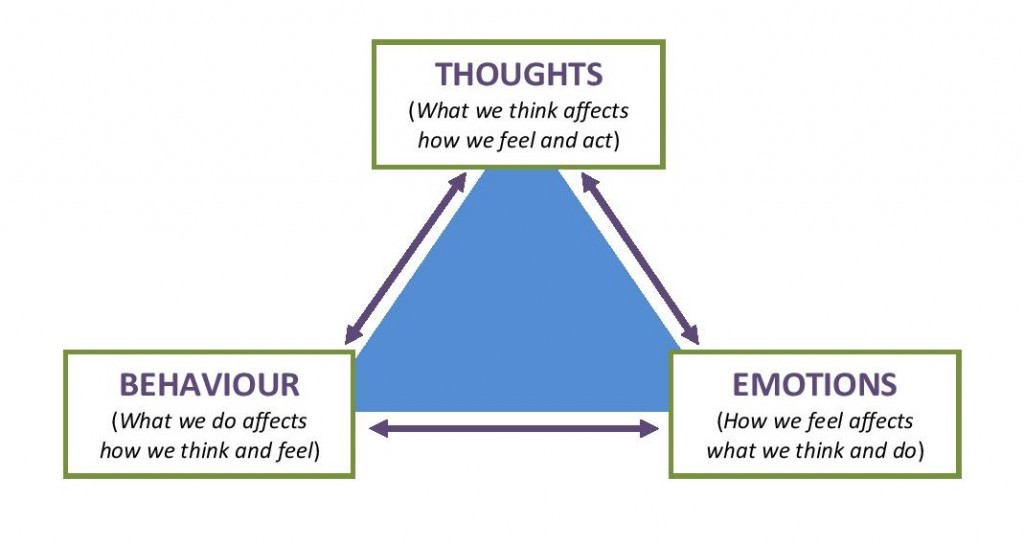
The next level is the level of behavior. Behavior modification is effective at a higher level than changes to environment, but it still isn’t an incredibly powerful level of change. This is the reason most of us fail at keeping our New Year’s Resolutions. It’s thinking that if we stop doing this and start doing that, we will have freedom. If we check all the boxes, then we’ll be free; but that isn’t the gospel, it’s religion. God didn’t send Jesus to the cross so that you can follow a checklist of behavior. He sent Jesus so that you could experience a relationship with Him. Let’s take a look at the cognitive behavioral triangle to get a clearer picture of this level of change.
We can see here that our behavior is affected by our thoughts and beliefs and by our emotions. This is how this often plays out. You do something “dumb.” The thought comes to your mind that “you are dumb.” Then you feel that you are dumb. The more this is repeated the more you will believe that you are dumb. If you are thinking you’re dumb, feeling dumb, and believe you are dumb, chances are high that you will continue to do dumb things. The key to changing behavior is to change one of the other legs of the triangle.
The easiest let to change is the level of thoughts. 2 Corinthians 10:5 says “We demolish arguments and every pretension that sets itself up against the knowledge of God, and we take captive every thought to make it obedient to Christ.” Taking our thoughts captive to the Word of God can help us change our feelings and our behavior. But this level of change isn’t the most powerful. Eventually, we find ourselves in the cycle of: sin, repentance, forgiveness, and then sin again. We are going to God to clean us up, which He gladly does, but we end up sinning again. This level can bring with it a feeling of condemnation.
This leads us to the third level of capabilities. At this level we have a mental map of what we think we can and what we think we cannot do. These are our limitations. This acts like a thermostat. If I believe I can perform at a higher level, I will rise to that level. When I hit the extent of what I believe I can do, I won’t go past that level. Think of all the athletic records that have been set. The example I like to use is running the mile. For years no one thought that a 4 minute mile was possible, but then in May 6, 1954 Roger Banister broke the 4 minute mile. Once it had been done, others began doing it as well. When no one believed it could be done, no one did it. But once people saw that that limit was false, they began pushing through that limit. We can see this when we say things like: I’m always going to struggle with this. Life is always going to be this way. This can lock us into a self-fulfilling prophecy where we end up never moving past the limit we put on ourselves.
This level ties in with the next level of beliefs. Beliefs are different from thoughts. They are deeper, more powerful, and begin developing at birth. Beliefs live in the heart, while thoughts live in the mind. We can’t usually put words to them. They aren’t easy to change. They are connected to repeated, powerful, or strong experiences that take on the role of truth in our lives. They alter our perception of the world around us. We can believe something that is false, but if we believe it then that belief becomes truth to us. Proverbs 23:7 (NKJV) says “As a man thinks in his heart, so is he.” Our beliefs influence what we become. That’s why the Bible stresses that we are to guard our hearts. Proverbs 4:23 tells us to “Above all else, guard your heart, for everything you do flows from it.” This is the level where we are dealing with strongholds. You can look back to the post Who Are You Listening To? to see how to take down strongholds. We need to hear God speak. When God speaks and we hear Him, it changes our heart and takes that lens off our eyes so that we see things differently. Information changes our thoughts, but revelation–the things we hear from God, the things we see from His Word–changes our beliefs.
The highest and most powerful level of change is the level of identity. We all have an identity. That identity is formed by the blueprint God had in mind when He created you. God is the one who gives us our identity. He determines our worth. The way God sees you is who you really are. Satan doesn’t want you to see this blueprint. He wants to keep you from knowing your true identity. When you see the truth of how God sees you, that is the truth that sets you free. 2 Corinthians 5:17 says “Therefore, if anyone is in Christ, the new creation has come: The old has gone, the new is here!” When we experience change at this level, it is lasting change that trickles down to all the other levels. Letting God change us at the level of our identity results in changes in our beliefs and how we see the world. Strongholds are demolished! That results in raising our ideas about our capabilities and limitations. That, in turn, leads to different behavior, and our change in behavior positively impacts our environment. It’s a process God takes us through as He renews our mind and makes us more like Him.
The final reason that our attempts at change might fail is that we are using the wrong tool to change. We can try as hard as we want, but if we’re not using the right tool, we can do more harm than good. It’s all about what we are seeking. If we are seeking change at the lower levels, that’s going to be what controls our lives. Whatever we spend most of our time focused on organizes the rest of our lives. So if we’re focused on what we are doing wrong, that’s what’s going to organize the rest of our life. You can see this when you’re thinking “Don’t do this. Don’t do this.” And then the next thing you know that’s exactly what you’re doing. It’s because you’ve put that thing, whatever it is, first in your life, and it’s organizing everything that comes after it.
That’s why Matthew 6:33 says, “But seek first His kingdom and His righteousness, and all these things will be given to you as well.” When we truly place God first, then He begins to organize our life. He has the opportunity to help us with lasting change. Remember, freedom is not the absence of something, it is the presence of Someone. Galatians 2:20 says, “I have been crucified with Christ and I no longer live, but Christ lives in me. The life I now live in the body, I live by faith in the Son of God, who loved me and gave himself for me.” We don’t have to change on our own. God is there with us. He is working through us to effect real and lasting change in our lives.
The beauty of all this is that it’s up to us what level of freedom we want to operate at. We can stay at the lower levels of change of behavior and environment, or we can live in the level of identity and see it trickle down to the rest of our life. It’s up to us! What level will you choose to live in?
“He will wipe every tear from their eyes. There will be no more death or mourning or crying or pain, for the old order of things has passed away.” He who was seated on the throne said, “I am making everything new!” Then he said, “Write this down, for these words are trustworthy and true.”
It’s hard to imagine that there will come a day without pain or sorrow or suffering. This was what life was supposed to be like. God didn’t design the world with pain or sorrow or suffering or sickness or death. He designed the world to be eternal. He designed our spirits to be eternal. Sin has required a high price from us.
But God promises that that price has been paid through the cross of Jesus Christ. When we receive Christ’s atonement on our behalf, we get a taste of this future promise. We will still experience pain and suffering, but we will not experience it alone. Jesus is with us no matter where we are or what we’re going through. He offers strength and peace in times of struggle.
One day, all things will be made new, just as our spirits have been made new. This earth and everything in it will return to the original design. In that day, there will be no sickness, no death, no sorrow, no pain, and no suffering. There will be peace and restoration. What a day of rejoicing that will be!
Father, thank you that you are a God who makes all things new. You make us new when we are saved. One day you will make everything else new as well. We look forward to that day, Lord. Comfort us when we are hurting. Walk with us when we are struggling. We know there is no place that we can go that you are not with us. Thank you, Father, for your amazing and incredible plan! In Jesus’ name, Amen.
This is my daughter Inara back in 2011 when we officially began our homeschooling journey. She was in kindergarten at that point, and I had never homeschooled before. I had just recently given birth to my youngest daughter, Avalon, and now that I had 5 children who needed some form of childcare either after school or all day, it didn’t make sense to keep working outside the home when my income wouldn’t even cover daycare costs. So I reworked the budget and reworked the budget until I was reasonably sure we could afford for me to come home and take care of my kids.
Homeschooling was always something I wanted to do. When I was young, I wanted to be a teacher. As I got older, other dreams took over, but the idea of being able to educate my children was still very appealing. Of course, the lamentable state of public education in the United States as well as several news stories about the lack of preparedness among recent high school graduates helped as well. I felt I had received a good education, and I wanted to be sure my children did as well.
But that wasn’t the only reason I chose to homeschool as soon as I was able. The main reason was Inara herself. My sister has ADHD, so I know how to recognize the symptoms. Inara had definite symptoms of ADHD. She was restless. She had difficulty concentrating. Her thoughts moved so quickly, and she talked very fast in order to keep up with them. She couldn’t remember a list of three items. I didn’t want to use medication to treat the ADHD. There is still some debate about whether or not the brain differences seen in children with ADHD are due to the condition itself or the nature of the medication they use to treat symptoms. I wanted to try natural, alternative methods for concentration first. I knew that in a public school setting Inara’s personality quirks would cause problems. It’s hard enough for teachers to handle “average” students in their classes, especially with the number of students per class, but throw in a few kids with “special” needs…well, they aren’t superheros.
Inara did well with homeschooling. She didn’t have to sit still all day. Our work took less time than public school lessons take because she was the only student and we didn’t have to focus on classroom management issues that take up a lot of the time in a public school classroom. She was able to move at her own pace, so if she picked up a concept quickly, we could rush ahead, and if she needed a bit more time to understand, we could slow down and take as long as we needed. I believe in teaching for mastery, so I didn’t move ahead with a lesson until I was sure whatever we were working on had been fully understood and mastered before hand.
If Inara wanted to jump up and down during math class, she could jump up and down. If Inara wanted to hang upside down from the couch during history, she was free to do so. She could fidget or draw or play with blocks during read alouds. The only time she had to sit still was during our penmanship classes. I told her I needed her to sit still in order to learn to write, but as long as she wasn’t writing she could do whatever she needed to do. If we were reading books and I wasn’t sure Inara was paying attention, I would ask her some comprehension questions. If she could answer the questions adequately, she could continue doing whatever she had been doing, but if she couldn’t answer the questions, she had to stop and sit still for the remainder of the lesson. I was able to minimize distractions in her learning environment and constantly redirect her wandering attention. We used yoga poses, exercise breaks, essential oils, and omega-3 supplements to help with her focus, and they did help a little bit.
But as Inara got older, I noticed that she had behaviors that ADHD just didn’t explain. She would lie about things all the time. I’m not talking about normal lying in young children when you catch them doing something they shouldn’t or when you suspect they did something and they are afraid of punishment. I’m talking lying about everything. All the time. Big things. Little things. Things that didn’t matter at all. She would tell stories. At first, I thought maybe she didn’t understand the difference between reality and fantasy, but then it became clear that she did understand the difference–at least intellectually. It just didn’t affect her storytelling. If she heard another person share a story about their life experience, I would catch Inara telling someone else the story as if it were her own, and when confronted Inara would insist that the story had absolutely happened to her.
She began stealing. At first it was the typical stealing in the check out line, taking candy or small toys. She was very young, so we explained that you can’t just take things without asking. We would have her return the item to the store manager and apologize for what she did. But where normal kids would stop doing this after the embarrassment of facing the store manager, Inara continued. It got to where we had to search her after every trip to the store. It didn’t stop either, Inara just got better at hiding what she had stolen so that we didn’t always find it. She moved up to stealing food from the kitchen at night. It’s not that she was hungry. She would just take things. She would steal ingredients if we didn’t have snack food in the house. She would steal food she didn’t even like. She would hide it around the house!
As we struggled with these behavior issues, we began to notice that Inara didn’t understand discipline or correction. When you correct a young child, you go through certain steps. You explain what they did wrong or, better yet, you have them explain to you what they did wrong. You explain how they should have handled the situation. Maybe you even role play what they will do next time. Most children from a young age begin to associate their behavior with the consequences for those behaviors. They understand the rules and how to follow them. As they get older, the discipline needs might change, but you generally don’t end up handling the same behaviors over and over and over again. Inara wasn’t like that. She understood the rule. She understood that what she had done was against the rule, but she didn’t understand why that was a problem. She viewed discipline as a personal attack. She would often say, “I’m in the corner because you don’t like me,” rather than saying “I’m in the corner because I hit my sister and that’s against the rules.” Even if you explained that hitting was against the rules and that was why she was in the corner, she would respond with “Well, yeah, I know hitting is against the rules, but that shouldn’t mean I have to be punished for it.” There was this sense that Inara did not understand why rules should apply to her.
As time went on, she progressed to getting more and more angry. Not only did she believe correction meant she was not liked or even unloved, she would begin to feel that whoever was doing the correction was her enemy and deserved punishment themselves. Since I was the one home with her all the time and handling most of the discipline that meant she targeted me with her needs for revenge. Inara was subtle in her tactics. She didn’t do anything at once. Instead she would wait, mulling over her feelings until they got big enough for her to act on them, days maybe even weeks later. She would destroy something I cared about. She would ruin something that belonged to me. If it was my birthday, she would stick her hands in my birthday cake before we even go to light the candles. If I received a present, she would break it or use it or damage it in some way so that I couldn’t enjoy it. If I received candy or a food item, she would eat it.
This behavior targeted her sisters as well. We raise our kids to be community minder. We often tell them that they ARE their brother or their sisters keeper. We tell them love means that you speak up when you see someone else doing something that’s going to get them in trouble or hurt them or someone else. You don’t let them do things that will hurt themselves, even if it’s something that will just get them sent to the corner. Remind them of the consequences. Then come get an adult if the behavior warrants it. When Inara’s sisters would see her steal something, they would say things like, “Inara, what are you doing? Why are you taking things? You know that’s stealing. You don’t want to get in trouble, do you? Put it back before someone sees you.” Inara began targeting them as well. She would tear up their favorite stuffed animal. She would cut holes in their clothing. Occasionally, she would choke them or threaten to hit them or harm them in some way.
As Inara approached adolescence, her threats escalated. She began to threaten to kill her sisters if they told on her or if they stopped her from doing what she wanted to do. We tried to seek mental health help for her, but when you have medicaid as your only mental health coverage (our commercial insurance excluded benefits for mental health) you tend to get lumped into a box and no one really listens. The therapists who took medicaid only wanted to recommend medication for her ADHD. No one believed that the other symptoms were true or that they were as bad as we reported. We were accused of scapegoating our child, of blaming her for our ineffective parenting. It didn’t matter that I had 4 other children (or even when I had 6 other children) who had none of these issues. I was to blame for Inara’s behavior.
We were finally able to get the local gateway agency for mental health in our county to come to our home and assess Inara for mental health services. This only occurred after Inara accused my husband (her stepfather) of physically abusing her. He was charged with child abuse in the 4th degree. We had to hire attorneys and fight to show that we had never abused any of our children. While we were working with the court system, Inara was qualified for in-home mental health therapy, which meant that a therapist came to our home and met with Inara either in our home, or outside, or at another location like a restaurant, etc. Inara was sent to group therapy for kids with severe behavioral issues. It was at this point that Inara’s stories took on a more sinister tone. She began to tell stories about the other kids at her group therapy sessions. In these stories, something would happen to a “friend” of hers, she would respond with aggression and violence to the alleged offender, and she would be the hero.
I became concerned that all of Inara’s stories now had some form of violence in them. Inara was good at manipulating her therapists. She had a pathological need to be the center of attention. She enjoyed shocking people and would often make outrageous statements to see the kind of reaction she would get. She told her therapist she was seeing demons. She then admitted that she was threatening to kill her siblings. Most kids who are mentally ill and make threats like this don’t have a plan. They say they want to kill people because they are angry and overwhelmed, but that’s all. So when you say: How would you do that? They can’t give more than vague answers. They don’t know. They haven’t thought it through. They made the threat in the heat of the moment due to overwhelming emotions. That wasn’t the case with Inara.
Inara had a plan. She always had a plan. It was detailed and step-by-step. She knew who she would attack first, what weapon she would use, how she would hide her attack from the rest of the family, and how she would progress until we were all dead. She even had a plan for how she would cover up the crimes and where she would go afterward. It was terrifying to live in our home. Inara was placed in an inpatient mental health hospital for adolescents. The psychiatrist who evaluated her said she had never met a child so young who lacked empathy and viewed people as objects. She had an obsessive need for revenge. It was after her hospitalization that my husband went to trial for child abuse. He was acquitted.
Inara was placed on a number of medications. She took a medication for her ADHD (the natural methods we were using were no longer effective and she was really struggling). She took a mood stabilizer. She took an antidepressant. She took a blood pressure medication to try to control her agitation and impulsivity. She took Melatonin to help her sleep. Inara never slept more than 4 hours at a time. In the beginning, the medication seemed to work. Inara came out of the hospital much more subdued. She was compliant. She was kind to her siblings. She obeyed our requests. She seemed less violent. She still lied, but she would eventually admit to lying rather than insist she was telling the truth. We were hopeful!
But as time progressed, the medication seemed to wear off. We adjusted doses. We adjusted medications, but Inara’s behaviors gradually returned in full force. It was almost like she said what she needed to say to get the pills to start with, but they weren’t actually affecting her behavior. She responded how she was told she would respond, but since it was an act it wore off quickly when the acting no longer suited her. Inara was still in therapy, but with the constant turn-over rate in mental health, she wasn’t with someone long enough for them to weed out her lies from the truth. By the time they figured out Inara was manipulating them, it was time for them to move on. She even convinced one therapist that her brother had Down Syndrome!
Inara’s behavior continued to escalate. All her stories were violent. She was sneaking out in the middle of the night. She was stealing from local stores to the tune of hundreds of dollars worth of items. She stole money from my purse and credit cards. She was threatening to kill us again. She even took a knife from our kitchen and hid it so that we couldn’t find it. It took us 6 months to find where she had hidden it! During all this the mental health agencies claimed their hands were tied. There was nothing they could do. They made Inara sign safety plans saying she wouldn’t kill us at night, and they sent us home. I can’t even begin to tell you what that’s like. I can’t begin to tell you how it feels to be alone in a house with 5 of your 7 children and feel that you can’t protect them from someone who wants to kill them. I can’t begin to tell you what it feels like to be afraid of your own child. And I was afraid! I was afraid for myself. I was afraid for my children.
Inara was finally admitted to the inpatient mental health facility again. It took multiple calls to police agencies and therapists to get it done. I had officers condemn my parenting. I had officers ask if I even had a husband and if all my kids had the same dad. (My husband is a truck driver, so he’s only home on weekends). I was told that the police were not a substitute for good parenting. It was humiliating and dehumanizing. I finally asked one officer if his 11 yr old daughter had ever threatened to tie him up in his sleep and set him on fire so that she could watch him burn. He said, No.” I said, “Well, then we’re really not comparing apples to apples here are we!” The officers who responded to my final call after Inara destroyed the house and was attacking her siblings took one look at the mess and decided I was the problem. They took Inara to the Children’s Hospital ER for psychological evaluation only after she informed them of her plan and desire to kill us. The officer questioning her said “Why do you want to kill your family? What would that accomplish?” She said, “They are in my way. I don’t like when people get in my way. Killing them solves that problem.” Her response scared him–scared a veteran police officer who had worked with hardened criminals. So they took her in.
At the mental hospital she decided she wanted to go into foster care. No one would accommodate her request. They all told her that foster care was not the magical place she thought it was. Inara met another patient who was in foster care and began getting information from her on how she got there and what it was like. The children aren’t supposed to discuss their history, but that didn’t stop Inara from pumping this girl for information. When she had enough information, she accused my husband of sexual abuse. The hospital said her accusation had all the hallmarks of a false accusation. They had to report it to CPS, but they assured me that they had told CPS they believed the accusation to be false. CPS didn’t care. After a sham investigation, they removed my husband from our home. Eventually, they went to court and placed all my children in foster care, claiming that I had failed to protect my kids from abuse. They used the previous allegation of physical abuse against us as well, even though it had ended in acquittal. They even claimed that the fact we homeschooled our children was a smoke screen to cover our abuse. Our religious beliefs of the roles that men and women should play in a marriage and in a home were evidence of abuse as well, they claimed.
Many people think that it’s always “innocent until proven guilty.” Many people think that they can’t prove you guilty unless it’s beyond a shadow of a doubt. But that’s not how it works in court against CPS. There, you are guilty unless you can prove yourself innocent. Everything is weighted against you. Statements are often twisted on the stand to look more damning. And you’re guilty if the judge determines there is a 51% chance that SOMETHING–ANYTHING–happened.
That brings us to today. My children have been in foster care for over a year now. You can’t get your kids out of foster care unless you admit your guilt or you “make progress.” Progress is defined by some change to your parenting or enough difference in test scores from parenting classes. The trouble is that since our parenting didn’t cause the issue to start with, we test high on all the tests. We are good parents. Our evaluators affirm we are good parents, but you can’t be good parents and have your kids in foster care. Since nothing is changing because we are being told that we are doing things well, we are not making progress. That’s how the state sees it anyway. We have had psychological evaluations to show we don’t suffer from mental illness and that we understand child development, aren’t scapegoating Inara for her behavior, and aren’t asking too much of our children, but it doesn’t matter. If we were drug addicts or if we suffered from mental illness ourselves or if we had pled guilty to anything–neglect, abuse, failure to protect–we would have our children back by now. We can’t do that. Our religion forbids us to bear false witness, even if the lie benefits us and others.
Inara did well in foster care initially. She was compliant. She was peaceful. It didn’t last long. She got caught stealing and when confronted she accused her foster mom of abuse. We thought that would vindicate us. It didn’t. CPS closed the accusation against foster mom. She gets benefit of the doubt since the state has approved her parenting as a foster parent. Inara was transferred to another home. She is failing school. She is stealing. She steals at school and has received detentions for it. She has stolen from church. She has left the home late at night. She has threatened to kill her foster family. None of that mattered. It didn’t prove we had been telling the truth. We were told this was all just a trauma response due to her history of sexual abuse. No one is willing to entertain the possibility that this abuse didn’t happen. Even when there is no evidence. There was so little evidence that no criminal charges were ever filed. The prosecutor even dropped that charge in the petition to remove our children. Instead he focused on the fact that Inara attacked her siblings when I wasn’t look, the fact that she had destroyed the home during her crisis, and the fact that we spanked our children. Spanking is legal in the State of Michigan as long as you don’t leave marks or bruises. We had not left any marks or bruises. It didn’t matter. Someone said we did, and all it took was their statement. It didn’t require proof of any kind. Anyone can say anything to CPS, and it’s treated as proof.
Most recently, Inara got corrected for turning flips near a glass table in the livingroom of her foster parents’ apartment. Inara got angry. She went to her room and began to calculate how to punish them. She decided to take a knife from the kitchen. I don’t know if she verbally threatened or if she attacked. I only know that her foster father had to disarm her and she was taken to the hospital again. She is now again in an inpatient treatment facility. This time she has declared that she is a lesbian. She claims she has another personality whose name is Evelyn. She insists that she is haunted by 3 little girls who look like her. She claims she was pregnant but miscarried (Inara hasn’t even had a period yet) and one of the ghosts is her daughter who died. She says she sees demons. No one takes her very seriously. They all claim it’s PTSD from the trauma. No one looks at the fact that the trauma didn’t happen. They are testing her for multiple personality disorder.
About the only diagnosis that we have received so far that fits the facts of this case–besides ADHD–is conduct disorder, early onset. Conduct disorder is a fancy name for a child who is on the sociopathic spectrum. She lacks empathy. She can not discern emotion in others. She is manipulative. She understands that rules exist, but she does not understand why they should apply to her. If you look at the medical research and prognosis, our best hope is that she learns to play by the rules and only goes to jail for petty theft. At the worst end of the spectrum, our child could be the next school shooter or could murder someone on the street. No one can tell you if a person will make the jump from verbally threatening and having violent fantasies to acting on those threats and fantasies. You just have to wait and see. Wait and see. And hope that if someone is hurt, it isn’t seriously.
So that’s our story. The broken mental health care system has let our daughter down. The broken foster care system has let our entire family down. We are telling our story in the hopes that it will help other parents struggling with a child with mental illness. We are telling our story in the hopes that enough people will see the brokenness in these two systems and petition their government representatives for change. “Best interest of the children” is thrown around a lot by these agencies. “We have to err on the side of caution.” That’s what we are told over and over again.
Meanwhile, children suffering actual abuse are left in homes until they die. There are calls from credible sources. There are medical records of injuries. In our case, there was none of that. Calls from an abusive ex-spouse were the only thing against us. I have continued to advocate that Inara get approved treatment for Conduct Disorder. I have begged the agency not to subject another family to the possibility of violence. I have tried to get a residential facility to take her, but it comes down to who is going to pay for that. We don’t have tens of thousands to pay out of pocket. Medicaid won’t cover it without a court order. The judge won’t order it. She claims only a psychiatrist can do that. The psychiatrist tried, but foster care claimed no residential home would take her. We are advocating or our other children, asking that they not be punished for Inara’s diagnosis. No question of abuse was even raised with them. They were taken under the law that states if one sibling is abused, all have the potential to be abused and should be removed from the home.
Most recently, our court appointed attorney told me to stop fighting for Inara. She said it was a waste of my energy. Stop advocating for my child. I am found guilty of abuse by people claiming I don’t love her or care about her, but now I am being told I care too much and need to stop. We are bankrupted by the fees as well. Not only do we have to cover our own attorney fees, or we did until I took a court appointed attorney due to lack of funds…we have to cover the guardian ad litum who is supposed to advocate for our children but really functions as a mouthpiece for whatever CPS says. We also have to pay the state room and board for our kids to be in foster care. We are $30,000 in debt so far, and the case isn’t even over yet. That’s the entire goal of the system. If we can’t get you to admit to something to make this go faster, we’ll bankrupt you until you can’t fight us anymore.
I hope this story helps someone else. I hope someone out there reading this feels less alone. Pray for our family. We know our God still works miracles. We know He isn’t surprised. We know He will vindicate us eventually. We trust that He will bring our children home. And we continue to pray for His divine healing of Inara’s mind. Get involved with a parent right’s advocacy group. Fight the corruption that is the CPS/Family Court system. Petition your representatives to hold CPS/Family Court accountable to following the spirit of the law. Children should not be removed from their home without some kind of proof of abuse. If it can happen to us, it can happen to anyone!
“This is how much God loved the world: He gave his Son, his one and only Son. And this is why: so that no one need be destroyed; by believing in him, anyone can have a whole and lasting life. God didn’t go to all the trouble of sending his Son merely to point an accusing finger, telling the world how bad it was. He came to help, to put the world right again. Anyone who trusts in him is acquitted; anyone who refuses to trust him has long since been under the death sentence without knowing it. And why? Because of that person’s failure to believe in the one-of-a-kind Son of God when introduced to him.”
Sometimes we view God as an angry judge, waiting for us to do something wrong so that He can condemn us. Talk to an atheist and they will tell you that they don’t want to believe in a God just waiting to send people to hell for being human. But this passage of Scripture tells us this view of God is entirely wrong. God isn’t an angry judge, waiting to condemn you. He isn’t a God who wants everyone to follow Him or else He’ll send them to hell. God is a God of Love.
And this is His great love for us, that while we were still sinners–standing in opposition to everything God IS–Christ died for us, that we might be reconciled–brought back to the same side as God. God doesn’t want to destroy us. He doesn’t want to condemn us. He wants to set us free. The sacrifice of Jesus Christ allows God to declare anyone who accepts it as “NOT GUILTY” of ever having sinned.
We serve a God who creates; He does not destroy. He has gone out of His way to demonstrate His love and creative desires by establishing a way to bring the world back to the way He created it to be. That’s grace–God’s unmerited favor upon us. We participate with Him in His restoration efforts when we acknowledge Jesus as the Lord of our life. That changes everything about us, and we change the world around us as a result. It’s a choice we make to accept God for who He really is, or to look at His great love and refuse to accept it. What choice do you make?
Father, I thank you that you have such a great love for us that you would do anything for us to offer us the chance to be near you again. I thank you that even when we were your active enemies, you sent your Son Jesus to die on our behalf so that we could have a way to peace with you. You do not want anyone to be destroyed. You want all of us to come to repentance and to have peace with you, with ourselves, and with each other. You want us to have a full life full of freedom and blessings. Thank you, Father. You are a good, good God. I accept Jesus’ sacrifice on my behalf. I believe that the only way I can be reconciled to you, God, is through the blood of your Son. There is nothing I can do that would be good enough. So I accept your free gift. I want Jesus to run my life. In Jesus’ name, Amen.
Trees are very important to God. There are hundreds of verses in the Bible that mention a tree or trees. There are even verses that compare people to trees. Trees symbolize life, prosperity, and abundance. They can also demonstrate a lack of these things. We are even compared to trees. In the book of Psalms, it says that the person who follows the Lord will be like a tree planted by water. In the New Testament, Jesus talks about trees producing good fruit and trees producing bad fruit to compare true followers to people merely going through the motions. Trees are all around us, so it makes sense that God would use trees to illustrate certain principles in ways that are easy for us to understand. God talks about various horticultural practices to give us a picture of spiritual principles. He talks about grafting different trees to illustrate how He brings Jews and Gentiles together into one body. He also talks about pruning.
Pruning is a practice of cutting away parts of a tree to encourage growth, to discipline the tree to grow in a certain way, and/or to keep the tree healthy and strong. Trees are pruned differently depending on what you want to ultimately accomplish with the pruning process. Trees are also pruned at different seasons depending on the type of tree. Pruning doesn’t harm the tree, but it does make it look a bit rough until the new growth starts. In the Bible, God talks about pruning us like pruning a tree.
John 15:2 says “Every branch in me that does not bear fruit He takes away, and every branch that does bear fruit He prunes, that it may bear more fruit.” Sometimes we read this verse and think that it applies to individual believers. After all, “He is the vine, and we are the branches.” (John 15:5). We are told in the same passage that we will bear fruit if we remain in Christ and allow Christ to remain in us. We think to ourselves that if we are producing fruit, then we will not be taken away in the pruning process, but this passage tells us that even when we are producing fruit, we will still undergo a pruning process.
“No discipline seems pleasant at the time, but painful. Later on, however, it produces a harvest of righteousness and peace for those who have been trained by it.” (Hebrews 12: 11). When God sees something in our lives that is out of balance or not the way He wants it to be, He disciplines us. If you’re like me, you shudder at that word “discipline”. When you hear the word discipline, do you associate it almost exclusively with punishment? Do you look at discipline as a bad thing that should be avoided at all costs? What if discipline meant something else entirely. What if we looked at discipline as pruning instead of as punishment.
When we prune a tree, we aren’t punishing the tree. We are simply making sure the tree is at its best for the environment that its in. We are making sure the tree is healthy and strong. We are making sure it is producing the maximum amount of fruit possible and that it looks its best. When God prunes us, He isn’t punishing us. He is simply making sure that we are at our best, healthy and strong, producing the maximum amount of fruit and enjoying the maximum amount of His favor and blessings. Pruning takes planning. It takes time. God knows exactly what His plans are for you. Jeremiah 29:11 tells us that those plans are to give us a hope and a future, not to harm us.
God prunes us through trials. He prunes us through correction. He prunes us in seasons of abundance and in seasons of winter. Pruning removes the unwanted, dead, unhealthy parts of our lives and allows the healthy parts to grow bigger and stronger. Sometimes, pruning hurts. Sometimes we are unaware of the weight we have been dragging around with us. We are unaware of the unhealthy parts of our lives or our personalities. When God starts to remove those parts of us, we are uncomfortable. If it’s through a trial, we may feel intense suffering.
James 1:2-5 says “Consider it pure joy, my brothers and sisters, whenever you face trials of many kinds, because you know that the testing of your faith produces perseverance. Let perseverance finish its work so that you may be mature and complete, not lacking anything.” Consider it pure joy. It isn’t going to feel like joy. It isn’t going to naturally be associated with joy in your mind when you are going through it. No one looks at a trial and says, “Yay! A trial. I’m so joyful at the idea of suffering something that’s really difficult!” But James says that when we find ourselves in a trial, we should change our perspective from the trial itself to what comes after. When we look past the circumstances of our pruning to the fruitfulness that will come afterward, that’s the part that brings us joy. We can then suffer through our trials in joy because we are looking through the trial to the finished product. We know that that trial is going to make us mature and complete.
There’s no doubt about it, trials bring out all the stuff hidden in our hearts. If I have a cup in my hand and someone jostles my arm, whatever’s in that cup is going to come out. Whatever is filling that cup will become obvious to anyone looking. It’s going to come out. Sometimes our hearts are filled with things we aren’t even aware of. Trials jostle our hearts. Trials put us under pressure. And the things that come out are the things we are full of. Matthew 12:34 says that our mouths will speak what our hearts are full of. Another translations says “out of the abundance of the heart, the mouth speaks.”
The Bible tells us that when we are saved the Holy Spirit dwells within us. That means all those fruits of the Spirit that we read about in Galatians 5:22-23 (love, joy, peace, patience, kindness, goodness, faithfulness, gentleness and self-control) are already planted on the inside of us. We already have them in our hearts, but in the beginning those fruits are tiny seeds. It’s only as we use them that they begin to grow into fully formed fruit. We have to put them into practice. So when we first enter a trial or a period of testing, the abundance of our heart is probably not going to demonstrate fully formed fruits of the Spirit. It’s probably going to bring a lot of yuck out first! And that’s the whole point! Once we see what’s filling our hearts, we can cooperate with God in the pruning process of removing it from our lives. When we cooperate with God, we get rid of the dead, ungodly things filling us up and we water those fruit seeds that the Holy Spirit planted there.
When we allow God to prune us, when we count it all joy, when we go through the trials and temptations and testing, we become mature trees, lacking nothing and full of the fruits of the Spirit. If you want to study more about the process of pruning and the fruit that comes from it, consider looking at this study. I also like this article from Joyce Meyer Ministries. Pruning hurts. It isn’t comfortable. It isn’t pleasant. But it IS for our good! It helps us to continue abiding in Christ and to bear much fruit for Him!
“Sing to the Lord a new song, for he has done marvelous things; his right hand and his holy arm have worked salvation for him. The Lord has made his salvation known and revealed his righteousness to the nations. He has remembered his love and his faithfulness to Israel; all the ends of the earth have seen the salvation of our God.”
My children love to play hide-and-seek. They run around to find hiding places and giggle uncontrollably while I pretend to look for them. When I “hide”, I make sure I choose a place where they can’t help but find me easily. They are so excited when they find me! I understand that if I make it too hard to find me, my children will become discouraged and may even feel uncertain, insecure, and unloved because they can not find me. God understand this, too.’
God doesn’t hide from us. He promises that whoever seeks after Him will find Him. He makes sure we can see His works. He makes sure we can find Him! God has revealed Himself to us throughout creation. He has shown love to the entire world by giving His Son Jesus as a sacrifice for our sin. The gospel message has spread far and wide, nearly to the ends of the earth. He provided salvation for every single person.
When we realize that we have found God, when we see His wonders before us and understand His great love for us and His plan of salvation, it brings joy to our hearts. Just as my children are excited and joyful when they find me during a game of hide-and-seek, God’s children are excited and joyful when they come to find Him. We can’t help but sing for joy when we suddenly encounter God for who He is. Our hearts begin to sing a new song out of joy and gratitude.
Father, thank you for your wonderful deeds. Thank you that you have not hidden yourself away from us, but you have revealed yourself, your deeds, and your salvation to all of us. We can find you if we look for you. Thank you, Lord, for your great love for us. We are so grateful to you for loving us so much that you sent your son to die for us. Our hearts sing for joy at the thought of your love. May you enjoy the songs of our hearts as they praise you. In Jesus’ name, Amen.
How do you handle correction? If you’re like most people, your response will depend on the context of who is giving you the correction and what the circumstances are. While correction may be easier to take from people who offer gentle correction, it can be hard to take from those we want to respect us or those who are very close to us or those who correct us in a harsh manner. But the fundamental truth of the matter is that at some point in our lives, whether we like it or not, we’re going to be corrected about something. The question is: how will we respond?
Proverbs is full of verses about accepting correction well.
“Whoever loves discipline loves knowledge, but he who hates reproof (correction) is stupid.” (Proverbs 12:1).
“Whoever ignores instruction despises himself, but he who listens to reproof gains intelligence.” (Proverbs 15:32).
“Hear instruction and be wise, do not neglect it.” (Proverbs 8:33).
It’s clear that God wants us to accept correction well.
Here are a few of the ways we might respond to correction:
We might become defensive. If we hear correction that causes us pain, we might get defensive in response. We might put up walls, ignore the correction, or attack the person correcting us. We may justify our behavior. Getting defensive is usually a reaction. It isn’t planned. It isn’t the best way to handle correction. Defensiveness occurs in the eat of the moment when emotions are running high. It causes us to take offense. It holds us back from evaluating the instruction being offered and prevents us from making needed changes. It can set us up for developing a stronghold in that area of our lives. We want to be free people who free people, and that means not responding in a defensive manner when someone offers us correction.
We might deny that we did what we’re being corrected for. We might respond this way out of embarrassment for what we did. Think of Sarah when she was told that she would give birth to a son. She laughed. The Angel of the Lord heard her laugh and asked her about it. Immediately, Sarah denied laughing. She was embarrassed at the perceived correction, so she denied what happened. Denying that we need correction or that we did anything wrong is ignoring reality. You can’t evaluate the correction objectively or make necessary changes if you deny there is a problem in the first place. We want to be people of truth. We can’t do that if we are spending all our time in a state of denial.
We might regret that we got caught. This is the worst way to respond to correction. If we respond this way, we aren’t thinking about the correction at all. We know we were wrong, but we are more concerned with how uncomfortable we are right now while being corrected than we are uncomfortable at the idea that we did something in need of correction. Regretting the correction or taking offense to the correction rather than regretting the act that set it in motion primes us to have a seared conscience. If our conscience is seared, we can no longer hear the voice of the Holy Spirit. This is danger territory indeed! We want to be people who are sensitive to the movement of the Holy Spirit. We want to be quick to obey His promptings. In order to do that our conscience must stay sensitive to His voice. We need to respond correctly to our sin.
We might divert attention. If we don’t want to deal with the issue at hand, we might try to change the subject away from our correction. Anything to get that negative attention off of us! Diverting attention doesn’t address the problem. It definitely doesn’t change the problem. It just puts dealing with the issue off until a later time, and that later time may never come. We want to be people who are quick to deal with sin. We don’t want to procrastinate. We don’t want to be passive. We want to confess our sins quickly so we can be forgiven quickly. We can’t do that if we are trying to avoid the attention that correction brings our way.
We might have godly sorrow. This is the best response to correction. To have godly sorrow, we have to first listen to the correction being offered. We have to not react to that correction and instead to think about it, to accept it, to ponder it, and ultimately to agree with it. When we realize we’ve done something wrong, and we accept correction, godly sorrow shows that we regret our actions. This is the first step towards repentance. Then, we need to act on that godly sorrow. Godly sorrow should lead us to action to correct the problem. It is the response that leads to change, which is where we want to be. We want to be changed from glory to glory to become more and more like Jesus. We can only do that if we are willing to accept correction and learn from it.
The key to accepting correction well is learning how to respond instead of how to react. A reaction is instant. It happens in the moment. It is full of emotion. Reactions aren’t usually our best foot forward. Response, on the other hand, is thought out. It’s planned. It’s calm. Response comes when we take the time to press pause on our emotions, consider what has been said, and formulate how we want to handle the situation so we are at our best.
One of the things that might help when it comes to accepting correction is to remember that, generally speaking, correction comes from a person who wants to see you improve. That person may not offer correction in the best manner, but they care about you. They want you to be your best. Remembering this and believing the best about the person offering the correction helps you move past the negative emotions you feel in the moment. It helps you press pause and choose a response instead of a reaction. If you’re not sure of the motivation of the person correcting you, believe the best. It is always better to believe the best of the person than to take offense at the situation.
How we respond to correction from those closest to us is often how we respond to God’s correction. It’s hard to see our own flaws. It’s uncomfortable to be seen as the imperfect people that we are, to acknowledge our sin, and to face our worst behaviors. Correction is an opportunity. It’s an opportunity to look in the mirror and see what another person sees–to see what God sees. If we don’t like what we see, we’re given the opportunity to change.
Graceful acceptance of correction demonstrates a teachable spirit, a contrite heart, and humility. Psalm 51:17 tells us that God does not despise a broken and contrite spirit. He views it as an acceptable sacrifice. We are told to honor God by offering ourselves as living sacrifices. What better way to do that than to cultivate a teachable spirit, one that gracefully accepts instruction and seeks to progress!
“May I never boast except in the cross of our Lord Jesus Christ, through whom the world has been crucified to me, and I to the world. Neither circumcision nor uncircumcision means anything; what counts is the new creation. Peace and mercy to all who follow this rule—and to the Israel of God.”
There are lots of things we like to boast about. We boast about our accomplishments. We boast about our possessions. We boast about our successes. None of these things is bad in and of themselves, but when compared to the work that God has done they pale in comparison. In this passage, Paul is talking to the church of Galatia. The church had encountered some false teachers who were encouraging them to be circumcised. Paul let them know that the works of the flesh, like circumcision, counted very little with God.
Instead, Paul says, we should boast in the work of God because it did something nothing else could do. It made us new creations and crucified the world and its works of the flesh in our lives. Now, it no longer matters what others think or do or say. What matters is God’s finished work, and His judgement. Paul wants our focus to be on the atonement of Christ, where it belongs, not on outward signs or symbols or works that we do. If we put our focus there, Paul assures us that peace and mercy will follow us.
So the next time you feel rejected by the world or you worry that you’re not doing enough for God, remember that the most important work was already done. It was done when Christ died for us on the cross. There is nothing you can do that compares to this finished work. It is an act of grace. Focus on that work instead of your own. Boast about what God has done. Focus on Him. And peace and mercy will surely follow.
Father, I thank you for your finished work on the cross. I thank you that in that work you did awesome and amazing things that I am only beginning to understand. I thank you that through your works I no longer have to be concerned about my skills or abilities or the works that I can do. They all pale in comparison to what you’ve already done. From now on, I want to boast about what you have done and not what I can do. Help me keep my focus on you where it belongs. In Jesus’ name, Amen.









 A Beautiful Mess