“Repent, then, and turn to God, so that your sins may be wiped out, that times of refreshing may come from the Lord”
Have you ever taken the wrong path? Maybe on a walk or a trip. You take a road that looks familiar, but then you realize that it doesn’t lead to where you thought it did. It isn’t the right road. So you have to find the road that leads you back home or back to wherever you were going in the first place. That’s the Hebrew concept of repentance. Mankind is supposed to walk the paths of the Lord. If we stay on those paths, we stay in connection with God. We always find our way to Him.
But if we stray from God’s path, then we end up separated from Him. We aren’t going to reach our destination…the one we were created for. “Repent” means to find the road that leads back to God and to take it. What a beautiful picture! We have strayed from God’s path, but repentance gives us the opportunity to find the road home.
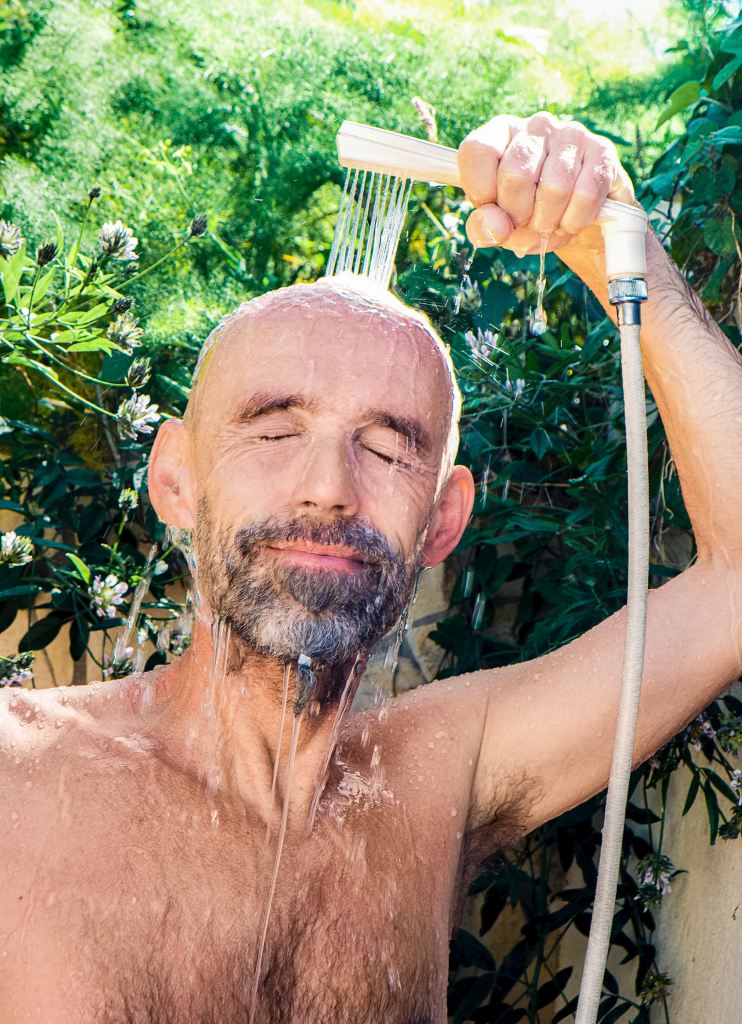
Here Peter adds that the road home to God leads to a removal of our sins and a time of refreshing that pours out of God like a mighty waterfall. We can go home. We can be forgiven. We can be washed clean. We can be refreshed from the struggles and weariness of our journey. We can come home.
Father, thank you. Thank you that you provide a way for me. You had a plan for me even before you created me. You had a path for me to walk–one that never separated me from you. But, Lord, I often take a wrong turn and end up on a road that takes me all kinds of places that you never intended for me to go. So, Lord, I thank you that even then you provide a road that brings me back to you–a road that brings me home. Father, help me to walk the road that leads me back to you. In Jesus’ name, Amen.
“I, even I, am he who blots out your transgressions, for my own sake, and remembers your sins no more. Review the past for me, let us argue the matter together; state the case for your innocence.”
Have you ever spilled ink on something important? An important document perhaps? There’s no way to remove the ink. It covers over everything entirely, making it impossible to read what was written on the paper just seconds before. The words are now blotted out. They’re covered up. They’re completely obscured. They can’t be read. That document is no good anymore. It’s null and void. Completely worthless. And not just to you. No one can hope to recover what was written there. It’s up to you to have another copy.
But what if we were talking about a document that contained a list of everything you’d ever done wrong? What if it were the only record of a tremendous debt you owed? What if the law said that without that document, the debt would be considered paid in full? Would you be in the same mental state when that documents words were blotted out? Or would you rejoice in the fact that you were now free of the debt?
When Isaiah wrote this prophecy, the people of God had sinned repeatedly and grievously. Their list of offenses was long and full and detailed. But God did something unforeseen. Instead of demanding justice, instead of holding up the list of transgressions and indicting them on every single one of them, He blotted them out. We know the fulfillment of this prophecy came when Christ died on the cross. The list of our every offense, our every crime against God, the incredible debt we owed Him was blotted out with the blood of Christ. It couldn’t be read anymore.
As far as God was concerned, it no longer existed. And so God asks us: “Do you really want to argue with me over whether or not you’re guilty when I’ve erased any record of your wrongdoing?” He says to us: “Are you really going to continue to come to me over and over again with guilt for something I’ve forgotten already? You are free of the debt. I remember it no more, and neither should you.”
Father, thank you that for your own sake and for your own purposes you planned a way from the beginning…from the very first sin…to blot out our transgressions against you. You are a merciful and loving God. Thank you that you covered all my sins under the blood of Jesus, and I no longer have to feel guilty about them or confess them to you over and over again. The guilt and shame I feel are not from you. You have set me free. Thank you, Lord. In Jesus’ name, Amen.
Do you have a promise God has given you? A dream that you know God put in your heart? What have you done with that promise?
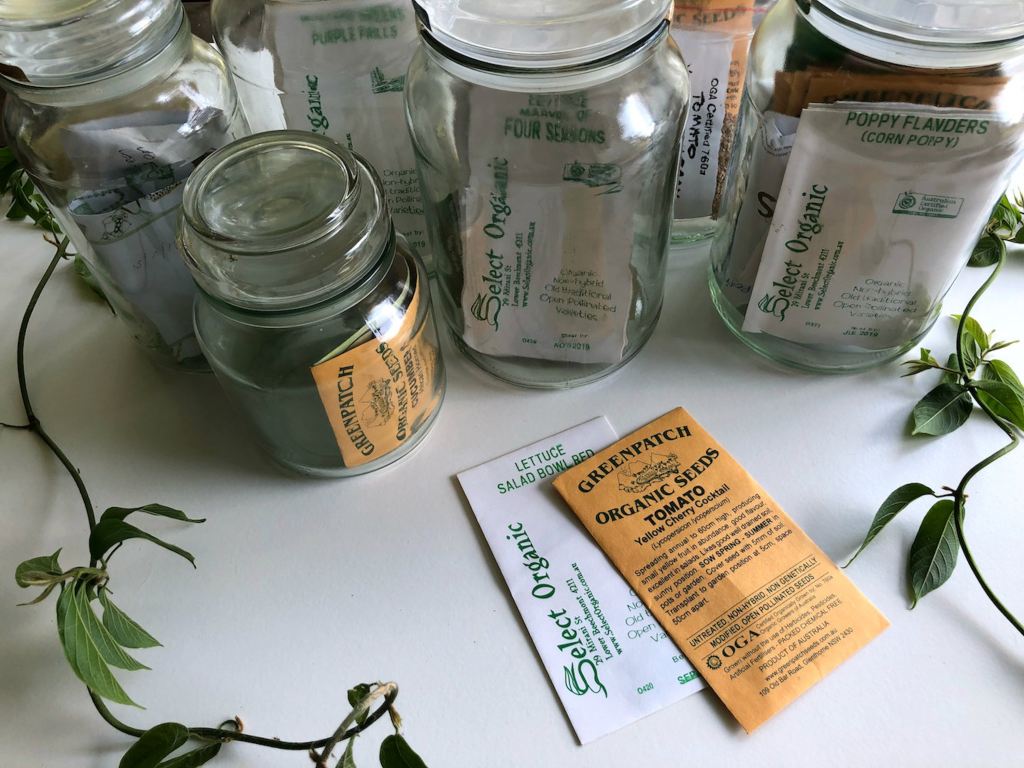
Promises are like seeds. They don’t do anything if you just hold them in your hand, or worse–leave them in their packages. Seeds have to be planted. They have to be watered. They have to be tended. They have to be allowed to grow until they are ripe for harvest, and then they have to be harvested to receive the full benefit. If you feel that God has given you a promise, a calling, or a dream. It’s your job to plant that seed of promise, to water that seed with faith and obedience, and to harvest it once it’s fully grown. It’s your job to work with God to pull out any weeds that might be choking it and get rid of any rocks that might get in the way of its roots.
But planting and watering and harvesting and weeding are not the only things that have to occur for seeds to grow. The ground has to be prepared first. If you’ve received a promise from God, chances are He’s already begun the work of preparing you to receive that promise. We get promises at all stages of our lives. Sometimes the promise comes in the midst of chaos and turmoil in our lives. Then we KNOW that God is working on us, plowing up the soil of our hearts, and preparing us for something more. Sometimes the promise comes in the midst of what feels like barrenness and lack–the Winter season–and we have to trust God that that seed will last until the Spring thaw.
We have to work with God to become ready for His promise to spring up in our lives. We have to allow Him to do whatever He needs to do. We have to allow Him to plow up the soil of our hearts and prepare us. We have to work with Him to get rid of the rocks that get in the way of growth: things like bitterness, fear, pride, shame, etc. Then when we are ready, we have to plant our seed.
That’s the easy part, planting. You take hold of the promise. You let your imagination run wild with visions of the promise when it has come to pass and what your life will be like walking in that promise. It’s a bit like looking at the front of the seed package and imagining how beautiful your garden will look when the flowers are blooming or how wonderful those vegetables will taste once the harvest comes in. That’s the picture you hold on to through the roughest part of planting a seed of promise: the waiting.
Seeds don’t sprout up immediately. Any child whose done the science experiment with a bean can tell you it takes a long time for a seed to sprout. It feels like forever. You wait. And wait. And wait. And wait. And wait. And wait some more. You can’t see what that seed is doing. You can’t see anything at all. You feel as if that seed is no good, as if it might never grow. Maybe you got a bad seed. But God doesn’t give bad seeds. His promises are always “yes!” and “amen!” What we don’t think about when planting a seed is that within that little seed are all the things that that seed will need in order to sprout and grow and become what it’s meant to be. We can rest assured that if God has given us a seed of promise, He has also given us everything we need in order to see that seed sprout and grow. It will just take time…and it’s not our timing that matters. It’s God’s timing. God is the one who does the hidden work of making a plant grow. We don’t even know how seeds grow and develop in nature. How can we expect to understand what God is doing in the time while we’re waiting for our promise to come to pass?
We have to be careful what we plant in our gardens. You can’t sow seeds of discord, unforgiveness, deceit, unfaithfulness…and expect to reap a harvest of peace, love, trust, loyalty, etc. You can’t plant seeds of disobedience and expect your seed of promise to grow. You have to plant obedience to get that seed to grow the way God wants it to. You have to sow the things that bring blessings into your life. God has gifted us with favor in Christ. Use it!
And then it happens! Suddenly! Unexpectedly! Probably when you’re not even looking. The seed sprouts, and you begin to notice the work that God has been doing under the surface all this time. You start to see the pieces fall into place. Slowly and surely, that promise is ripening for harvest. And then it’s time for you to work again. You have to harvest the seed. You have to lay hold of the promise. You have to step out in faith. You have to DO something in order to bring the fullness of the promise into your life.
So do you have a seed of promise from God? Have you planted it by handing it to God, visualizing the fulfillment of the promise, holding onto it with faith, watering it with prayers and faith and whatever else God asks you to do to bring that promise to fruition? Are you waiting patiently while God works behind the scenes to bring it to pass? Are you obediently working with Him to remove the obstacles and hindrances that might be in your way? Have you reached out in faith, prepared to take hold of the fullness of that promise?
Whatever stage you’re in in the sowing/reaping process, I encourage you to wait well. To be patient. To trust in God. To hold firm to the fact that He has given you everything you need for that seed of promise to grow to fruition. Diligent work will yield an abundant harvest!
“If we [freely] admit that we have sinned and confess our sins, He is faithful and just (true to His own nature and promises) and will forgive our sins [dismiss our lawlessness] and [continuously] cleanse us from all unrighteousness [everything not in conformity to His will in purpose, thought, and action].”
Why do we need to confess our sins? Some people believe that if we don’t confess every sin we commit, we will not be saved. God will not take us to heaven with unconfessed sin in our lives. That belief is not biblical. Jesus died on the cross to pay the price for ALL sin. The sin we commit was paid for before we ever committed it. If we believe in Jesus’ death and resurrection on our behalf as payment in full for all of our sin and if we have confessed that belief with our mouths, the Bible tells us we are saved.
We have been made new. God no longer remembers our sin or holds it against us. So our salvation is not dependent upon whether or not we have confessed every little sin in our life. Confession doesn’t earn us favor with God. It doesn’t make Him love us more. It doesn’t make Him forgive us more. Instead, confession takes the wind out of the enemy’s sails.
When we sin, Satan is ready and rearing to go to lay a guilt trip on us about the sins we committed. He even likes to bring up sins we already confessed. Satan whispers in our ear that we should feel bad about our sin and that our sin makes us a bad person, but none of that is true. Confessing our sin to God when we first recognize them removes the power Satan has to use that sin against us. Instead, we can point to this verse and remind ourselves that we have confessed the sin, so God has forgiven us and cleansed us. Nothing Satan can say has more power than the power of God’s promise.
And this isn’t a one-time cleansing…it’s a continual cleansing. God has forgiven us. He continues to forgive us. And He has cleansed us and continues to cleans us. Satan loves to sling mud in our direction, but God’s faithfulness and continual cleansing means none of it will stick. Confession brings us intimacy with God. It builds our close relationship. So if you realize that you have done something that needs to be confessed, confess it. Let God cleanse you and continue His work of changing you from the inside out.
Father, I thank you that you are a faithful and just God. I thank you that you love me so much that you gave your Son Jesus to die on the cross and pay for any sin I will ever commit, even the ones I haven’t committed yet. I thank you that you want relationship with me. So, Lord, I confess my sin to you. I know that you are faithful to forgive my sin and to cleanse me. Now nothing Satan says to me about my sin has any power over me. You are the final authority, and you have declared me clean. Thank you for that. In Jesus’ name, Amen.
Are you ready for war? It might strike you as an odd question. After all, unless you’re a soldier or you live in a country or area where conflict is prevalent, when would you ever be at war? But the Bible makes it clear that we are always at war. We have an enemy who seeks to destroy us. When we become a Christian, we emigrate from the kingdom of darkness to the kingdom of light. Our emigration makes us mortal enemies to those who are still members of the kingdom of darkness. That means war…spiritual war…at any time at any place. We need to be ready.
2 Corinthians 10: 3-5 tells us about the battlefield where this war takes place. “For though we live in the world, we do not wage war as the world does. 4 The weapons we fight with are not the weapons of the world. On the contrary, they have divine power to demolish strongholds. 5 We demolish arguments and every pretension that sets itself up against the knowledge of God, and we take captive every thought to make it obedient to Christ.” The battlefield is in our mind. We use our spiritual weapons to demolish arguments, to demolish pretension, (some translations) to tear down walls that keep people from God’s truth, to smash warped philosophies. We hold thoughts captive and bring them into obedience to Christ. Satan doesn’t attack us with obvious weapons, instead he starts a smear campaign. It’s a campaign of whispers and innuendos. His attacks cause us to feel shame and guilt. They cause us to doubt ourselves, our identities, and the promises of God. It all happens in our mind.
So how do you fight a war on the battlefield of your mind? What kinds of weapons do you use? As with any battle, you have offensive and defensive weapons. Offensive weapons are for the attack. Defensive weapons help you defend against the attacks of the enemy. We have both types of weapons in our arsenal, but we have more defensive weapons than offensive weapons. Why? Because ultimately, the war has already been won. Jesus defeated Satan at Calvary. He won the war. We fight battles only because Satan doesn’t realize he’s already been defeated and because oftentimes we don’t realize that Satan has already been defeated. That’s why we fight a mostly defensive battle. We don’t need to take territory from Satan because that territory has already been taken. Instead, we need to realize the territory that is already ours and defend it from Satan’s whisper campaign.
THE ARMOR OF GOD:
The armor of God is our defensive weaponry. Paul tells us in Ephesians 6:11-17 about the different pieces of the armor of God.
Put on the full armor of God, so that you can take your stand against the devil’s schemes. 12 For our struggle is not against flesh and blood, but against the rulers, against the authorities, against the powers of this dark world and against the spiritual forces of evil in the heavenly realms. 13 Therefore put on the full armor of God, so that when the day of evil comes, you may be able to stand your ground, and after you have done everything, to stand. 14 Stand firm then, with the belt of truth buckled around your waist, with the breastplate of righteousness in place, 15 and with your feet fitted with the readiness that comes from the gospel of peace. 16 In addition to all this, take up the shield of faith, with which you can extinguish all the flaming arrows of the evil one. 17 Take the helmet of salvation and the sword of the Spirit, which is the word of God. 18 And pray in the Spirit on all occasions with all kinds of prayers and requests. With this in mind, be alert and always keep on praying for all the Lord’s people.
Ephesians 6:11-18
Belt of Truth: The belt of truth is the most essential piece of the armor. It doesn’t sound like it. I mean it’s a belt. Why would a belt be an essential piece of equipment? Because the belt held many of the other pieces of weaponry together. The sword hung in a scabbard from the belt. The shield could be clipped to the belt. The pouch that carried his arrows was attached to the belt. Even the breastplate was attached to the belt. Without the belt, all the armor could come apart! Our belt of truth is the written Word of God. All our other pieces of armor rest on the foundation of God’s Word. That’s why we put the belt of truth on first. The Word of God must be central to our lives. Everything else depends upon it. If you remove God’s Word from its central place of importance, other pieces of your armor will lose their effectiveness. You may even lose your armor altogether!
Breastplate of righteousness: This piece of armor protects your heart and central organs from attack. Protecting our heart is incredibly important. Proverbs 4:23 says, “Above all else, guard your heart, for everything you do flows from it.” Jesus told us that it is out of the abundance of our hearts that our mouth speaks (Matthew 12:34). We produce good fruit from the good stored up in our hearts (Luke 6:45). We have the breastplate of righteousness because of the sacrifice of Jesus Christ. 2 Corinthians 5:21 says, “God made him who had no sin [Jesus Christ] to be sin] for us, so that in him we might become the righteousness of God.” When God looks at us, He no longer sees our sin. Instead, He sees the righteousness of Christ. We are hidden in Christ. Through Christ, we are made righteous. See why knowing God’s Word is essential for the rest of your armor? Knowledge of the word reinforces that you are the righteousness of God in Christ Jesus. That’s your breastplate of righteousness–the knowledge of who you are in Christ. Your identity guards your heart. It deflects all Satan’s attacks on your identity. Those feelings of guilt and shame? Gone. Why? Because there is now no condemnation for those who are in Christ Jesus (Romans 8:1).
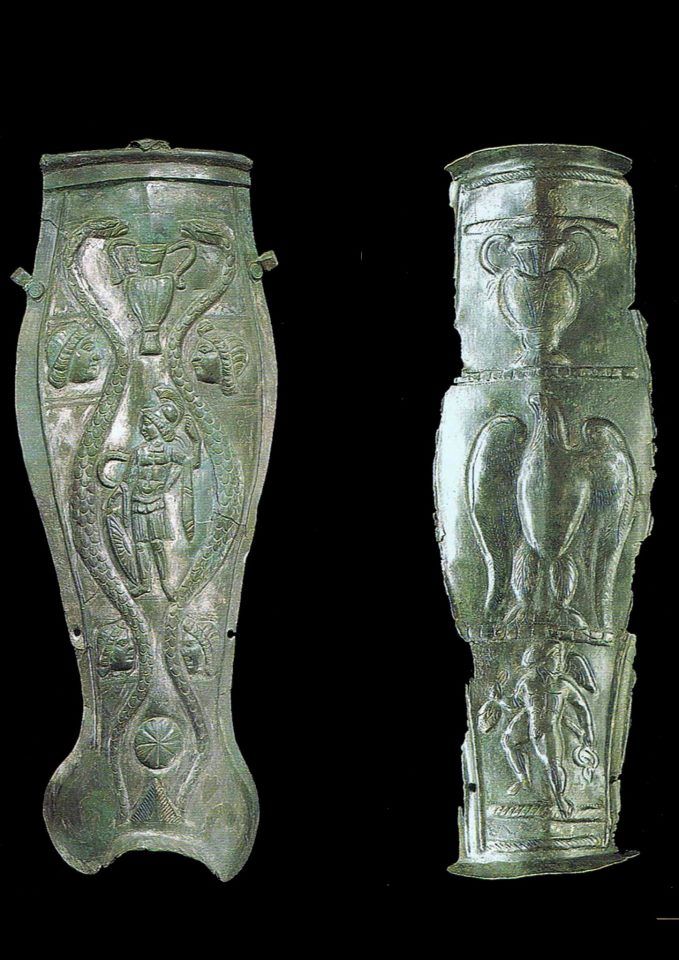
Shoes/Greaves of Peace: Greaves are pieces of metal that wrapped around the lower legs to protect a soldier from being bruised or scraped. The shoes of a Roman soldier were covered with thick leather on top and spiked hobnails on the tip of the toe and back of the heel. They were also heavily spiked underneath. The shoes of a Roman soldier were definitely weapons! Paul uses the Greek term hupodeomai when he tells us to have our feet “shod.” According to Rick Renner, Greek scholar, this word conveys the idea of binding something very tightly on the bottom of one’s feet. These shoes not only protected the soldiers legs from rough terrain while he walked, they also kept him firmly in place during battle. When we have God’s peace, we are protected from any harassment the devil sends our way. We can’t be pushed around. We can’t be moved. We have a firm footing. The peace of God keeps us marching forward. How do we get this peace? Philippians 4:6-7 says we get it from praying properly: “Do not be anxious about anything, but in every situation, by prayer and petition, with thanksgiving, present your requests to God. And the peace of God, which transcends all understanding, will guard your hearts and your minds in Christ Jesus.“
Shield of Faith: The shield that Roman soldiers used was roughly the size of a door. It could be linked with the shields of other soldiers to form a phalanx. It was covered with a leather hide that had to be lubricated each day so that arrows would slide off and fall to the ground instead of sticking in place. Paul uses the Greek word thureos here, which is an oblong door that was wide in width and long in length. This is no tiny shield. It’s huge! God has given us the measure of faith necessary to keep us completely covered (Romans 12:3). The key is to maintain our shield. Without regular care and maintenance, Roman shields became brittle, stiff, and breakable. We don’t want to go into battle with a brittle shield! Every morning, the soldier would rub oil onto his shield. We need to do the same. We need to make sure we are applying the Holy Spirit’s anointing oil to our shield of faith every single day. We need a fresh touch of God’s Spirit every day. Also, these shields linked together to form the phalanx. If you’re in the midst of a particularly difficult battle, link your faith with others for some added protection against the attack of the enemy.
Helmet of salvation: The helmet of a Roman soldier was especially fitted to his head. Paul uses the Greek word perikephalaia to describe this piece of armor, which means a piece of armor that fits very tightly around the head. These helmets were ornate and noticeable. Your salvation is the same. God has given us a gorgeous, elaborate, precious gift: the gift of salvation. When we are saved, our spirits are made new. We become new people. Our salvation sets us apart. It should make us stand out. It should be noticeable. When we have a complete knowledge of our salvation and what it means in our lives, we are immune to the attacks of the enemy in our minds. We are protected when he tries to steal from us. Like a firm understanding of our identity guards our hearts like a breastplate, a firm understanding of our salvation guards our minds like a helmet.
Sword of the Spirit: What image comes to mind when you hear the word “sword?” Something like this?
Paul uses the word machaira here. It looked more like this:
This was a dagger-type sword. It was approximately 19 inches in length and was inserted into a victim at close range. In fact, this sword was only used in close combat. It was razor sharp on both sides of the blade. The tip was turned upward, possibly even twisted so that it would shred the insides of the victim. This sword was a terrifying weapon that left a horrible wound! Paul says the Sword of the Spirit is the Word of God. The Greek word used here for word is rhema.Rhema refers to the spoken word of God. It is a quickened word. Rick Renner gives this explanation for rhema words:
You are praying about a situation when suddenly a Bible verse rises from within your heart. In that moment, you know that God has supernaturally made you aware of a verse you can stand on and claim for your situation. When this happens, it’s as if the Holy Spirit put a sword in your hand–a spiritual dagger–that you can insert into the heart of the enemy to bring about his defeat.
Because rhema is a spoken word, we not only need God to speak to us the verse we are to use. We need to speak it ourselves. This is one of two offensive weapons mentioned in the Ephesians passage.
Lance of supplication and prayer: This is the final weapon mentioned in Ephesians 6:18. It isn’t listed as a specific piece of armor, but it’s important nonetheless and as a standard component of Roman armor, it would be a part of the “whole armor of God.” The lance gave the soldier the ability to strike his enemy at a distance. The lances used by the Roman army were diverse. They varied in size, shape, and length. This affected the distance they could be thrown, so a soldier would choose a lance based on his intent in using it. Just as there were many different types of lances for many different purposes, there are many different types of prayer. Using the lance of prayer helps us attack the enemy from a distance, before his schemes get close enough to do any damage. We can use the prayer of faith, the prayer of agreement,, the prayer of intercession, the prayer of supplication, the prayer of petition, the prayer of consecration, the prayer of thanksgiving, united prayer, the prayer of praise, etc. We need to fit our prayer to the situation in order for it to be effective. That’s why Paul instructs us to “pray with all kinds of prayer.” Without our lance, Satan has an opening to get a lot closer to us in his attacks.
It’s clear God has supplied us with everything we need for the spiritual battles that we face. He has given us defensive armor and the offensive weapons of His Word and prayer. There’s no need to be unprepared for the enemy’s attacks. We know the enemy will come. We know he will try to attack us, but now we know how to put on the whole armor of God and stand firm in defense of our territory in the Kingdom of God.
“Get rid of all bitterness, rage and anger, brawling and slander, along with every form of malice. Be kind and compassionate to one another, forgiving each other, just as in Christ God forgave you.”
Have you ever just had the urge to deep clean your house? Do you do a spring cleaning where you go through all your stuff and get rid of what you don’t need? Perhaps you like that new Netflix series Tidying with Marie Kondo where you watch families sort through their stuff and minimize their positions by keeping only what “sparks joy.” This exercise of clearing out the old and unused can be extremely therapeutic.
While we apply this practice of deep cleaning to our homes, we hardly ever think of applying it to our lives. Yet, this is what Paul is saying in this letter to the church at Ephesus. He’s asking them to clean out their lives. Get rid of the old stuff that you don’t need anymore–all that bitterness, rage, anger, fighting, talking about each other, anything that came with your old fleshly way of living. Throw it out! Let it go! Put it in the dump where it belongs. If we leave those old ways of doing things, those old fleshly impulses, in our lives, we won’t have room for the new things God wants to bring out of us.
Clearing out the fleshly junk makes room for the new fruits God planted in us. We have room for kindness and compassion and for forgiveness when we throw out the junk we used to cling to. And all this cleaning is possible because of Jesus Christ. His offer of forgiveness paves the way for us to become new creations. Our new spirits and our new spirit-filled lives have new ways of interacting with the world around us. We are “sparking joy” by becoming more and more Christ-like in our living. So out with the old and in with the new! I promise you won’t miss those stinky grave clothes. So toss them out. And put on the garment of praise and the robe of righteousness that Christ offers you instead.
Father, thank you that through your work at the cross I am made new. My old way of handling relationships, my old way of doing things, is just stinky grave clothes. I don’t need them any more. I don’t have room in my life for things I don’t need and won’t use. Instead, I’m throwing out my old, fleshly way of doing things, and I’m making room for your way. I’m clearing space so the Fruit of your Spirit has room to grow in my life. Help me replace my old, bad habits with new ways of doing things–your way. In Jesus’ name, Amen.
Sometimes reading the Bible in English means you miss something important. English, like any language, can be limited. If you’re translating from a language with a great range of expression into a language with less forms of expression, it can be hard to convey the exact meaning that you need. This is seen most powerfully in the word “love” as translated to English in the New Testament.
Now, if you’re a Christian and you’ve listened to various sermons and studies on love, you may know that the Greeks had six different words for love. Each word conveyed a different idea. There was eros (sexually passionate love. This love was out-of-control. It possessed you.), philia (friendship love. This love was loyal. It was experiential love. It involved acts of demonstrated love and physical love.), ludus (playful love. This was the playful love between children or the flirting love between casual lovers.), agape (the most emphasized for Christians. This is universal, unconditional, sacrificial love. The God kind of love.), pragma (longstanding love. This is a more modern update to Greek concepts of love. A more New Testament word would be storge–which demonstrated an empathetic bond demonstrated best by parents to children.), and philautia (love of self. This love could be healthy self love or unhealthy narcissistic love.)
Because agape love is so often used in the New Testament, we have a tendency to think of all the times the word “love” is used in a verse as referring to agape love, but this isn’t true. So when we approach verses with the wrong type of love in mind, we can miss what God is trying to tell us. Nowhere is this more important than on the verses referring to marriage. This difference is key, not only to understanding what God is trying to tell us, but also in understanding that God took into account the differences between men and women–our strengths and weakness and our needs–when He gave us instructions on marriage.
Now, I’m not going to focus on both sides of the marriage coin in this post. Instead, I’m going to focus on the love wives are to show their husbands. I’m focusing here because: 1) I’m a wife and 2) Titus 2:4 instructs older women in the church to teach younger women–not to teach men. It’s odd to think of myself as an “older woman” in the church. I think often we read verses like this and think it applies to someone much older than us, but the truth is that at any stage in our life, we can pass down the wisdom and knowledge that God has given us through our study of the Word and our experiences to those who are younger than us. So that’s what I’m trying to be obedient to.
Let’s take a look at Titus 2:4-5 “Then they (the older women) can urge the younger women to love their husbands and children, 5 to be self-controlled and pure, to be busy at home, to be kind, and to be subject to their husbands, so that no one will malign the word of God.” Paul felt it was important for older women to teach younger women how to love their husbands and how to submit to their husbands so that the Word of God would not be maligned. What strikes me about these verses isn’t just that our relationships can be used to influence our community’s view of God and His Word, but also that these things need to be and can be taught. When we think about “love,” we often think of it as an emotion. Love is natural. It is innate. We don’t often think of “love” as something that needs to be taught, but here Paul is saying that it is something to be taught and something that can be learned.
This is why knowing the Greek word for love that Paul uses here is important. The word Paul uses for the “love” women are to show their husbands is philia, and that changes everything. If we approach this verse from an agape perspective, we miss the mark. Think about agape love for a moment. It is unconditional love. It is a decision-based love. It is sacrificial love. How many times have you fought with your husband but still loved him? How many times have you made the decision to love your spouse on those days when you just don’t feel the “love” emotions you used to feel when you were first dating? How often do you put the needs of your husband and your children above your own? If you’re like most women, probably a lot. You’re not perfect at it. After all, we’re all human, but you’ve probably got a lot of the aspects of this unconditional love down. It’s a more natural love expression for women than it is for men simply because women tend to be more emotional and have deeper emotional awareness than men have.
But God didn’t tell us to agape love our husbands here. Why not? Well, because men need something else besides agape love in their relationships, and women need to grow into something less natural for them. They need philia love. We all know that men are more concrete thinkers than women. We know they have different needs than we have and that they view priorities in relationships differently. My husband wants his physical needs met first. He cares less about my verbal expressions of love than he cares about food and sex. That’s just how he’s wired. When I demonstrate hands on, physical love, that’s when he feels most loved. That kind of love is hard for me as a woman, because I’m just not wired to be as concerned with sex and physical needs as he is. Now, of course, we’re talking in generalizations here. This isn’t going to be true of every single person in every single relationship, but it is going to be true in a majority of them.
What my husband needs from me, and what I can train myself to offer is philia love. This love goes beyond the abstract “Yes, I love everyone. I’m a Christian!” kind of love to the “Yes, I not only love my husband, I likehim. I consider him one of my closest friends. I trust him. I share with him. I demonstrate my love to him in physical ways” kind of love. Husbands need physical love. That’s what gives them a feeling of intimacy with you. It’s what draws them in and forms a lasting bond.
So how do we do this? Well, a great place to start is learning your husband’s particular love language. As humans, we all tend to show love in the way that is natural for us, but since we’re not all alike, the way we show love is not all alike. If you and your husband have the same love language, life is great. You each hear love the same way. You each demonstrate love the same way. But if you have different love languages, you may be going out of your way to show love to your husband and he may be feeling completely unloved and vice versa. You have to be speaking a language the other person understands. My husband shows love by buying me things, but I’m not a big gift person. I need my husband to spend time with me and tell me that he loves me. I will spend lots of time with my husband and tell him constantly that I love him, but this doesn’t mean anything to him. If I make him a small gift or I pick up something/do something that shows I was thinking about him, it means much more. That’s when he feels loved.
Another good place to start is meeting your husband’s sexual needs. You shouldn’t do anything that you feel badly about or violates your conscience, but if we’re talking simply a difference in frequency or technique, make the change. Go out of your way. You don’t have to want to. You don’t have to “feel into it.” Just make the effort. With seven kids and five who are home all the time, it’s easy for me to be tired and worn out when my husband gets home, especially given that I’ve been on duty 24/7 for a week or two before he comes home from work. The last thing I want to do is have sex! I’d much rather take a nap and hand all parenting duties over to him. But my husband needs sex to feel connected to me. He needs that as much as I need emotional intimacy. When I make the added effort to meet his needs, even if I’m not enthusiastic about it to start with, I usually find myself becoming enthusiastic as time goes on. My husband’s physical needs can only be met by me. He can’t get those sexual needs met elsewhere and still be under God’s will or keeping his marriage vows. It’s not right for me to deny him those needs all the time. Communication is key here. You both have to be willing to be up front and honest about your needs, your comfort levels, what you can and can’t do, and when it’s acceptable to say “not tonight.”
There are lots of other ideas for ways you can show experiential philia love to your husband. Crystal Storms has a great graphic with 35 random acts of kindness to surprise your husband with. Tina M. at Mother’s Niche gave herself a 30 day challenge to becoming a better spouse to her husband. Jolene Engle hosts podcasts as a marriage mentor and has courses and articles on lots of topics to help you do marriage God’s way. Her article on the 8 habits of a gracious wife gives wonderful tips on making sure you are going to God as your source before trying to meet your husband’s needs. Without God, meeting these needs can be daunting if not impossible. We need His help to be good wives. Saidah Washington over at A Proverbs Wife has wonderful, practical hands-on resources as well. And if you’re struggling with some bitterness in your marriage that makes all these concepts a bit unpalatable, check out this article from Sheila Qualls with tips on how to overcome those feelings so that you can love your husband a bit better.
There are lots of Titus 2 women out there. Seek them out. Find some older women who have been married longer than you at your church. Learn from them. Get their advice. They are an invaluable resource for navigating stages and seasons in your marriage that they’ve navigated in their own relationships before. Beyond finding your own marriage mentors, consider becoming one. No matter how long you’ve been married, you can offer your own advice for seasons and struggles you’ve gone through to those who are just now facing them. This is how the body of Christ works–each of us walking the path and helping those coming after us to navigate the road the way God wants us to. Let’s be Titus 2 women no matter where we are in life! That way, the world will see us as a beacon of light and the Word of God will not be maligned.
“Jesus said to his disciples: “Things that cause people to stumble are bound to come, but woe to anyone through whom they come. It would be better for them to be thrown into the sea with a millstone tied around their neck than to cause one of these little ones to stumble. So watch yourselves.If your brother or sister sins against you, rebuke them; and if they repent, forgive them. Even if they sin against you seven times in a day and seven times come back to you saying ‘I repent,’ you must forgive them.”
Jesus said there are things that will cause us to stumble, and sometimes they come through other people. Knowing this, He warned His disciples to be vigilant in two ways: 1) They were to correct a brother or a sister that they saw doing the wrong thing. 2) They were to forgive any offense.
Offense is something that can easily cause us to stumble into unforgiveness. Why? Because offense is often an injustice. It’s something we can point a finger at and say, “That was completely wrong! I didn’t deserve that!” And it’s not that we’re wrong to say that at all. In many situations, that’s the truth, but it does open up a door in our hearts for lots of wrong things to come in and take root because we are in danger of having a wrong attitude. If we’re stuck in the finger-pointing mindset, we’re acting in pride. We’re judging someone else’s sin as worse than our own. Oh, how the devil loves to whisper in our ear messages like that! And if we listen, we give him a lot of territory in our heart. We can’t finger-point in love. Finger-pointing goes beyond recognizing someone else’s short comings and seeking to correct them….it demands justice at all cost. Justice without mercy is the opposite of love. When we plant thoughts of unforgiveness, what we reap is a harvest of bitterness.
So we need to be vigilant! When we suffer an offense, we need to forgive. We need to forgive even if the other person doesn’t apologize, but in this verse that’s not the scenario we’re given. Instead, we’re given the scenario of a brother or sister, who acknowledges their sin, says they are in the process of changing, they are sorry for their sin, and ask for forgiveness. If we aren’t to harbor unforgiveness toward someone who doesn’t see their sin, how much more so should we forgive someone who’s trying to make it right? Because at some point, we’re all going to be guilty of hurting someone else, and we all are going to want forgiveness for that offense. You can’t reap what you don’t sow. If you are unwilling to forgive someone who asks for forgiveness, why should anyone forgive you when you ask?
And we need to correct a brother or a sister when we see them doing wrong? Why? Because it goes back to the command to love one another. Jesus made it clear in this passage that the person that causes another person to stumble suffers the worse fate. It’s bad to stumble, but it’s worse to be the cause of the stumbling. Who would look at someone they love and think, “I want you to suffer a very bad outcome.” No one! That’s why it’s important for us to speak up. We are offering that person the opportunity to repent, to seek forgiveness, and to fix the problem. We are saving them from being the cause of a “stumbling offense,” and we are rescuing them from the worse fate. That’s love! Love corrects. It places a boundary between the person we love and anything that has the potential to harm them.
So if a fellow believer is headed down the wrong path, speak up! Correct them in love. Realize that we’re all in the process of being changed from the inside out. Sow forgiveness. Don’t allow the seeds of unforgiveness to be planted in your heart. That’s the only way to protect against the attack of the enemy and be sure you reap the kind of harvest you want.
Father, thank you that you loved me enough to warn me of things that might cause me trouble in my life. Thank you that true love corrects. It doesn’t let another person be hurt. Father, today, I am choosing to plant the seeds of forgiveness in my heart. That’s the kind of harvest I want to reap! Help me to recognize the need to forgive quickly so that I don’t allow any root of bitterness to grow in me. Help me also to be bold enough to offer correction in love when I see a brother or a sister heading down the wrong path. I want to better love those around me. And, Lord, when I am being corrected, help me to have a teachable spirit, to accept correction well, and to seek forgiveness when I need to. In Jesus’ name, Amen.
Sometimes I find myself harboring grudges. It’s a very human thing to do. We are hurt or offended by someone, and there is just some part of us that doesn’t want to let go. We play that tape of hurt or offense over and over in our mind. We think of all the witty comebacks and insults we could have said in reply. We run through the various scenarios of how we could have done things differently to prevent the hurt we feel. We think of all the ways we could show the offender’s true colors to other people. We want justice for ourselves.
It should be clear right now that if I’m dwelling on my hurt and offense, I don’t have room for anything else. If my thoughts are consumed by the scenario that happened or by desires for revenge, then I can’t be meditating on the word. If all I feel is offense, then I’ve left no place for joy. I’m trapped. I’m a slave to those emotions. I’ve given the offender control over my thoughts, a place of power in my mind, and by extension, I have allowed them to run my life for me. I’m not longer in control. They are. Their actions are. The hurt they caused is.
The longer I allow these thoughts and feelings to dominate my life, the more I give soil, water and fertilizer to the seed of bitterness that person has sown in my life. The longer I tend it, the more I allow it to put down roots and grow in my heart. I now have a beautiful, healthy tree of bitterness. That’s not the kind of seed I’m supposed to be cultivating, but like any seed it will happily grow as long as I allow it to grow.
But I don’t want to stop the flow of blessings into my life. I don’t want to have a tree of bitterness growing in the garden of my heart. I don’t want to be a slave to the person who offends me. So, I must forgive. I make a choice to forgive. I make a choice to hand the hurt and offense over to God and let Him deal with it. Because the truth is, I don’t want justice when it comes to my own offenses. I want God’s mercy. So it isn’t really fair for me to hold to justice when it comes to the sins of others but demand mercy when it comes to mine.
Jesus said with the same measure we use against others, it will be judged against us. The same measure. The same measure of forgiveness. The same measure of justice. The same measure of mercy. I want to err on the side of mercy. I would rather be guilty of being too merciful than doom myself to harsh judgement simply because I would not offer mercy to others. I want to have only the Fruits of the Spirit growing in the garden of my heart. I want freedom.
So I choose to forgive. Believe me, I don’t want to. I don’t feel like forgiving. My grandmother told me many times: “You don’t have to want to. You just have to do it.” It was the mantra I heard over and over again when I faced an unpleasant and unappealing task that just simply had to be done. So I just do it. I choose to forgive. I don’t instantly stop hurting. It’s not instantly okay as far as my emotions are concerned, but my choice to forgive puts into motion spiritual laws that bring all those things into alignment for me.
When those feelings come up, I can command them to come into alignment with God’s truth about the situation because I have stood in obedience to God’s truth. When those thoughts start to ruminate in my mind about the injustice of it all, I can hold them captive and rest in the truth that Jesus knows what injustice feels like. There is no amount of injustice I could ever face that will top what He faced on the road to the cross. There is no amount of pain I can feel that would top Gethsemane.
And that’s the thing. On the cross…..Jesus forgave. He forgave those right there holding the hammer and the nails, the ones who were screaming for His crucifixion, the ones who were mocking Him, the ones who were happy at what was happening to Him…right there….those in front of Him…He chose to forgive. And I think sometimes we forget that. We move Christ’s forgiveness into some ultra-spiritual, abstract realm so that when we face our own hurts they seem impossible to forgive, but Christ’s forgiveness was abstract. We are called to something higher. We are called to take up our own cross. On our own cross of offense and hurt and pain and suffering, will we forgive as He did?
Repeat offenders are the hardest for me. I think there should be a limit to how much I forgive, but that isn’t truth. Because the truth is that if I could see those people the way that Jesus saw them, forgiving them would be easier. Hurting people hurt people. They hurt others out of the pain they have experienced themselves. Maybe not intentionally, but they still do it. Free people free people. They want others to experience the freedom they have experienced….and I think forgiven people forgive people.
So every new time that something happens and those old feelings rear their ugly head, I remember that this is a battlefield. I know the enemy’s tactics. He will never get a new bag of tricks. And I remove those seeds from the soil of my heart before they even get a chance to sprout. I replace them with the seeds of the Holy Spirit. Each time, it gets easier. Each time, I remember that harboring unforgiveness does nothing but cause me more pain. It doesn’t teach my offender a lesson. They don’t care, or they would have apologized. Instead, it makes me their slave. It adds slavery to the offense, and that’s more territory than I’m willing to give up. So I choose to forgive, and I wait for God to bless my obedience by healing the hurts that were caused in the first place.
It is amazing to me the number of Christians who believe that Christianity is a somber and serious religion. For some reason, there are people in the church who believe that God wants us to walk around with a serious, sometimes sour, look on our face. They are offended if someone is having fun at church. They frown at anyone laughing. They shake their head if kids are playing outside. I think they believe that God is this way, too. But Psalm 2:4a tells us that “the One who sits in Heaven laughs.” God is not somber. He is a joyful God, and He wants His people to be joyful people as well.
We all know that play is important to children. Research has shown that play is how most children learn. Play helps with healthy brain development. It keeps us healthy. Then why do we give up play when we become adults? For some people, it’s the idea that play is a childish thing that we outgrow, but I don’t think this is true. I think play should be a lifelong pursuit. When we are children, play consumes most of our time. When we are adults, there are responsibilities that we need to handle. We can’t spend our entire day at play. We have to be more disciplined and discerning, but disciplined doesn’t have to mean that we go without play altogether. Like the writer of Ecclesiastes says, “there is a time to weep, and a time to laugh; A time to mourn, and a time to dance.” We need balance in our lives, and balance includes times of recreation and play.
Play reduces stress and enhances overall well-being. It keeps us healthy. It builds relationships. Play keeps our minds sharp and enhances productivity. What does play look like for adults? Well, it doesn’t always look the same as it would for children. “What all play has in common,” says psychiatrist Stuart Brown, founder of the National Institute for play, “is that it offers a sense of engagement and pleasure, takes the player out of a sense of time and place, and the experience of doing it is more important than the outcome.”
Play might involve actual games or puzzles. It might involve simple recreational activities like going to the movies with friends or engaging in a hobby. Play gives us a chance to rest. It helps us put our stress into perspective. It helps us cope with negative circumstances more effectively. In short, “A joyful heart is good medicine, but a crushed spirit dries up the bones.” (Proverbs 17:22). God wants us to enjoy life. Psalm 32:11 tells us that God makes known to us “the path of life; in your presence there is fullness of joy; at your right hand are pleasures forevermore.”
There are many forms of play: rough-and tumble play, ritual play, imaginative play, body play, and object play. Rough and tumble play involves sports activities and competition. Ritual play involves things like chess and other board games that have set rules and regulations. Imaginative play involves things like coloring, storytelling, etc that make use of our imagination. Body play involves things like yoga, rock climbing, and hiking. Finally, object play is play with toys or objects. Games like Jenga, Legos, snowball throwing, etc. Whatever form your play takes, make sure to play.
There are many benefits of play. We need play in our lives. Play doesn’t have to take up a lot of time or money. It can be something simple and involve spending time with others. Play gives us vitality and enhances our relationships. Many people list a sense of humor as the number one character trait they look for in a relationship. We don’t need to give this up in order to please God. As long as we are keeping our play in perspective and not neglecting the work that we have to do, we can honor God through our recreational activities in the same way that we honor God with our work.
We are made in God’s image. God likes to laugh. The Bible tells us that God laughs. It tells us that God delights in us. It even says that God sings over us. If God enjoys simple things like this, it makes sense that we would enjoy them, too. What doesn’t make sense is believing that we need to stop enjoying life in order to be “an adult.” Not only does this make US miserable, it makes the people around us miserable as well. How can we be a light to a dark world, if our light is dimmed through too much seriousness and work?
We are to reflect who God is to the world around us. When we do our work well as unto the Lord, we are reflecting God’s faithfulness to the world around us. We are attracting people to God through our diligence, our attentiveness, and our attentiveness. When we play well, we are reflecting God’s joy to the world around us. We are attracting people to God through our joy, our peace, our cooperative spirit, and our love. God is not a two-dimensional purpose. He is three-dimensional. He is perfect and complete. God is balanced. In order to show God to the world, we have to be complete, balanced, three-dimensional people as well. Do yourself a favor, and find a way to honor God through play.











 A Beautiful Mess