
Confession Unto Faith

Photo by Brett Jordan on Unsplash

We know the words that we speak have power. We usually think of this power in terms of the ability to hurt or to heal. We think about the saying “Sticks and stones may break my bones, but words will never hurt me.” We’ve all heard the saying. We may have even repeated it ourselves, and yet we’ve all been hurt by words at one time or another. Words are important. So it should come as no surprise that words have creative power. When God spoke, the world was created along with everything in it.

We were made in the image of God. When God formed man from the dust of the ground, He breathed into his nostrils the breath of life, and man became a living being. Some translations say: “a living, speaking spirit like God.” Our words have the power of life and death. Proverbs 18:21 says, “the tongue has the power of life and death, and those who love it will eat its fruit.” When we speak, we come into agreement with something. Either we agree with God, or we agree with our own flesh or with Satan. We can’t remain neutral. Jesus said in Matthew 12:30, “whoever is not with me is against me.” So our words put us in agreement with spiritual forces. Which spiritual force and kingdom we choose to agree with determines the path our lives will take, so we want to align our confession, the words we speak, with God’s Word.

God calls things that are not as though they are. That means that God sees the potential and speaks that potential into existence. When our words align with God’s Words, we are speaking that same potential into existence. We are agreeing with God, and where two or more agree, God’s power is released. Sometimes we believe the words we are speaking. Our words are flowing from the abundance in our heart. Our words are speaking the faith that already resides in us. Sometimes, however, we may not yet believe what God’s Word says. What do we do when God’s Word says we are “the righteousness of God in Christ,” but we don’t feel like the righteousness of God? What do we do when we do not yet have faith to see ourselves the way God sees us? What do we do when God’s Word says “by His stripes we were healed,” but we still have symptoms of sickness and physical illness in our life?

We know God’s Word is true, so we can stand on the truthfulness of God’s Word and on God’s faithfulness to fulfill His promises even before we believe the actual Word God has spoken. We can make a confession unto faith. A confession unto faith occurs when we come into agreement with God’s Word and speak that word over our situation, even if we only have an intellectual belief in it–even when our heart does not really believe. This in itself is an exercise of faith.

Remember the story of the man with the son who had a mute spirit? He brought his son to the disciples to be healed, but the disciples couldn’t heal him. Then he brought his son to Jesus and said, “If you can do anything, have compassion on us and help us.” (Mark 9:22b) Jesus responds: “If you can believe, all things are possible to him who believes.” The father says, “Lord, I believe. Help my unbelief!” This father knew that Jesus had the ability to heal. He knew it…intellectually, that is. He didn’t have a firm faith in his heart. But when Jesus pointed out that all things are possible to those who believe, this father made a confession unto faith. He said, “I believe.” Then, he asked for help for the unbelief still in his heart.

We can do the same thing. We can make a confession unto faith. We can speak the Word of the Lord until we believe it in our hearts. When the Word makes that jump from something we agree with and trust in intellectually to something we agree with and trust in with faith in our hearts, the Word becomes powerful. God says His word does not return void but accomplishes all that He has sent it forth to do. (Isaiah 55:11) God even tells us to do this in Joel 3:10 when He says, “Let the weakling say, “I am strong!” The weakling can say this, even though he may not yet believe it, simply because God has said it of him.

There are scientific studies showing that what we hear has the power to influence our beliefs. That means if we speak God’s Word out loud, we are going to be hearing God’s Word over and over again. This is part of renewing our mind. Hearing God’s Word is one of the ways we build faith. “Faith comes by hearing, and hearing by the Word of God.” (Romans 10:17 NKJV) When we make confessions unto faith, we are allowing the Word of God to renew our mind and to build our faith in that area of our life. We are breaking our agreement with the lies Satan has told us that we have believed up to this point, and we are coming into agreement with what God says about us.

Joyce Meyer tells the story about how she stopped smoking. She says that she wanted to quit smoking, but she was failing miserably with everything she tried. So she decided she would change her confession. Everyday she would drive down the road and say, “I am not a smoker. I don’t like to smoke.” Even while she was still smoking, she would make this confession. Until little by little the urge to smoke left her, and her words became her confession of faith. That’s what we’re talking about. Confessing over our life the things that line up with God’s Word until we believe them and they come to pass in our lives.

Here are some confessions you can try:

  • “Jesus loves me. He has chosen me. He will never reject me.”
  • “I am the beloved of the Lord.”
  • “The Lord is my God! He is mighty to save. He rejoices over me with gladness and singing. I am quieted by His love.”
  • “God redeems my life from the pit. He crowns me with loving kindness and compassion.”
  • “The Lord surrounds me with His favor.”
  • “I can do all things through Christ who strengthens me.”
  • “God daily loads me with benefits. He is my salvation.”
  • “The joy of the Lord is my strength.”
  • “My ways please the Lord, and He makes even my enemies to be at peace with me.”
  • “I am a new creature in Christ; old things have passed away, behold all things are new.”
  • “I have died and have been raised with Christ and am now seated in heavenly places.”
  • “I am dead to sin and alive unto righteousness.”
  • “No weapon that is formed against me shall prosper, but every tongue that rises against me in judgement I shall show to be wrong.”
  • “I prosper in everything I put my hand to. I have prosperity in all areas of my life–spiritually, financially, mentally, and socially.”
  • “I take every thought captive unto the obedience of Jesus Christ, casting down every imagination and every high and lofty thing that exalts itself against the knowledge of God.”
  • “I am a believer, not a doubter.”
  • “I am slow to speak, quick to hear, and slow to anger.”
  • “I am a doer of the Word.”
  • “I cast all my care on the Lord because He cares for me.”
  • “I don’t have a spirit of fear, but of power, love and a sound mind.”
  • “Pain cannot successfully come against my body because Jesus bore all my pain.”
  • “Sickness cannot successfully come against my body because Jesus bore all of my infirmities.”
  • “I am the healed of the Lord.”
  • “All my household are blessed in their deeds. We are blessed when we come in and when we go out.”
  • “All that I own is paid for. I owe no man anything except to love him in Christ.”

Start making confessions unto faith today. Pretty soon, you’ll start believing the words you are speaking and they will become confessions of faith.


The Power of Hearing

Photo by Alireza Attari on Unsplash

Romans 10:17

“Consequently, faith comes from hearing the message, and the message is heard through the word about Christ.”

Paul has been talking about his desire for the nation of Israel to be saved. He says basically that Israel is zealous for God but that their zeal is not based on knowledge. They don’t know God as He really is, so they don’t recognize Messiah when He comes. Paul then asks some questions: how can they believe unless they know? How can they know unless they hear about it from someone else? Now he comes to the heart of the matter.

Faith in Christ is impossible unless you at least hear about Christ. Without someone sharing with you the message of the gospel and the truth of who Jesus really is, you can not possibly have faith in Jesus. You need to hear the message and the truth in order to accept the message and the truth. Once you accept the message, you can put your trust in the truth of the message. That trust is the basis of faith.

We all have faith in something. We have faith that if we sit in a chair it will hold us up. We have faith in the laws of physics that state that an airplane is designed in such a way that it can fly, even with gravity pulling it toward the center of the earth. We have faith in that natural order of things and in science. We have faith in all kinds of things. Our faith is based on our knowledge of those things. We have knowledge because we have heard of these things from someone who has experienced them. We have experienced them ourselves.

But faith in Christ can not come without experiencing Christ, and since His ascension that experience has to come because we have heard the message of those who saw Him and walked with Him and learned from Him. The burden, then, to expand the kingdom of God lies with us. It’s up to us to spread the message of Christ to those who have not heard so that they have the opportunity to know Jesus for themselves and come to faith. So tell your friends. Tell your neighbors. Tell strangers you meet throughout your day. Spread the message of Christ so that others might have faith. And build your own faith by sharing your testimony with others and by listening to the testimonies of others that they share with you… because faith comes by hearing the message.

Father, I thank you that you did not leave us in the dark. You made sure that everything around us spoke truth about your existence. You gave us your word so that we would receive the message of salvation through Christ. We have faith because we heard the message of who Jesus is and what He did for us on the cross and we accepted that message. Help us to pass that message on to others so that they, too, might come to faith in Him. In Jesus’ name, Amen.

Going Deeper With God

Photo by Bas Voets on Unsplash

The Christian life is supposed to be a transformed life. If no one can see a difference in your life from before you were saved to after you were saved, there’s a problem. When we accept Jesus as our Lord and Savior, we are made new. We’re supposed to consider ourselves dead to sin and alive to Christ. The Bible tells us we’re being transformed from glory to glory; we’re becoming more like Christ. The Bible compares our life to a journey and a walk, but I think it can also be compared to a swim. In light of this, I’d like to take a look at a vision in Ezekiel chapter 47.

***Now let me put this disclaimer out here front and center. Ezekiel is a book of prophecy. We have to be really, really careful when we talk about books of prophecy because they are notoriously difficult to interpret and to understand. I’m using this passage metaphorically. I’m in no way saying that this is the only way to interpret this scripture or even that the way I see it is the correct way to see it. I simply saw something worthwhile to consider in it. So take this with a grain of salt and a lot of prayer. ***

The River From the Temple

47 The man brought me back to the entrance to the temple, and I saw water coming out from under the threshold of the temple toward the east (for the temple faced east). The water was coming down from under the south side of the temple, south of the altar. He then brought me out through the north gate and led me around the outside to the outer gate facing east, and the water was trickling from the south side.

Ezekiel is given a vision of the temple of God. The temple is where God dwells. His presence and His name inhabit the temple. In the Old Testament, the temple was an actual building. It was Solomon’s Temple originally–built to take the place of the tabernacle that had moved from place to place with the nation of Israel as they went up to inherit the promised land. Once the land had been inhabited by Israel, God made known His desire for a place to put His Name. The temple was to be a representation of God dwelling among His people.

In this vision, there is a stream of water flowing from the temple itself. What if we consider this stream to be Jesus, the water of life. Jesus’ influence, His authority, and His power, flow from the temple of God itself. Initially the water is just a trickle. When we first come to know Jesus as Messiah, when we first recognize God’s presence in the form of Jesus, we get just the bare minimum of God’s plan for us. We take a step into God through salvation. It’s the first step. It’s a small exercise of our faith. But even that small, introductory step yields incredible results. It takes us from death to life. It transports us from the Kingdom of Darkness into the Kingdom of the Son He loves. It changes our spirits from corruptible to incorruptible. It makes us the temple of God. We have access to God directly. We have the Holy Spirit living within us. We become children of God. And yet, experientially, we know very little of God. Just a trickle really. Just the start of abundant life. Just a promise.

As the man went eastward with a measuring line in his hand, he measured off a thousand cubits and then led me through water that was ankle-deep. 

God calls us to go deeper. After all, salvation is just the first step in a journey to know God fully and completely. As we begin our walk with God, we learn more about Him. We might start by reading our Bible and learning about who God says He is. We might learn more about who God says we are now that we are united to Christ. As we go deeper into God’s word, we allow more of His presence into our lives. More of His living water, flows through us. We are more aware of what He’s calling us to be, what He’s calling us to do, what His purpose is for us. Each step is a step of faith.

Putting our toes in the water when we received salvation required faith and trust in God’s promise of redemption. Taking a step into ankle deep water requires us to exercise faith that we can trust God in our day to day situations. We can cast our cares on Him. We can experience a little more of His presence in our lives. We can experience a little more of His freedom. We’re wading in. We have the promise. We have an understanding of faith. We’re on our way to abundant life.

He measured off another thousand cubits and led me through water that was knee-deep. He measured off another thousand and led me through water that was up to the waist. 

And yet, God calls us to go deeper. If ankle deep required faith, how much more does waist deep? Waist deep in the river of living water requires trusting God in times of trial and suffering. It requires a level of maturity in Him. We can’t go waist deep into God if we’re still drinking milk. We have to be trying out some solid food at this point.

Hebrews 11:1 tells us “Now faith is the confidence in what we hope for and assurance of what we do not see.” When you’re in water up to your waist, you still have some control over your situation. You still have some areas of your life that you haven’t completely given over to God. Sanctification, after all, is a process. As we walk on this journey toward holiness, we begin to see faith a bit differently. Dan Seaborn put it this way in a recent sermon on faith: “Faith is understanding that every situation, especially the difficult ones, is an opportunity to deepen in Christ.”

Every situation. Every. single. one. They present us with an opportunity to do it our way or God’s way. They present us with the choice to trust God or to trust in our own strength. We can operate in works of the flesh, or we can operate in the power and authority of the Holy Spirit. Which will we choose? Will we stay at the ankle deep level of faith? The level where we’re still in control, but where we’re trying a bit more to trust God? Or will we go a bit deeper? Will we go to waist deep, where we have no choice but to give God more control over our everyday experiences?

He measured off another thousand, but now it was a river that I could not cross, because the water had risen and was deep enough to swim in—a river that no one could cross. He asked me, “Son of man, do you see this?”

And still God calls us to go deeper. Ezekiel stops here saying that the water is now a river deep enough to swim in. If ankle deep required some faith and waist deep required more faith, over our heads requires complete exercise of our faith. There’s no portion of our life that we’re attempting to control at this point. We are operating totally by faith. We can’t see the bottom. We can’t feel the bottom. Instead, we’re depending on God to take care of us. Our experiential knowledge of God is exponentially larger than it was when we started our journey.

This is the kind of faith Peter exercised when he walked on water to Jesus. It requires our focus to be completely on God. You can’t get into living water over your head until you walk through some serious trials. It takes mature faith to end up here. But that’s what life is for, isn’t it? To be transformed from glory to glory? To die to self until all that’s left is Christ living in you? To go all in?

Let’s live our lives in such a way that at the end of the journey, we are completely and totally buried in the living water of Jesus Christ. We’re in over our head. There’s nothing left of us. It’s all God. It’s all for His glory. Paul said it this way, “For to me, to live is Christ, and to die is gain.” That’s where I want to be. I want to go deeper in Christ. Day by day, foot step by foot step–all in. Experiencing more of God in my daily life, more blessings, and more miracles. Yes, Lord.

Gratefulness

Photo by Courtney Hedger on Unsplash

Luke 17:11-19

Now on his way to Jerusalem, Jesus traveled along the border between Samaria and Galilee. As he was going into a village, ten men who had leprosy met him. They stood at a distance and called out in a loud voice, “Jesus, Master, have pity on us!” When he saw them, he said, “Go, show yourselves to the priests.” And as they went, they were cleansed. One of them, when he saw he was healed, came back, praising God in a loud voice. He threw himself at Jesus’ feet and thanked him—and he was a Samaritan. Jesus asked, “Were not all ten cleansed? Where are the other nine?  Has no one returned to give praise to God except this foreigner?”  Then he said to him, “Rise and go; your faith has made you well.”

When we read this story, we’re often tempted to be critical of the nine lepers who did not return to give thanks. We think, “How ungrateful of them! Jesus healed them, and they couldn’t even say thank you!” It’s easy to stand in judgement and condemn people. How often do we experience the miraculous from God and fail to thank Him? How often do we take for granted that God will answer our prayers and fail to say a proper “thank you” when He does?

The fact of the matter is that the identity of the nine as Jews may have played a huge role here. These were people who believed that they were God’s chosen people. They were. They believed that God would do miraculous things on their behalf. He had done so before, and there was no reason to doubt that He would do so again. Sometimes when we pray that God will do miracles for us like He did in biblical times, we are neglecting to consider the miracles He has already done in, through, and for us. We are so used to having a relationship with God that we take that relationship for granted. Perhaps, that’s why the Samaritan (someone who was not considered as having a relationship with God or of even being worthy of such a relationship) was the only one to recognize the miracle and be thankful for it.

It’s also possible that the nine healed lepers thanked God at a synagogue or temple. They were probably incredibly grateful to God for their healing, but that gratitude may not have extended to believing that Jesus himself needed the thanks. After all, without faith in Jesus’ identity, it’s easy to consider him merely the vessel God chose to work through. So the Samaritan goes beyond recognizing the miracle here to recognizing Jesus’ identity. That’s why Jesus says to him, “Your faith has made you well” or literally “your faith has saved you.”

Not only should we be grateful to God for the everyday miracles He does in our lives, but we also need to have a saving faith. Saving faith recognizes Jesus as more than just a vessel. It recognizes Jesus as God Himself.

Father, thank you that you are a miracle working God. Forgive me for the times I have taken your miracles for granted. Forgive me for thinking that I need a huge miracle in my life when the miracle of a restored relationship with you is more than enough. Forgive me for the times I forgot to say thank you for the blessings you give me every single day. Help me to have a saving faith, a faith that is grateful and a faith that recognizes who you are. In Jesus’ name, Amen.

Communication

Photo by Jason Rosewell on Unsplash

Communication has got to be one of the hardest things about marriage and about relationships in general. It requires skills in both transmitting and receiving. That’s hard enough, but add to that the fact that all of us filter information through our own mindsets, worldview, beliefs, and past experiences, and you have a recipe for misunderstanding and hurt. We all know that good communication is essential to having a good marriage, but how do we accomplish good communication? It’s easy to point our finger and say things like, “If my spouse would just communicate more clearly….” or “If my spouse would just listen to me….”, etc. But the truth is that we can’t change a single thing about our spouses. The only person we can change is ourselves.

Sometimes we think fixing our communication involves focusing on either the transmission of the message (the speaking) or in the receiving of the message (the hearing), but Jesus told us that the true focus should be on the “heart” of the matter. Matthew 12: 33-35 tells us that our mouth speaks what our hearts are full of. If our hearts are full of past hurts, negativity, or lies from the enemy, those things are going to come out of our mouths. It won’t just come out in the words we use, either. It will also come out in the tone of voice we use when speaking and possibly even in the timing of when we choose to speak.

Before we communicate with our spouse, we need to pray.

Communication with God is essential to being able to communicate well with our spouse. The Holy Spirit can give us not only wisdom to know what to say and how to say it, but also the wisdom to know when to say it. If we have a topic we need to address with our spouse, taking it to God first can save us a lot of heartache. We know that if we speak when God tells us to speak, He will have already helped to prepare our spouse’s heart to receive what we have to say. God can keep us from speaking to our spouse out of our own selfishness or hurt. When we ask God about something, He may tell us not to speak at all but rather to leave the situation in His capable hands. That’s hard to hear, but oh, so good to be obedient to!

When our spouse says something to us that seems hurtful or sparks controversy, we can take a quick moment to ask the Holy Spirit about it before we respond. “God, how do YOU see this situation? What would YOU want me to say here?” Asking God to interpret what was said for you can prevent your own filters of past hurts and experiences from clouding your perspective.

For example, let’s say you grew up in a household with an overbearing father who was constantly angry and negative all the time. You may associate someone expressing displeasure with the thought that they are angry with you or that you aren’t good enough. It may cause you to internalize the criticism and think that the person does not love you. If your spouse did not grow up in the same kind of household, they may think they are just expressing something that bothers them. They are not intending for you to feel inadequate, unworthy or unloved. If you don’t ask God to interpret what they said, you’re going to respond out of a place of hurt and of feeling unloved.

It’s clear to see how such a response might escalate a passing comment to a full blown argument in no time at all. Then both parties are feeling hurt and unheard…just because we allowed our own filter to get in the way instead of taking it to God.

We need to be slow to speak and quick to hear.

It’s easy to get caught up in thinking about how we’re going to respond when someone is talking to us. It’s easy to focus only on our own view and ignore the other person, but the Bible tells us in James 1 that we all should be slow to speak, quick to hear, and slow to anger. I think it’s important that slow to anger comes at the end of this list. If we are slow to speak, that is, if we hold our tongue and really hear what the other person is trying to communicate, it will probably go a long way to making us slow to anger.

How often do we find ourselves in arguments because we misunderstood what the person was actually trying to say? We’re not all expert communicators. Sometimes the words we use when we’re trying to tell our spouses how we feel don’t really communicate the issue. We think we’re being clear about what the problem is, but actually we are being anything but. If we are slow to speak when our spouse is trying to talk to us, we have the opportunity to really hear them out. We can ask clarifying questions to be sure we really understand what’s at the root of the matter.

For example, I have candles that I use as aromatherapy. When I’m feeling depressed or I get the winter blues, a tropical scented candle is a quick way to “snap out of it,” so to speak. It instantly lifts my mood. I don’t have a lot of wiggle room in the budget to be constantly buying candles, so I’m very judicious when it comes to lighting them. I only light them when I’m really having trouble with my mood and nothing else seems to be helping, and I only keep them lit for long enough to feel my mood shift. That way a single candle can last a really long time. My ex-husband would frequently light these candles. He felt it was a way to make an older house smell better, so instead of maybe opening a window to air out a stale smelling house or cleaning something or taking out the trash, he would quickly light the candles. As a result, he often left them burning for hours at a time.

One day, I went out for the day to run errands. I asked him if he could help clean up while I was gone since I would not have the opportunity to do so. Instead of cleaning up, he simply lit one of my candles and left it burning all day. When I got home, the candle was practically used up, the house was still a mess, and I felt incredibly disrespected and devalued. When I tried to tell him how I felt, he couldn’t hear me. He thought the issue was the candle itself. So the entire conversation revolved around the candle instead of the real issues of feeling disrespected and devalued. It took a trained therapist to help me communicate the root of the problem and help him hear what I was really trying to say.

We need to believe the best.

Knowing that our spouse can say something that upsets us without realizing it, we need to be quick to believe the best. If we take the time to step back and say, “My spouse really loves me. They aren’t intentionally trying to hurt me.” We can go a lot farther toward being able to de-escalate potentially contentious situations. This goes along with being slow to speak and quick to hear. Asking clarifying questions can help us sort out what’s really going on, but beyond that saying “Hey, I felt _______ when you said ________, so I’m having difficulty hearing what you’re trying to say. Can you help me understand?” can also help us sort out tough issues. Using “I feel” statements removes any accusatory tone. Our spouse can argue with statements like “You made me feel _______________.” or “your words really hurt me.” But they can’t argue with how you feel. All they can do is clarify whether or not they intended for you to feel that way.

This technique has saved a lot of heartache in my current marriage. Taking the time to stop the conversation and let my spouse know that I’m feeling triggered but I want to hear him out gives us the opportunity to address some baggage issues that otherwise would escalate the situation. He has the opportunity to help me correct my thinking.

This brings up another point. If you’re talking to your spouse, and they suddenly seem angry or defensive or upset about what you said and you have no idea why, you’ve probably triggered some baggage and old soul wounds. That’s a great place to stop and pray for some direction. It’s also a great time to stop and say, “I think something I said may have upset you. Can you tell me what you heard or what you’re feeling right now?” That gives you the opportunity to say, “Oh, I didn’t mean for you to feel that way at all! Let me try again.”

Yes, it would be easier if everyone just saw the world the way we do, but that’s simply not reality. When it comes down to it, the only person we can change is ourselves. Making small changes like taking it to God first, praying when we find ourselves in the middle of an argument, being slower to speak and quicker to hear, and believing the best can make a huge difference in our marriages. It can also prompt some changes in our spouse. And finally, choose to forgive. Holding on to past hurts and arguments does nothing for our marriages except make everyone involved miserable. Choose to forgive. Even if your spouse is wrong. Even if they don’t ask for forgiveness. Even if they’re not sorry. Remember that love keeps no record of wrongs. Hand the hurt off to God, choose to forgive, and let Him take care of the rest.

Helping Your Kids Handle Stress

As adults, we tend to minimize stress in children. We often say things like, “What could you possibly be stressed about?!” That’s because we think of stress only in terms of the things that we face in our lives as adults, but stress is much more complex than that. Stress is anything that causes the body to react in a certain way to actual danger or perceived danger. It’s a function of any thing that causes change or uncertainty. When we break stress down to this basic level, it’s easy to see that stress is something everyone experiences in life no matter what their age, background, socioeconomic status, etc.

Stress is a natural part of life. Our bodies are designed to handle some stress. It’s a defense mechanism to protect us from dangerous situations. Stress like this is helpful because it keeps us safe, but long term, chronic stress can do serious damage to our physical and emotional health. That’s because are bodies are not designed to handle chronic stress. It’s the chronic stress that gives us symptoms such as headache, back pain, muscle tightness, high blood pressure, etc. Stress can lead to illnesses of its own or it can magnify illnesses already present in our bodies.

Source of Stress in Children

There are lots of things that can produce feelings of stress in children. Think of an infant. They depend on their parent for every need they have. When parents fail to respond to cries, that produces stress in an infant. Infants are also particularly sensitive to the mood and atmosphere around them. When parents are stressed out themselves, it can result in stress experienced by the infant. Loud noises, frequent arguing, childhood trauma are all sources of stress in infancy. This is the time of life when babies form trust bonds with their caregivers. Those bonds are necessary for establishing healthy attachment and promoting future growth and development. Studies show that babies and young children who experience chronic stress have smaller brains and less development than children who grow up in healthy environments. That can lead to serious health consequences later in life.

In childhood, stress comes from navigating peer relationships, from school, from negative events in life like divorce/separation, from things like long term illness or death, and from disturbing world news. Anything that causes a child to feel overwhelmed or insecure is a source of stress. It’s important for us, as parents, to identify situations which may produce stress and help our kids identify stress and deal with it in a healthy way.

In some cases, identifying a source of stress is relatively easy because the stressor is the same for our kids as it is for us. When we are struggling through divorce or separation or family arguments, those things are going to cause stress for us as parents as well as stress for our kids. If we’re over scheduled, that’s going to cause stress for us as parents as well as stress for our kids. But sometimes figuring out what is stressing our our kids isn’t so easy. That’s because stress is a very individualized feeling. The things that cause stress in one person may not cause stress in another. Likewise, some people are better at dealing with stress than others. It’s important to recognize the potential signs and symptoms of stress in kids in order to help them identify the sources of their stress and how to cope with it.

Symptoms of stress in kids include:

  • mood swings
  • changes to sleep patterns
  • bedwetting
  • stomach aches
  • headaches
  • difficulty concentrating
  • decreased appetite
  • new or recurring fears
  • aggressive or stubborn behavior
  • clinginess
  • withdrawal from activities
  • hoarding
  • nervous habits like nail biting
  • self calming habits like thumb sucking

If you see any of these symptoms in your child, try to identify the trigger. Look at things going on in your family, things going on at school, or things going on with friends. In older children, talk to them about how they feel and what’s going on. Does your child have frequent sick days around the exam schedule? Are they struggling with social media use? Are they over-scheduled?

Ways to Help Your Child Cope With Stress

Obviously, if you can identify a trigger like being over-scheduled, you can come up with a straightforward solution like dropping some activities and making sure there is time for rest and for play. Some things are beyond your control to change. Those are the areas where you can help your child develop healthy coping mechanisms to minimize the effects of stress.

  1. Make your home a healthy, safe, secure place to be. That might mean avoiding arguments with your spouse in front of the kids. It may mean establishing a predictable routine. Morning routines can minimize stress related to going to school. Family dinners or family game nights provide times for kids to relax and talk it out. You want the environment of your home to be calm. Make sure your kids know that you will keep them safe and protect them from danger. Allow your kid to talk to you about any topic. That’s a tough one for me, personally. But it’s important that your kids feel like they can approach you about anything and not have you react to them negatively. It takes a lot of work to learn to respond instead of react, but learning ways to hear your kid out and then calmly discuss the topic goes a long way to making your home a place of safety and security.
  2. Keep your kids involved. Discuss any new changes that are coming up. Kids do better with change when you remove as much of the unknown as you can, so talk about anything that might be new. Role-play situations that might be anxiety producing for your children. Think about role-playing trips to the doctor when they were young. That idea can carry on into the teen years with role-playing scenarios of bullying or dating or other social situations that may cause stress. Make sure your kids have healthy activities. Exercise is a great way to help get rid of excess adrenaline and calm your stress levels. Just make sure you aren’t scheduling too much! Talk to your older kids about your own stressors and how you cope with them. A lot of parenting comes down to modeling appropriate behavior. Sometimes all your child needs is to know that they are not alone in the situation.
  3. Make rest a priority. Make sure that you are getting plenty of sleep each night and that your children are too. If you aren’t dealing with your own emotions and stress well, you may be the source of stress for your child. Make sure you are teaching your child to listen to their body and to rest or relax when they need to. Healthy eating is also a great way to minimize the effects of stress in our own bodies and in the bodies of our kids. Don’t forget to play. Play is a wonderful stress reliever, especially in younger kids.
  4. Teach a more positive mindset. A lot of our sources of stress arrive with negative thinking in tow. If we can adapt a new attitude or a fresh approach, we can reduce our stress. Positive parenting techniques, nurturing parenting techniques, and other means of setting realistic expectations and increasing feelings of self-worth can all help to reduce stress.
  5. Seek professional help. Sometimes stress is just too much. You may need to see out professional therapy options to help yourself and your children learn better ways of dealing with stressful situations and of handling stress when it comes your way.

We want our kids to succeed. We want our kids to go farther and do more and be better than we were. We can use this same approach in dealing with stress. Modeling good coping skills, talking about it, praying about it, casting our cares on the Lord…these are all things we can do in our homes to help our children learn the right way to handle the stresses that life throws at us and come out on top!

The Right Path

Photo by Einar Storsul on Unsplash

Isaiah 55:7 (MSG)

“Let the wicked abandon their way of life and the evil their way of thinking. Let them come back to God, who is merciful, come back to our God, who is lavish with forgiveness.”

Sometimes in life the right path is hard to find. We wonder which way to go–which path will lead us to our destiny. Proverbs tells us that a man’s way seems right to him. When we go with our own wisdom and knowledge, we end up on a path we think is right, but it may not be. Without wisdom, we’re just choosing blindly. Proverbs also tells us that the fear of the Lord is beginning of wisdom.

When we fear the Lord, we have access to His wisdom. He’s the one who created us. He has good plans for us. The Bible tells us that the Lord has prepared ways for us to walk in. When we turn away from our own knowledge, when we look to the Source of Wisdom, we find the path that God has prepared for us.

What holds you back from seeking God’s wisdom? Oftentimes, it’s a fear of judgement or a feeling of shame. But God is merciful and lavishes us with forgiveness. That means He supplies forgiveness in abundance. It’s overflowing fountains of forgiveness. We can choose to turn from our own way, which seems right in our eyes, and seek out God’s way.

Father, thank you that you have prepared a way for me to walk in. All your plans for me are good. If I walk in the path you prepare for me, I know I will experience wonderful blessings beyond anything I can imagine. Father, forgive me for the times I’ve tried to walk in my own way–the times I sought my own wisdom and knowledge as my source. I want you to be my source of Wisdom, God. I want to turn from the ways that seem right to me and walk in the ways you’ve prepared for me instead. In Jesus’ name, Amen.

Cleansing Pools

Photo by Vince Fleming on Unsplash

Acts 2:38 (AMPC)

And Peter answered them, Repent (change your views and purpose to accept the will of God in your inner selves instead of rejecting it) and be baptized, every one of you, in the name of Jesus Christ for the forgiveness of and release from your sins; and you shall receive the gift of the Holy Spirit.

On the day of Pentecost, Peter and the other disciples were gathered together in one place. After the Holy Spirit came upon them in the shape of tongues of fire, the disciples began speaking in tongues they had not learned. The city was filled with Jews from all nations, and these men heard the message in their own language. Then Peter stood up and began to preach the gospel to the crowd.

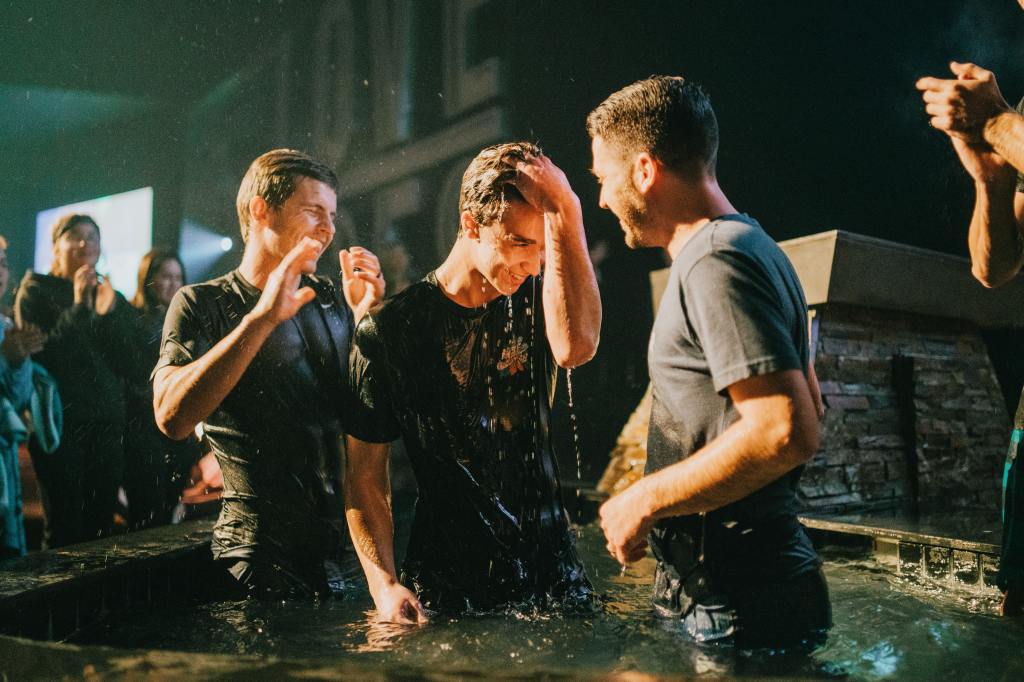
Some commentaries suggest that when Peter referred to baptism, he may have been near the steps of the temple and near the mikveh, ritual baths used for purification. These ritual baths were very similar to baptism and are sometimes referred to as baptism. The person would have to be full submerged in water in order to cleanse away ritual impurities that made them ceremonially unclean. If you were ceremonially unclean, you could not approach the temple to offer sacrifice or participate in the assembly. You had to be ceremonially clean to do that.

There were a number of ways you could become unclean that required mikveh cleansing. The mikveh was connected to a natural source of running water, like a spring. This water was referred to as “living water.” How fitting then that Peter points these men and women to Jesus, tells them to repent from their unclean living, be baptized in His living water, and receive the Holy Spirit. When we repent, Jesus’ blood cleanses us from our unrighteousness. Baptism serves as an outward sign of the inward cleansing. It’s a symbol connecting the Old and New covenants in Jesus. Then, we can lay claim to the Holy Spirit to enable us to not only enter the temple, but to go straight to the Holy of Holies into the presence of God Himself.

What a beautiful picture of the cleansing of the living water of Christ! Have you been baptized since you believed?

Father, how beautiful are the patterns you have given us in Scripture. They point to larger truths of your story of redemption. Thank you for the atonement you gave us through your son Jesus Christ. Thank you for the mikveh you offer us in baptism. Thank you for cleansing us from all unrighteousness. You are the living water that we need to cleanse us and purify us so that we can enter into your presence with boldness and confidence. What a precious gift! In Jesus’ name, Amen.

The Beauty of Rest

Photo by Nathan Dumlao on Unsplash

This morning when my alarm went off I groaned….literally. I just did not want to get up this morning. It wasn’t that I stayed up late last night. I didn’t. It wasn’t that I was getting up earlier than usual today. In fact, I actually got to sleep in a little bit because I wasn’t on the volunteer schedule for our weekly Women’s Bible Study meeting this week. I just felt drained of energy. I was just plain tired. Of course, I wanted to go to the Bible study, but I also wanted to listen to my tired body and go back to sleep. What to do?

I did what I normally do when I have a decision to make and either option looks good to me. I asked God about it. I prayed about what I should do. In my head, pictures of the worship time during women’s ministry popped up. I thought about how I always get a good word when I’m there. I thought about the people who would miss me if I didn’t go. I thought about this blog and about how I usually use the message to prompt the topic of my post for that day. I knew if I went I wouldn’t be disappointed, but while all these thoughts were going through my head, I heard one word deep in my heart: Rest.

As soon as I heard it, I felt complete and total peace. So I closed my eyes and went back to sleep. I must have needed it because I slept for several hours beyond my original alarm time. I wondered how I could be so worn out and tired. There are probably many answers to that. As a general rule, I try to get 8 hours of sleep a night, but we all know that’s perfect world scenario stuff and this is not a perfect world. I eat healthy foods. I take a multivitamin regularly, and while I don’t exercise like I should, I do get out and about once in a while. I’m not coming down with any type of sickness. As a side note, since I began doing a daily declaration that “sickness can not come against my body because Jesus bore all of my infirmities,” I haven’t had even cold symptoms longer than a day.

I was just tired. And the most logical answer is that it’s probably a result of stress. No matter how much I focus on peaceful living right now, I’m under stress. We all are. There is good stress (yeah, I know that’s hard to believe). And there is bad stress (that’s the kind we’re talking about when we typically talk about stress). Like it or not, life right now is kind of heavy on the bad stress side of the equation for me.

There’s the foster care requirements that get more detailed, more ridiculous, and more and more difficult to fulfill every day. God has been so faithful in that by giving me a clear picture on the best that I can do, and aside from some really subjective, unrealistic requests I’ve been able to meet every new hurdle they’ve placed in my path. Praise God! But in addition to the constant barrage of new hurdles to jump over, there’s also the negative feedback you get and the separation from your family. All on its own, that’s a major source of stress. How many times after a long day do you just pick up your children and hug them? How many times have you dropped everything and felt your blood pressure return to normal just by rocking a child to sleep, nursing a baby, or just smelling that newborn smell? There’s just something about a sleeping child…or a child’s hug….or their laugh…that melts all your stress away or at least makes a sizable dent in it. And that’s a stress-reliever I no longer have access to regularly.

There’s also work. I work from home, which is great in the sense that I have complete control over my schedule for the most part and a lot of flexibility. But the downside is that my home is also the office, so I have to work hard to keep separation between work hours and non-work hours. Sometimes it feels like it’s an invasion of my space to work from home, because I have to keep everything clean and tidy and just so in case a customer comes by. First impressions are important after all. And since I manage a mobile home community that also happens to be where I live, there’s a fine line between a neighborly knock on the door and a tenant who just doesn’t get that you clock out at 5 pm. There are projects that I’m responsible for, and there are duties that I have to do each month no matter what. Sometimes all those things crowd together, and my week feels hectic and fast paced.

There’s ministering. It’s not a major source of stress. I love doing it, and I’m only doing what God has placed on my heart to do. But sometimes the amount of preparation and work that goes into ministering in different capacities is staggering. Depending on your ministry position, you may be on call 24/7. That’s not the position I’m in, but it’s a valid issue for people in ministry. And when you’re in ministry you can get trapped in the idea that if you’re doing it for God, then it’s all things you should be doing. But sometimes, that isn’t true. You can easily go beyond the calling God put on your life under the umbrella of serving the Lord. You can easily forget to rest. You can easily forget to take time to read your Bible and pray and worship. You can fall into striving. Sometimes you have to just say “no” to some volunteer opportunities in order to keep your calendar from filling up beyond what you can handle.

Yesterday, there was the added stress of a yearly physical. Those have never been fun, but now that I’m 40, there are a lot more tests that have to be run to make sure I’m in good health. Last year’s physical had some abnormal results. The doctor who did the exam wanted me to come in for more testing, but I declined. 1) She wasn’t my normal physician. This isn’t a huge issue, but given that I felt my regular doctor would have a different viewpoint on the test results and next steps, it gave me confidence to decline. I told her that if my regular doctor wanted me to come in, I would consider it. 2) I just didn’t have time for that. We’ve all had those days, right? This foster care nightmare was just starting, and I just did not have one more brain cell to devote to negativity and bad news. I was used up! So I said, “Not today, Satan. Thank you very much!” and declined to fall prey to the worry of an abnormal test result. I put it off, and I told God that I was sure if there was a problem He could more than heal me from it and if there wasn’t a problem then worrying wasn’t going to do me any good anyway. But still there was the possibility that the test would be abnormal again, and I might have to make different choices, so those thoughts were going through my mind as I sat in the exam room yesterday.

Then I had my daughter’s yearly physical. That’s stressful only because with her mental illness you have no idea what kind of child you’ll be dealing with. I’ve perfected the art of not reacting when she says outlandish things or tells stories about memories that could never have happened. But the added stress this year is the fact that I have to do all this under the watchful eye of a foster care system who thinks the problem of my daughter’s mental illness rests solely upon my parental shoulders. If I don’t smile enough when I greet her, I get labeled as a cold, uncaring mother. Smile too much, and I could set her off. I have to respond to her concerns, but not encourage her lying. I have to know when to react and how to react so I don’t get sucked into a never-ending spiral of escalating feelings. It’s draining just typing about it! There’s the stress of hoping her latest stint in a mental hospital has resulted in a medicine combination that might actually work, and then seeing that her symptoms are still there so she may very easily spiral all over again….and of course, there is the trauma response that her spirals provoke in me, which a system skilled in trauma has no patience for because I am an adult and should just deal with it.

Yes, my need for rest was probably totally due to stress. And that’s okay. God knew what I needed, and by listening to Him, I did what I needed to do today. Yes, I’m sure God would have made sure that I didn’t suffer negatively if I had gotten up and attended the Bible study meeting. I’m sure I would have had a wonderful time of worship. I know I would have gotten a good word that I could apply to my life, but it’s also okay that I just took some time to rest. I think sometimes we forget that rest is part of God’s plan, too.

Rest was such a big part of God’s plan that He gave us an entire day devoted to it and commanded us to remember it and keep it holy. God designed us for rest. He didn’t design us for stress! We are designed for rest. We need it physically, mentally, emotionally, and spiritually. We need rest from our physical labor, which is why God modeled working and resting for us in His work of creation. We need rest from fear, anxiety, worry and stress. That’s why God offers us His peace and tells us to cast our cares on Him. We need to rest in God. When we trade our stress for God’s rest, we enter into His design for our lives. When we take His yoke upon us, we kiss stress goodbye. Too much rest leads to laziness, but too little leads to burn out. As usual, God calls us to a path of moderation between the two extremes.

“Rest time is not waste time. It is economy to gather fresh strength… It is wisdom to take occasional furlough. In the long run, we shall do more by sometimes doing less.”

Charles Spurgeon

So today, I rested. I took the time I needed, and as a result, when my visitation time rolled around for foster care, I was more in control of my emotions. I was able to handle the misbehavior of my kids and the expectations of the system. I was able to take deep breaths and be a calming force to help my kids handle their own stress because kids get stressed too (more on this in my next post). I was able to handle the things that I needed to handle today without irritability or anger or an emotional outburst because I got the rest my body so desperately needed.

So today, I’m encouraging you to take an honest look at your life. Are you getting enough rest? Beyond sleep, are you resting in God? Are you turning over your cares and worries to Him and leaving them there? Are you letting go of worry? Are you working with God in the tasks you undertake on a daily basis so that the yoke of work is light? If you’re not, there’s no better time to start.

God grant me the serenity
To accept the things I cannot change,
The courage 
To change the things I can,
And the wisdom
To know the difference.

Living one day at a time,
Enjoying one moment at a time,
Accepting hardship as a pathway to peace,
Taking, as Jesus did,
This sinful world as it is,
Not as I would have it,
Trusting that You will make all things right,
If I surrender to Your will,
So that I may be reasonably happy in this life,
And supremely happy with You forever in the next.

Amen

Outward Signs

Joel 2:13 (NIV)

“Rend your heart and not your garments. Return to the Lord your God, for he is gracious and compassionate, slow to anger and abounding in love, and he relents from sending calamity.”

In the ancient world, there were a lot of torn clothes. Tearing your clothes, putting on sackcloth, or covering yourself in ashes was an outward sign that you were mourning. Spiritually, it was an outward sign that you were mourning your sin. You were repentant. In this verse, the Bible is telling us that God doesn’t care about outward signs. He doesn’t care if you tear your clothes, put on sackcloth or cover yourself with ashes. He doesn’t care if you shave off all your hair. He doesn’t care if you wear the right clothes to church on Sunday, sit in the right seat, or even if you’re there for every single service.

What God cares about most is the condition of your heart. You see the thing is that we can do all those outward signs with a heart that isn’t repentant. We can look like we’re righteous on the outside without really having a heart for God on the inside. But God looks at our hearts. He wants our hearts to be repentant. He wants to see hearts that have been broken over our awareness of sin and are turning back to Him.

God gives us a promise here as well. Sometimes we may hide from God, like Adam and Eve did. We’re afraid that if we come to God, brokenhearted over our sin, He might reject us. He might say, “Well, I forgave you last time and the time before that and the time before that, but I’m not forgiving you anymore because your chances have run out.” But look at what this verse says: “he is gracious and compassionate, slow to anger and abounding in love, and he relents from sending calamity.” The Message translation says it like this: “God is kind and merciful. He takes a deep breath, puts up with a lot, This most patient God, extravagant in love, always ready to cancel catastrophe.”

God never runs out of patience for us. He never runs out of grace. As long as you are truly repentant, God forgives. Over and over and over again. He forgives. Because He is merciful and kind. He does not want to see anyone perish. He wants us all to find everlasting life. So take some time and examine your heart. If you need to, repent. God is waiting with open arms to see the inward signs of your repentance.

Father, thank you that you are a merciful, kind, and patient God. Thank you that you are always willing to forgive if I come to you with true repentance in my heart. I thank you that outward signs don’t matter to you. I don’t have to tear my clothes or cover myself in ashes to show my repentance, I just have to bring my broken heart to you. Thank you. In Jesus’ name, Amen.