An anchor is an important piece of sailing equipment. Your anchor keeps you from drifting with current or wind when you’re out in the open water. In a storm, the anchor keeps the bow pointed into the wind and can prevent damage to the boat from being run aground or pushed against rocks. In calm waters, the anchor keeps the boat in one place. You can have a temporary anchor, like the one we normally picture when we think of the word “anchor”, or you can have a permanent anchor, which is more like a mooring. Temporary anchors are raised and lowered as needed during a voyage. Permanent anchors remain in one place, are seldom, if ever, moved and keep the vessel in a permanent or semi-permanent location.
Anchors themselves have been around since the Stone Age. Both the Greeks and the Romans used variations of anchors for their boats. The world of the early church revolved largely around the Mediterranean Sea, and the early missionary journeys often involved sailing from one area to another. As such, the early church would have been familiar with anchors. There is only one verse in the Bible that refers to an anchor. It is Hebrews 6:19-20: “We have this hope as an anchor for the soul, firm and secure. It enters the inner sanctuary behind the curtain, 20 where our forerunner, Jesus, has entered on our behalf. He has become a high priest forever, in the order of Melchizedek.” The anchor has been a Christian symbol for hope, safety, steadfastness, calm, and composure since the first century.
The writer of the book of Hebrews wanted the Jewish community of believers to understand the nature of God’s promises. He wanted to encourage the Jewish Christians to persevere in the face of persecution and to hold fast to their faith in Jesus Christ and the promise of salvation. He wanted them to grow up spiritually. These were men and women who knew the Law, who knew the Prophets, and who understood who God is. These were men and women who from that foundation of a knowledge of God and His faithfulness and His promises to Abraham should have understood that Jesus was the Messiah promised by Scripture. As such, they should have been mature believers and not still requiring teachings on the basics of the faith.
So when the storms of persecution came against them, these were men and women who should have been able to stand firm in confidence of their faith, but they were struggling. In Hebrews chapter 2, the author warns them “not to drift away” from what they had heard. How could they keep from drifting away? By dropping their anchor. What was their anchor? This hope of salvation that was promised to Abraham. This was a permanent anchor. It was a firm foundation. It was a solid footing.
Permanent anchors can be made by laying out three conventional anchors on short chains attached to a swivel. No matter how the boat turns, one of the anchors will always work against the motion of the boat, keeping it in place. When I look at the verse in Hebrews 6:19-20, I see three points of security. The first point is God’s oath. The author of Hebrews tells us that “people swear by someone greater than themselves, and the oath confirms what is said and puts an end to all argument. (Hebrews 6:16)” God swears His promise to Abraham to give him many descendants by Himself because there was no one greater than God to swear by. This oath makes the promise legally solid.
The second point is God’s very nature. God is unchangeable, and God is Truth. He can not lie. The character and nature of God form the second binding point. Hebrews 6:18: “God did this so that, by two unchangeable things in which it is impossible for God to lie, we who have fled to take hold of the hope set before us may be greatly encouraged.” We have two solid points that allow us to hold tight to the promise of salvation: God’s oath and God’s nature.
Now we come to the third and final point that holds us securely in place: Jesus Christ. Jesus Christ entered the inner sanctuary behind the curtain on our behalf, and the author tells us that our hope enters that sanctuary with him. We are held firm by God’s oath. We are held firm by God’s very nature–the fact that He does not change and can not lie. We are held firm by the finished atoning work of Christ Himself. This finished work is the basis for our hope. It isn’t hope as the world hopes which is an optimistic wishing for something. It is a sure, secure knowledge of God’s promise.
A mature believer recognizes, accepts, and abides in these truths to such an extent that he/she is unable to be moved by the storms of life that come upon us. In Ephesians 4, Paul talks about reaching maturity and attaining the whole measure of the fullness of Christ. In verse 14 he says that when we have reached this maturity, “we will no longer be infants, tossed back and forth by the waves, and blown here and there by every wind of teaching and by the cunning and craftiness of people in their deceitful scheming.” When we reach maturity, we will be firm. We will be steadfast. We will be anchored.
When trouble comes, which it will, we will remain unmoved. When storms arise, which they will, we will not be damaged against the rocks. We will remain in place, anchored in God’s promise of salvation. When the waves come against us, we will stay firmly rooted in Christ. Even when things are going smoothly and troubles and storms are not on the horizon, our anchor in the fullness of Christ will keep us from drifting into false teaching, laziness, or unbelief. This anchor is enduring and unfailing. It provides safety in any and every situation–the good and the bad.
“But to as many as did receive and welcome Him, He gave the authority (power, privilege, right) to become the children of God, that is, to those who believe in (adhere to, trust in, and rely on) His name—“
We often think about the work of Jesus as a work of redemption only. It is a work of redemption, to be sure, but it is so much more than that. If all God wanted was to satisfy the requirements of the law, then all He would have offered was payment for our sin. Instead, God offers more than satisfaction of justice. He offers relationship. And not just any relationship either. Close intimate relationship.
God offers us adoption into His family with all the rights and privileges that go along with sonship. Sonship guarantees us certain rights and privileges. It guarantees us an inheritance. Jesus Christ came into the world to redeem the world, yes, but He also came into the world so that anyone who wanted to be adopted into the family of God might have the authority to be adopted. Those of us who are willing to trust in His name, to rely fully on Him, we are given the privilege of adoption.
We are granted the same inheritance that Jesus has. We are granted His authority against the enemy. We are a part of His family. We have the opportunity for intimate, close relationship with God, the same as Jesus Himself has with the Father. All based on our acceptance of Him, our dependence on Him, and our faith in Him.
Father, I thank you that your plan was so much bigger than just satisfying the law. I thank you that you didn’t buy me back just to make me a slave. Instead, you bought my life from the enemy that I might be adopted into your family and become your child. You provided me a family. You provided me an opportunity for close relationship. You provided me with an inheritance and with authority. Thank you, Father, for all that you have done on my behalf, even while I was your enemy. In Jesus’ Name, Amen.
God wants us to enjoy our lives. He wants us to experience joy every day. In fact, Jesus said in John 10:10 (AMPC) that He came that we “might have and enjoy life and have it in abundance, to the full, until it overflows.” If Jesus came so that we might have and enjoy life, why do we spend so much of our time grumbling and complaining and not enjoying our lives? Sometimes I think we don’t realize that God wants us to enjoy life. We often picture God as distant, removed, cold, and serious. If that’s your picture of God, it would be hard for you to believe that He approves of you relaxing, playing, or having fun and enjoying life. The truth is that God is not distant, removed, cold or serious all the time.
In Genesis, God creates things for His pleasure. He calls them good. He makes trees and plants that are pleasing to the eye. God takes delight in His creation. He enjoys it. Throughout the Bible God laughs, He sings, He rejoices, He delights, and He dances. Jesus was God in flesh. When we look at Jesus, we get a picture of God the Father. Jesus said that anyone who had seen Him had seen the Father (John 14:9). So what was Jesus like when He walked the earth? We find Jesus eating and drinking and enjoying company. Apparently, Jesus’ enjoyment of life in general caused the Pharisees to accuse Him of being a glutton and a drunk (Matthew 11:19). In fact, Jesus’ first miracle was turning water into wine. An act done solely for the enjoyment of the guests at a wedding feast which He was attending. It served no purpose other than pleasure.
If God found joy in His life here on earth, we can find joy in our lives as well. Sometimes we confuse joy with happiness or giddiness. We think joy is a feeling of intense happiness, but joy can be quiet calm delight and contentment. Joy isn’t dependent upon our circumstance. Joy is a choice. It is a fruit of the Spirit, which means that because we have the Holy Spirit living within us as believers, we are full of joy already. All the fruits of the Spirit are present within our spirits when we are born again, but it is up to us to cultivate them into maturity. Joy exists within our spirits in seed form. It’s up to us to cultivate it so that it grows into a fullness we experience every single day.
How do we cultivate joy in our lives?
Abide in Christ. Abiding in Christ means dwelling with Him and living with Him. It means allowing our relationship with Jesus to be a large part of our everyday life. Our relationship with Jesus isn’t just a casual once-a-week acquaintance. It’s meant to be a daily, intimate relationship. When we remain in close connection with Jesus, we experience the fullness of life that He has planned for us. We experience the fullness of His love for us. We experience a fullness of joy (John 15:11).
Meditate on the right things. Our thoughts have a huge impact on our attitudes and beliefs, which in turn have a huge impact on our behavior. If we’re constantly dwelling on negative thoughts or we’re constantly focused on the things around us that cause us stress or discouragement, then we can’t possibly hope to find joy in our everyday life. Instead, if we want to feel joy, we need to focus on thoughts that bring us joy. Philippians 4:8 says, “Finally, brethren, whatsoever things are true, whatsoever things are honest, whatsoever things are just, whatsoever things are pure, whatsoever things are lovely, whatsoever things are of good report; if there be any virtue, and if there be any praise, think on these things.” When we think on these things, we open the door for joy to enter into our lives.
Take the time to smile. We all know the song: “If You’re Happy and You Know It..” The chorus tells us that “If we’re happy and we know it, then our face will surely show it.” It’s amazing how much seeing someone else smile at us or taking the time to smile ourselves lifts our spirits. Proverbs 17:22 says, “A joyful heart is good medicine.” Proverbs 15:13 says, “A joyful heart makes a cheerful countenance.” We already know that out of the abundance of our heart, our mouth speaks. We know we can change our outlook by speaking words of faith rather than words of unbelief. Likewise, our face can show what we’re feeling deep in our hearts. We can change our outlook on our day simply by changing the expression on our face. Take the time to smile, even if you don’t feel like it in the moment. It will lift your mood until your feelings match your smile.
Let go of unreasonable expectations. Oftentimes, feelings of disappointment and discouragement are based on unreasonable expectations. We have expectations for how life should be or how our spouse should treat us or how we should respond to situations. When those expectations are unmet, they cause feelings of frustration and disappointment. Unmet expectations are a thief of joy. When we let go of the expectation that joy demands some type of huge, miraculous, burning-bush type moment, we open the door to finding joy in the little things. We free ourselves to enjoy our lives.
Develop an attitude of gratitude. In the midst of life’s stressful moments, it’s hard to remember the good things that happen. Our brains seem to be wired to focus on negative things. It’s far easier for us to remember the one bad part of our day than it is for us to remember all the good things. That’s why making the choice to be grateful and cultivating a grateful heart can have such an impact on our enjoyment of life. This requires intention. When I’m having a good day, it’s easy to end that day thanking God for all the good things that happened, but when I’m having a bad day, it gets harder to be thankful. I pray the Examen in order to help with this. As I pray, I go through my day and think about all the times that I felt joy, all the good times, and also all the times that I felt God’s presence. I thank God for all these things. Then I go through my day and think about the times when I didn’t feel God’s presence. As I think of these things, I ask God to show me where He was in that moment. Often when I do this, the Holy Spirit will change my perspective and draw my attention to something I didn’t notice before. He gives me something to be thankful for, and suddenly my entire outlook about my day changes.
Often all it takes to enjoy our life in the everyday, mundane moments is a change of perspective. When I allow God to define my day, when I seek His presence in those moments, when I focus on the positive and on being grateful, I enjoy more and more of my day. I find joy in the everyday moment. This isn’t an instantaneous change. It’s a process. That’s why I like to think of it as cultivating joy. when you cultivate a seed, it doesn’t sprout overnight. It takes time. It takes intention. It takes practice. But in time, that seed will sprout and grow and become mature and fruitful. The same is true with the seed of joy. By taking time, by being intentional, by putting small changes into practice, in time we can see mature and fruitful joy in our lives.
The Bible promises that God is always working on us. He is changing us from glory to glory, making us more like Jesus. Jesus enjoyed his life. He laughed. He danced. He sang. He had fun. He enjoyed time with friends. We can do the same.
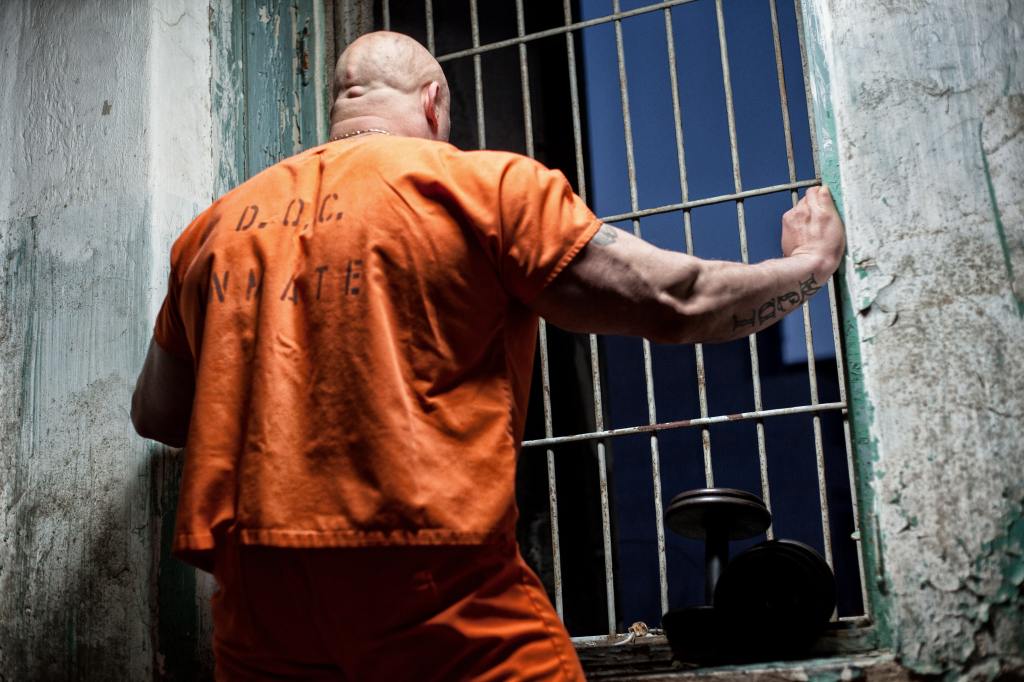
“But the Scriptures [picture all mankind as sinners] shut up and imprisoned by sin, so that [the inheritance, blessing] which was promised through faith in Jesus Christ (the Messiah) might be given (released, delivered, and committed) to [all] those who believe [who adhere to and trust in and rely on Him].”
Lots of people believe they can get into heaven by being good people and doing good works, but the Bible makes it very clear that that is not true. We can never be good enough. We can never do enough good. In fact, the Law was given so that we would see just how far we miss the mark. The Law shows us that we are prisoners to sin. We can’t release ourselves. We don’t have the keys. We don’t have the authority. We are all guilty of missing the mark.
But God had a plan. He sent His own Son, Jesus Christ, the Messiah. Jesus has the authority to pay the penalty for us and to release us from our sentence. He holds the keys. When we receive Jesus Christ by faith, that inheritance is freely given to us. We have freedom in Jesus because of His work on the cross. When we put our trust in Him and rely on Him, we demonstrate the faith we need to release our blessing: freedom from sin and redemption from the Law.
Father, I thank you for your Word, which shows me that no matter how hard I try, I will never be able to do enough to free myself from sin. I thank you also that your Word shows me that I don’t have to free myself. You have done the work for me. Jesus died on the cross in my place. By believing in Him, trusting in Him, and accepting Him by faith, the door to my cell has been opened. I am free from the law of sin and death. I have an inheritance in Christ. Thank you for blessing me with such a great inheritance. In Jesus’ Name, Amen.
Schools are closed throughout the country. Some are closed until April 6th. Others have extended their closures into May. Some have suspended schooling for the rest of the school year and will not resume until fall. There’s a lot of confusion about what will happen with public schools. Will the students have to make up the time? Will online schooling count? Are parents who have children at home now homeschoolers? Are they crisis schoolers? One thing is for sure there are tons of articles all over the internet about what parents should do to educate their children while public school is suspended.
Not everyone educating their children at home right now is a homeschooler. Homeschoolers are parents who have voluntarily chosen to educate their children at home. They’ve studied the options, selected curriculum, and made a plan of what they want to accomplish. They have varied reasons for homeschooling, but most are plugged into homeschool communities where they can get advice and help with their curriculum, field trips, resources, and legal compliance. Some homeschooling parents are former educators. Some are not. But all of them believe that it is the parent’s job to educate their children, and they take that responsibility very seriously.
Some parents thrust into educating their children at home are using resources provided by their school districts. Districts equipped for distance learning are utilizing online resources, web classes, etc. in order to continue their normal curriculum in a home environment. In Utah’s Davis School District, for example, teachers are compiling weekly check lists of curriculum to be covered, providing access to websites to facilitate learning, engaging students via email and online check-ins, and offering limited on site school office hours for tutoring for those students who need it. The district passed out tablets to students who needed them in order to accomplish digital learning.
In Michigan, schools that are not registered with the state for online learning are not able to continue with their curriculum. Some teachers are still giving out assignments, but they can’t grade the assignments and the days done online will not ultimately count toward the state requirements for school attendance. Some schools and teachers aren’t even doing that. In other states, teachers have put together resource packets which parent can pick up and turn in at regular intervals. This is what I would define as “crisis schooling.”
Even so, there are some parents looking at the current state of education, the current crisis, and the current availability or lack of options and considering whether homeschooling might just be a better option altogether. As a homeschooler, I’d like to offer some tips and resources for parents in any of these situations to try to give you a bit of encouragement in a time of uncertainty and stress.
You don’t have to be a teacher to teach. Public education as we know it in the US is a fairly modern invention. While variations in public education and schools date back to colonial times, a structured public school format from elementary to high school didn’t emerge until the 1930’s. One room schoolhouses that taught students who were at different grade levels at the same time serve as an example that schooling your children in different grades can be done. Also, before standardized curriculum came into existence, there was a lot of flexibility in how learning occurred. We can utilize these ideas to keep learning interesting and exciting for students who didn’t like school and aren’t enthusiastic about “doing school at home.”
One of the biggest factors in school success is parental involvement. Parents who value education, who partner with their child’s teachers, and who show an interest in what’s going on produce children who do better in school over all. You can’t get more involved in your child’s education than acting as your child’s educator. As such, your values and priorities are on display for your child. Your child is now going to be receiving one-on-one instruction and attention. That’s a huge advantage over most public school classrooms where teachers can have 25+ students to work with!
Probably the biggest fear of parents who are currently tasked with educating their child at home is their fear that they are unqualified. The truth is that you are eminently qualified to teach your child. After all, you taught them how to walk. You taught them how to talk. You taught them how to care for themselves through learning to dress themselves, wash themselves, feed themselves and use the bathroom on their own. You have done a huge amount of educating your child already! You know your child best. You know what they respond to, what motivates them, what they struggle with. You know what they like and don’t like. These are huge advantages when it comes to education, and it’s one of the reasons most teachers ask you to fill out some kind of student survey with questions like this about your child at the start of the year.
In fact, before the high school years most teaching degrees focus on things like classroom management, educational theory, and the politics of the school board system rather than actual subject matter. It isn’t until you get to the high school level that teachers are required to have an educational degree that includes a majority of credit hours in the specific subject they plan to teach. Even substitute teachers are only required to have a bachelor’s degree. It can be in any subject. Even if you didn’t go to college, a desire to see your child succeed in school will go a long way to making up for any deficiencies you may have.
Home school curriculum options are often scripted. As long as you follow the script, your child will learn what they need to learn. There are lots of resources and helps to cover different ways of teaching a subject or troubleshooting problem areas that can help learners with differing strengths understand the concepts being taught. You don’t have to know everything to be a success. You just have to be willing to try. Many parents find themselves learning right along with their child, which can help instill a lifelong love of learning in children.
If you want to begin homeschooling officially and continue after COVID-19 has passed, you need to start by learning your state’s laws about homeschooling. Different states require different things. Some require attendance records. Some require standardized testing at various intervals. Some require a curriculum review. Others require only that you teach the same subjects as your local public school district would teach. The best resource for making sure you are in complete compliance with local homeschooling laws is the Homeschool Legal Defense Association. HSLDA is active in helping homeschoolers with legal compliance, defending homeschoolers in legal battles related to homeschooling, and keeping homeschoolers informed on any proposed changes to the laws and requirements in their state. They provide resources and templates, including those for things like student IDs and transcripts.
There are a wide range of homeschooling curricula options on the market. There are religious options as well as secular options. There are options that are heavy on worksheets and structure, and options that are more literature based. There are even options for classical education that includes subjects like logic and Latin. Your best bet is to find a curricula that’s easy to use, covers the necessary subjects you want to cover, and also fits your child’s learning style. If you have a child who loves to read and listen to stories, you want to lean toward a literature-based curricula like Sonlight or Bookshark. If you have a child that does better with worksheets you may want to try Abeka. For classical education, you might try Veritas. Want to search out a curriculum tailored to your needs? Use Cathy Duffy’s review website’s advanced search option.
What if you just want to take advantage of some unique learning opportunities as they come? With everything closed or restricted due to social distancing, there are tons of resources for online learning opportunities as well as online field trips and virtual tours. This website provides resources for online learning experiences for various grade levels as well as information on school closures due to COVID-19. This website provides a list of resources organized by subject as well as by grade level. Want a virtual field trip? Try these website options: weareteachers.com , discovery education, weare themighty.com, and scholastic. Want to take a virtual tour? Try these articles from Good Housekeeping and Town and Country Magazine.Virtualfreesites.com lists over 300 options for museums, exhibits, points of interest, and guided tours online. Online libraries like Audible and Epic have offered free resources to children out of school. Technology allows you more educational opportunities than you can imagine.
Bottom line: Learning doesn’t have to look any particular way. Learning can happen anywhere at any time. You can be very structured or very relaxed in your approach. It’s up to you and what works best for your family situation. Learning happens as we engage with each other. It can look like family game night, cooking together, reading together, or gardening together. Math skills, science skills, and reading skills can be practiced in a variety of hands-on, real-life practical ways that can reinforce what your child learned in school without feeling like school at home. If you’re in quarantine together, take some time to learn together. Find a family hobby. Learn a new craft. Take advantage of the opportunity to slow down, reconnect, and rest. Life may never go back to the way it was, but it can go back to something better!
“I write these things to you who believe in the name of the Son of God so that you may know that you have eternal life.“
There are lots of things that bring doubt into our lives. The devil loves to stir up doubt. Along with deception, it’s his favorite weapon to use against believers. After all, doubt worked in the garden. Satan got Eve to doubt what God had said, and using that doubt it was easy to deceive her into disobeying God’s commands. In our lives, Satan uses doubt in all kinds of ways to move us into deception, but God has given us a weapon.
The Word of God is the Sword of the Spirit. It is our offensive weapon to use against the attacks of Satan. When we establish our life in the Word of God, we can not be shaken. When doubt comes, we answer back with what God says about the situation. No matter how we feel, we know that God’s Word is Truth.
John tells us that he wrote all these things so that we may know. Scripture isn’t just nice thoughts. It doesn’t offer us just good teaching to guide our lives. Scripture exists so that we may know. When we allow the Word of God to penetrate our hearts and to become a part of us, we can know with assurance the will of God, our purpose in life, and our assurance of eternal life because of Christ’s death and resurrection on our behalf. That’s why meditating on the Word of God is so essential. It gives us assurance of our identity in Christ, of God’s character and will, and of our inheritance as His children.
Father, I thank you that you have given me your written Word so that I can KNOW that I have eternal life through Jesus Christ. I thank you that it doesn’t matter how I feel in the moment. I can have assurance because your word is True! I will meditate on your word. I will hide it in my heart. I will use it as a sword against the attacks of doubt that the enemy sends my way. It is a firm foundation and can never be shaken. I do not have to wonder. I do not have to guess. Thank you that I can KNOW by standing on your word. In Jesus’ name, Amen.
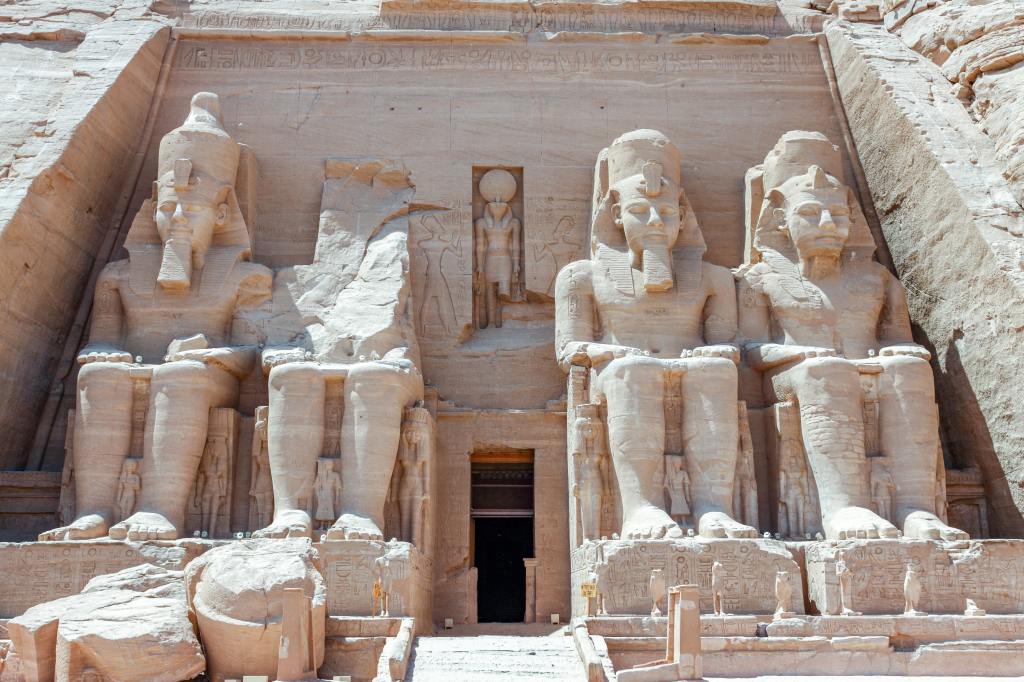
With the Coronavirus all over the news, there’s been a lot of talk of plagues. It got me thinking about the plagues in the Bible. God sent plagues to correct people. It got their attention. He also provided a means of escape. No plague in the Bible lacked a way out. The devil comes to steal, kill, and destroy, and that includes sickness for sure. I don’t think God creates illnesses, but I do think that God uses these things to bring about a better purpose. Whether or not you believe God sent the Coronavirus as a judgement on the world (personally, I don’t), I think it’s serving a purpose of drawing back people who have fallen away from God, making us all slow down and take time to be quiet, and bringing families back together. God takes what the enemy meant for evil, and He turns it for good. So I decided to take a closer look at the ten plagues of Egypt, the scientific explanations, their significance to the Egyptians themselves, the purpose they served to bring correction, and what we can learn from them.
The Plague of Blood
The first official plague to strike Egypt was the plague of blood. Aaron was commanded to take his staff and to strike the waters of the Nile to turn them to blood. Moses confronted Pharaoh and warned him of this plague before it came. This plague affected both the Egyptians and the Israelites alike. No distinction was made between the groups. This plague could be duplicated by the Egyptian magicians, so Pharaoh hardened his heart against the message of Moses and Aaron.
Scientific Explanation: The waters weren’t really turned to blood. Instead, ancient peoples mistook a red algae bloom for blood. Red tides often occur in both fresh and salt water sources. The algae releases toxins that poison fish and produce a foul smell. An alternative explanation is that the heavy rains in Ethiopia caused a deposit of red clay to enter the Nile, poisoning the fish and turning the water red.
I think this explanation denigrates people who lived in ancient times. We like to think that our modern technology and advances in science make us smarter and wiser than our ancestors, but this isn’t necessarily true. The Bible clearly says that the water was turned to blood not that the water looked red like blood, and I think ancient peoples knew what blood would look, feel, and smell like. After all, they butchered animals, and in some cases carried out ritual sacrifices. In addition, this plague affected water even in storage jars, which can not be explained by simple algae bloom or a deposit of clay.
Egyptian significance: The Egyptians had several gods associated with the Nile: Hapi (the deification of the Nile’s annual inundation), Sodpet/Satet (also associated with the Nile’s flooding), Khnum (creator of water and life), Hatmehit (guardian of fish and fishermen), and Osiris (whose bloodstream was the Nile). The Nile’s flooding was greatly significant to Egyptian life. The annual flooding provided fertile soil for crops to grow. Irrigation of the Nile’s waters watered the crops of the region. Fish provided a primary food source for the Egyptians. Even beyond the Nile itself, water is important to human life.
The plague of blood struck all aspects of the Nile. It turned not only the waters of the Nile itself into blood, but it also affected water in irrigation ditches, in reservoirs, and in vessels throughout the land of Egypt. There was no drinkable water in Egypt for seven days. This was significant because the number seven was considered the number of completion, perfection and effectiveness in Egypt. The number was also associated with the symbol for water, which was represented by seven zigzag lines.
Analysis: The plague of blood proved that some of the most powerful deities of the Egyptian pantheon, including Osiris one of the three most powerful gods, were no match for the God of Israel. Pharaoh had ordered the execution of all male Israelite babies by throwing them into the Nile. By turning the Nile into blood, God showed His judgement and retribution on Egypt for the killing of these babies. The innocent blood of the babies was brought to the surface of the waters and plagued Egypt for seven days. God is a God of justice, and He exposed the sin of Egypt with this first plague.
The Plague of Frogs
The second plague to strike Egypt was a plague of frogs. Frogs began to come out of the Nile in huge amounts. They were everywhere! Again, Pharaoh was warned of this plague before it came, and again Aaron’s staff was stretched out over the waters to produce the frogs. The plague affected both the Egyptians and the Israelites alike. No distinction is made between the peoples. Again, Pharaoh’s magicians are able to duplicate the plague, giving Pharaoh an excuse to harden his heart. This plague, however, prompts Pharaoh to recognize God at some level because he asks Moses to pray to God to take the plague away. God removes the plague at the time set by Pharaoh.
Scientific Explanation: For this one, science points to the fact that the red tide occurred first. They say that the red tide would have depleted food sources for the frogs, prompting them to seek food outside the water sources. A similar incident occurred in Greece as recently in 2010. Likewise, throughout history there are stories of “raining frogs”. Red clay deposited in the Nile would also have caused a migration of frogs by poisoning the fish and depleting the food source.
Many of the plagues of Egypt have natural explanations given Egypt’s location and ecology. However, the plagues were sent in vastly superior numbers to what would normally have occurred. In this case the frogs were in beds and houses, in kneading troughs and ovens. There was not an area where there were not frogs. It’s a little difficult to believe that this kind of frog population naturally occurred in the Nile region and was simply made obvious by a disruption to the Nile.
Egyptian significance: The most likely god/goddess associated with the plague of frogs is Heqet, fertility goddess and goddess of water renewal. This goddess had the head of a frog, and frogs symbolized life-giving power in Egyptian mythology. Heket was the wife of Khnum. She was said to blow life into the bodies that Khnum formed from dust. Frogs were associated with the court of Hapi and with Nun, Kek, and Heh who were depicted as men with frog’s heads. Egyptians considered frogs to be sacred because they lived in two worlds: water and land. Stepping on a frog, even accidentally, was punishable by death.
The plague of frogs attacked the creation myth of Egypt. It also turned the “blessing” of fertility and life in the form of frogs into a curse. With frogs on every surface, the Egyptians could not possibly avoid stepping on them, causing them to violate their own laws and to bring death upon themselves as a result. These sacred animals then died all at once as a result of Moses’ prayer, and now these sacred animals were gathered into putrid piles.
Analysis: God showed Himself to be the true Creator and giver of life. It was God who created the frogs, God who caused them to proliferate in numbers larger than normal, and God who causes them to die in an instant at the time set by Pharaoh. While the magicians could bring the frogs, they could do nothing to remove them. Only God could do that. God proved that He was the one who breathes life into what He creates. He is the one who controls life and birth. What God intends to be a blessing (birth and fertility), He can change into a curse as He did in this plague of frogs. Once again, Egypt’s sin is brought to the forefront. This time it is their sins against their own gods by their own rules in the form of stepping on frogs.
The Plague of Lice
The third plague on Egypt was the plague of lice or, in some translations, gnats. Aaron was told to take his staff and strike the dust of the ground to bring forth the lice. Pharaoh was not warned of this plague before it happened. This plague also struck both the Egyptians and the Israelites. No distinction was made between the people. But this time the magicians could not duplicate the plague. They attributed this plague to the finger of God.
Scientific Explanation: This plague, Hebrew word Keenim, can refer to lice, fleas, or gnats. Working off the earlier algae bloom and subsequent arrival and death of frogs, it makes scientific sense that the next plague would include insects that frogs would have naturally controlled. Again, the issue here is less that the phenomenon can be explained than the fact that the numbers involved seemed to be exponentially more than what can be naturally explained.
Egyptian significance: Here it is less important that the plague was of lice or gnats than it is that these insects came from the dust of the ground. Geb, also called Seb or Keb, was the god of the earth, literally of the dust. Now instead of the earth bringing forth crops and life and abundance, it brings for lice and gnats. Geb is not powerful enough to prevent this plague.
In addition to Geb, this plague also diminished the power of Har-pa-khered (Horus in child form) who was invoked to ward off dangerous creatures and Imhotep, the god of healing, as well as the other healing gods. Even Pharaoh himself was afflicted with the lice, and Pharaoh was considered to be a god in his own right.
Analysis: Once again, God reveals Himself as the only true God. He has used the dust of the ground, a link to creation in Egypt, to bring forth lice. Not only has He shown Geb to be impotent to stop this plague and shown that the various gods of relief and healing are powerless as well, but He has prevented the pagan priests from even approaching their gods to worship them properly. You see, the priests of the various gods of Egypt were required to undergo cleansing rituals specifically designed to prevent lice. Lice were considered to be unclean and to make any priest afflicted by them unclean as well. The plague of lice made all the priesthood of Egypt unclean, preventing them from serving their gods and entering their temples. As a result, the priests and magicians acknowledge that this plague is from the finger of God Himself. Pharaoh knows the solution to these plagues is to let the Israelites go free, but his heart is hard and he refuses to listen, even to the priests.
The Plague of Flies
The fourth plague is a little bit different because we don’t truly know what this plague consisted of. Modern interpretation says that it referred to swarms. Some have added that these were swarms of flies, but it is also likely that they may have been swarms of scarab beetles, which were also sacred to the Egyptians. In this case, the staff of Aaron is no longer involved in causing the plague. Instead, Moses simply proclaims that the plague will come. Pharaoh is warned of the plague before it occurs. As before, the plagues from this point forward cannot be duplicated by the magicians. The other difference here is that God now makes a distinction between the Israelites living in Goshen and the Egyptians. This plague strikes the Egyptians, but does not strike the land of Goshen where the Israelites live.
Scientific Explanation: The Hebrew word for this plague is arov and translates to “mixture.” Interpretations for what this plague consisted of range from hornets and mosquitoes to wolf-like beasts and wild animals. Some scholars consider this to be a plague of venomous snakes or scorpions, but current interpretation says the plague was flies. Just as with the lice, swarms of flies would have been a natural byproduct of climate change that could have started the red tide or from the death of the frogs.
Egyptian significance: So if this plague was a plague of flies it could have been viewed as an attack on Uatchit, the fly god of Egypt. But let’s consider that this plague was a plague of swarms and might involve other flying insects like the scarab beetle. In that case, this plague attacks the power of Khepri. Khepri had the head of a fly and was considered one of the gods of creation. Khepri was associated with the scarab beetle and dung beetle. As such, he was seen as a god of rebirth and resurrection. Khepri was also associated with the sun because dung beetles form dung into balls and roll it along the ground, mimicking the movement of the sun across the sky.
Analysis: God has proved Himself more powerful than Khepri. Khepri could not even control the beetles associated with him. Beyond that, God showed Himself more powerful than the wind god, Amun, who could have blown the swarms away. Here again, only Moses’ prayer on behalf of Pharaoh causes the flies to die all at once so that not a single fly is left. God has also shown Himself to be mindful of His people. From this point forward, God makes a distinction so that none of the plagues that affect Egypt affect any of the Israelites in Goshen. Because of this distinction, the scientific explanations of the plagues fall short. There is no scientific reason for a plague to hit Egypt but avoid Goshen. Now we see the sovereign power of God at work as well as His protective power over His people.
Pharaoh finally acknowledges that God has power over Egyptian deities, but he doesn’t truly understand who God is. He thinks that he can bargain with God and trusts in his own power more than in God’s power. Pharaoh offers to let the people go but for less time than God demanded. He then offers to let the people go but not as far away as God demanded. Pharaoh’s heart is hardened to the point that he cannot see the reality of God and thinks that God can be manipulated and controlled.
Diseased Livestock
The fifth plague was a plague on the livestock of Egypt. Again, this plague came by the word of Moses. Not only was Pharaoh warned of the coming of this plague, but a time was set by God so that Pharaoh had ample opportunity to change his mind and let the people go. This plague wiped out the field animals of the Egyptians, but it did not touch the animals of the Israelites. A plague like this would have affected Egypt on many levels: crippling the economy by affecting food production and transportation as well as by affecting the military of Egypt.
Scientific Explanation: This mysterious and highly contagious plague killed all of the cattle and livestock. Given the previous explanations of the lice and flies, it makes sense scientifically that these plagues would result in infectious disease spread through the bites of these insects. According to researchers, a similar viral illness called rinderpest has had devastating effects on livestock throughout history. The most recent case of this illness was diagnosed in 2001. It is now considered eradicated as of 2010. Rinderpest is spread through contact with infected animals, contaminated water, and possibly by the breath of infected animals. Once again, however, the science fails to explain why the plague would only strike the field animals of the Egyptians and not all the field animals equally.
Egyptian significance: The Egyptians didn’t just value cattle and livestock as property of great monetary value, they also considered certain bulls and cattle to be sacred. The creation god Ptah was depicted as an Apis bull. These bulls were embalmed and entombed just as pharaohs would be. The sun gods Atum and Re were combined into a deity called Mnevis by the Greeks that was depicted as a black bull. Sky and creation goddesses Nut and Neith were depicted as celestial cows that gave birth to other gods. Finally, Hathor the goddess of love and protection, music, dance, foreign lands, and childbirth, is depicted as a cow-headed goddess. She was highly favored among Egyptians and was seen as the mother goddess to pharaoh.
Analysis: God has hit Egypt hard with this plague. Their sacred cattle have been decimated. Their economy is in tatters. Cattle were used in food production, transportation, farming, and military campaigns, and now they are all dead. Pharoah does an investigation to find that the cattle of the Israelites have not been touched, but his heart is still hard. The Egyptians are probably seeking protection from their gods, and yet their gods are powerless to stop the plagues. They are silent and impotent in the face of the God of the Israelites. God has shown that He is in control of the property of the Egyptians.
The Plague of Boils
The sixth plague to hit Egypt is the plague of boils. The plague would affect both animals and people. The plague is brought on by Moses throwing soot from Pharaoh’s furnace into the air. There is no warning given to Pharoah, but the plague is brought on by throwing the soot into the air in his presence. Here again, a distinction is made between Egypt and the Israelites. This plague hits everyone and makes it so that the magicians can not even enter the presence of Pharaoh, Moses, or Aaron due to their affliction.
Scientific Explanation: Boils aren’t all the uncommon. Generally, they are caused by Staph A. infection. Again, the explanation claims that boils would be a natural byproduct of the plagues of lice and flies since they can carry infectious disease. Interestingly enough, Rinderpest was thought to be related to small pox because they have analogous symptoms. While there is no known evidence that humans can get rinderpest, they can absolutely get smallpox, and smallpox was not unknown to Ancient Egypt. There are mummies with smallpox scarring on their skin. Smallpox blisters could be described as boils. Cattle do get cowpox, which is similar enough to smallpox to provide limited immunity in humans when they are exposed to cowpox.
Egyptian significance: This plague was an attack on the goddess Isis. A member of the Egyptian trinity, Isis along with Thoth was believed to have taught the secrets of medicine to the Egyptians. She was the goddess of life as well as the crone of death and was often depicted on coffins. This plague would have also targeted Sekhmet, the goddess of epidemics, and Serapsis and Imhotep, gods of healing. Again, this plague made the priests and magicians unclean before the gods. Likewise, it made Pharaoh himself unclean. Pharaoh was considered to be a god himself, and now he is unclean according to the laws of purity.
In addition, Egyptians often performed human sacrifices to their deities. They would burn the bodies on an altar and scatter the ashes into the wind. Wherever the ashes fell was supposed to bring blessings on the people. Here God has flipped the script. Instead of bringing blessing, God uses the ashes to bring judgement upon the people.
Analysis: Now God has revealed the sin of the people, their uncleanness, on a national level. All of Egypt is covered in boils. All of Egypt is shown to be unclean. All of Egypt, even Pharaoh, is in the same position. None of the gods are answering. None of the gods is doing their job of protecting the nation of Egypt. In the face of God, they are all powerless, but the people of God? They are protected. They are healthy. They are clean. God has covered them with His protection and His provision.
The magicians were the healers of Egypt. They are covered in boils. They are unclean. They can’t heal themselves. They can’t heal others. And these magicians never appear before Pharaoh again. The only people left standing untouched are Moses, Aaron, and God. God’s judgement was against the property of Egypt with the cattle, and now God’s judgement is against the people of Egypt themselves. This is personal.
The Plague of Hail
Now, we come to the seventh plague. Moses goes before Pharaoh and warns him again, but notice this time that God says He will bring the full force of His plagues against Egypt. Up to this point, God hasn’t released His full power. He has shown time and time again that the gods of Egypt are powerless and worthless, but He hasn’t even exhausted His full power yet. He has exposed the sin of Egypt on a national level and on a person level, but still this is not the full extent of His power.
God tells Pharaoh that He could have wiped out all the Egyptians by this point, but He has not because He wants them to know who He is. He tells Pharaoh that the plague coming will be a hailstorm the likes of which has never been seen before. He gives Pharaoh a full day of warning again. Time to repent. Time to save the things that have been left: the remnant. Bring in every animal left alive. Bring in the people. Whoever is not brought in to safety will die.
And now we see another distinction again. Not only does God protect His covenant people, as He has been doing for a while now, but He gives the opportunity for protection to anyone who fears His name. Some of Pharaoh’s officials have learned their lesson. They have seen the power of God. They believe what He says, and they respond in obedience. They bring in their animals and their servants.
Scientific Explanation: Around the alleged time of the exodus, there may have been a volcanic eruption on the island of Santorini. Volcanic ash in the atmosphere would have disrupted the climate of the region as well as its weather patterns. Volcanic eruption has been used not only to explain some of the plagues against Egypt but also the parting of the Red (Reed) Sea. Again, while hail was not unheard of in Egypt, the scope of this storm was to be unlike anything that had ever been seen before or would ever be seen since.
Egyptian significance: Hail would have been seen as an attack on several Egyptian deities. There was Nut, the goddess of the sky; Seth, the god of winds and storms; Shu, the god of air and bearer of heaven; Min, the god of fertility, vegetation, and protector of crops; Neper, god of grain; Horus, the third member of the Egyptian trinity who was a protector of crops; Osiris, ruler of life and vegetation; and Isis, who spins flax, since this storm destroyed only the flax and barley. None of these gods were able to prevent the large scale hailstorm. None were able to prevent the death of the animals left in the fields or of the slaves left in the fields. None could save the crops. At this point, ever member of the Egyptian trinity has been discredited. Only God is God of all.
Analysis: God has shown judgement on Egypt’s sins by striking their water, by striking their property, by striking their bodies, and now by striking their means of providing clothing and drink for themselves. He has destroyed the fish of the Nile. He has taken away their sources of meat and milk. He has stripped the fields of the flax and barley. The wheat and spelt are unharmed at this time, so the Egyptians at this point still have a food source. But here, God shows mercy. He allows those who will demonstrate obedience to avoid the punishment of their sin. The Egyptians who chose to listen to the warning of God are spared as are the Israelites.
The result of this plague is that Pharaoh admits his sin, but once again while he acknowledges God’s power and God’s righteous judgment, he still does not accept God for who He truly is. He begs forgiveness of his sin and asks Moses to pray to God for relief. Moses does so, and once the danger of the hail storm is gone, Pharaoh hardens his heart again. In the midst of crisis, Pharaoh pays lip service to God, but there is no real repentance here. He still believes that he is in control and not God.
The Plague of Locusts
The eighth plague on Egypt was a plague of locusts. Moses and Aaron go to warn Pharaoh of the coming plague, but this time God warns them that He has hardened Pharaoh’s heart and the hearts of his officials. Once again, God gives Pharaoh time to repent and to take a different path and avoid the plague of locusts. This time not only do some of the officials believe the Word of the Lord and give Him proper respect and reverence, but they plead with Pharaoh to do the same.
Scientific Explanation: Increased humidity and precipitation often foster the presence of locusts. So given that some of the plagues may have been the result of abnormal weather patterns, from a scientific perspective, it makes sense that locusts would be drawn to this area. Once locusts swarm they often ravage an area of its plant life. Anything left from the hail would be fair game as a food source for swarming locusts. Even today swarms of locusts pose a problem to farmers in the region. Once again, however, the scope of the plague is far beyond what would naturally occur. This isn’t just a swarm of locusts. It’s a swarm that covers every bit of the ground, turning it black. It’s a plague the likes of which had never been seen before nor would ever be seen again.
Egyptian significance: This plague would have targeted Seth, the god of storms and the wind. This plague would also target Min, since it wiped out what was left of any crop or food source in Egypt. Likewise, it targeted Anubis as guardian of the fields. The same gods targeted by the hail would have also been targeted by the locusts. The little bit of vegetation that was left has now been stripped bare. Serapia, the protector from locusts, was also impotent in the face of God. Not only does God bring locusts, He uses one wind to bring them and another to take them away. Hakhisesui is the Egyptian god of the east wind, while Hutchai was god of the west wind. By using both winds, God asserts that He alone is in control of all of creation.
Analysis: God tells Moses that these remaining plagues are being sent so that everyone will know the might of the Lord. Not only will the Egyptians know and pass these wonders on to their generations, but the Israelites will know as well. God has now shown that He controls the fate of Egypt. He controls their water. He controls their property. He controls their personal health. He controls their clothing. He controls their food. If a repentance does not occur, Egypt will be utterly destroyed.
Pharaoh again acknowledges the power of God but refuses to accept Him. He again tries to bargain and compromise his way out of the situation. He wants the men to go but not the women and children. Pharaoh still has a prideful spirit that leads him to believe that even now he is in control. God proves that He is not a god like Pharaoh has known before. He is not to be manipulated, not to be controlled, not to be bargained with. He is the final authority on what will happen. After the plague, Pharaoh again acknowledges his sin and cries out to Moses to pray on his behalf, but once again as soon as the plague is over and the imminent danger has passed, Pharaoh returns to his sin.
The Plague of Darkness
The ninth plague to strike Egypt is supernatural darkness. According to the Bible, this was darkness that was impenetrable. No one could see their neighbor. No one could move about. It was darkness that could be felt. Unlike the previous plagues, Pharaoh was not warned about the coming darkness.
Scientific Explanation: We’re back to theories of volcanic ash or an eclipse. The issue with the volcanic eruption is that the eruption happened 500 miles away. The issue with the eclipse besides the fact that the darkness lasted three days is that the people of Goshen, the Israelites, had light in their homes. An eclipse doesn’t explain how some people had darkness so thick they couldn’t see people next to them while their neighbors had light.
Egyptian significance: The sun god Ra, Re, Atum, or Aten was seen as the creator of everything. It was believed that he spoke all things into being. The Egyptians believed that day (Ra) and night (Apophis) were locked in battle with Ma’at, god of justice, keeping them in balance. By blocking out the sun for three days, God unseated Ma’at as the ultimate arbiter of justice. Likewise, the sun god Amun-Ra was seen as the supreme god over everything else. Now God has shown that He alone is God. He has defeated the entire pantheon of Egypt. Even the supreme god is no match for God.
Analysis: God plagued Egypt with an unnatural darkness. This was an area of the world where the sun shone all the time. The sun was their supreme deity, but now that deity is powerless. Even the lesser deity governing the moon is silenced. This isn’t basic darkness. It isn’t just an absence of light. It is a palpable darkness. It is a darkness with a presence of its own. Just as the number seven is significant to Egyptian religion, the number three is as well. This plague lasts three days. Three is the number of plurality in Egyptian religion and also symbolized completeness. Egypt had a trinity of Osiris, Isis, and Horus. God has defeated them all.
Once again, Pharaoh is prideful enough to think that he can dictate terms to God. He now offers to let the people go but to have their possessions remain, but this is not God’s plan. God has shown that He is the ultimate judge, the only Creator, and God over life and death, but Pharaoh still will not accept Him. Pharaoh has now expelled Moses and Aaron from his sight, thinking that by doing so he has also gotten rid of God, but God has one more plague for Egypt.
Death of the Firstborn
The final plague on Egypt is the death of the firstborn. It’s a plague that strikes humans as well as animals. Once again warning is given to Pharaoh and the people of Egypt. God uses the favorable disposition of the Egyptians toward the Israelites to enrich Israel before their exodus from Egypt. They obtain valuable possessions, silver, and gold from their Egyptian neighbors. Once again, a way out is given, but this time it is to the Israelites. If they will apply the blood of a lamb to their doorposts, the angel of the Lord will pass over them. We know that the Passover celebration was a symbol and a shadow of the ultimate redemption from death and sin bought for us by Christ. This is God’s redemption story played out in the final plague of Egypt.
Scientific Explanation: One theory is that the red tide released mycotoxins into the grain supply. The first born may have been the first to pick the grain and, therefore, would have succumbed to the mycotoxins first. Another theory goes back to the volcanic eruption. There was a village where all the eldest children died after a volcanic eruption. The researchers found that in that culture the eldest children slept on the floor, while younger children slept on an elevated platform. The eruption released deadly gasses that moved along the ground. The eldest children sleeping on the ground were trapped in these deadly gasses while they slept; whereas, the younger children slept above the level of toxic gas and so survived.
Egyptian significance: Pharaoh himself was considered to be a god. He maintained balance in the universe on behalf of his people. Not only did the people consider Pharaoh a god descended from gods, but Pharaoh considered himself to be a god and his firstborn son would take the throne after his death as a god in human form. Serket, goddess of protection, could not protect the firstborn elite from the judgement of God. Meshkenet, goddess of children and childbirth, could not protect the firstborn. Sobek, who represented the strength of the pharaohs, could not protect Pharaoh’s son. Renenutet, special protector god of Pharaoh himself, could do nothing.
Even the sacrifice of a lamb for the blood to be used for protection would have been aimed at Egyptian worship. Sheep were associated with Amun-Ra and with Khnum. To kill the sheep, roast it, and eat it would have offended the Egyptians indeed, and it would have demonstrated once and for all the superiority of the God of Israel.
Analysis: God has judged all of Egypt’s gods and shown them to be powerless against Him. He has judged the line of Pharaoh, and at the Red Sea, He will finish that judgement by destroying Pharaoh himself. God has made a distinction between His covenant people and any other people in the world. He has protected them from the plagues, and in the last plague He demands their active obedience for their salvation.
The plagues of Egypt weren’t just a show of power to the nation of Egypt to demonstrate that the Lord alone is God. They were also a message to Israel about who God is. God is a God of miracles and wonders. He does impossible things. No one can stand against Him. By remembering the miracles that God performed in Egypt, the Israelites could trust God to handle anything. If they had fully understood God’s nature and character, they would have fully trusted Him in the wilderness on the way to the Promised Land.
Take away Lessons:
God will punish sin wherever it occurs. Following another religious system does not make you immune to God’s judgement on sin. God alone is the ultimate judge.
God is merciful. He will give ample opportunity for repentance, but eventually those chances will run out. We are only given our lifetime to repent for our sin and to follow God. At some point, our life will run out, and we will face God’s judgement.
True repentance involves real and lasting change. It isn’t enough to seek God in times of crisis. That only lasts as long as the crisis lasts. If we do not truly repent, as soon as the danger has passed we will fall back into our old sinful patterns.
No matter what we serve, God is God. Idols come in many shapes and forms. Anything in our life that we put in the place of God is an idol, whether we realize it or not. God will do drastic things to draw attention to those idols and remove them from His place when necessary.
God is in control. There is nothing that surprises God. There is no crisis He cannot handle. God always has a plan. God always offers protection and provision to those who follow Him.
Then Jesus told him, “Because you have seen me, you have believed; blessed are those who have not seen and yet have believed.”
Poor Thomas. We have forever labeled him a doubter. That’s what he’s most remembered for. Not his missionary work in India, but for being a doubter. The thing is that doubting the word of others wasn’t so unusual in a disciple. Remember when Mary Magdalene came running in to tell the others that she has seen Jesus risen from the dead? They didn’t believe her. They had to run to the tomb to see for themselves. So when they see Jesus himself instead of just the empty grave clothes and they tell Thomas about it, it makes sense that Thomas didn’t believe.
The difference is that Thomas didn’t just want to see for himself. He wanted to touch for himself as well. He made a statement that showed a lack of willingness to believe when he demanded that he place his fingers in the nail marks. It wasn’t enough for Thomas to hear and see; he wanted more. How many of us have made some stubborn demand of God before we trust Him? Things like, “God, if you do this for me I will believe in you.”
Look at what happens next. Jesus appears when Thomas is present, and He knows what Thomas said to the other disciples. He offers Thomas the chance to do what Thomas had demanded in order to believe, but Thomas has changed his mind. As soon as he sees the Lord, he acknowledges him as Lord and God. Thomas saw and believed. Beyond believed in Jesus, he acknowledged him as God. Thomas words to Jesus up to that point had only ever been used of Yahweh. Thomas got it!
Then Jesus gently tells Thomas that he is blessed because he saw and believed (like all the disciples were blessed because they saw and believed), but there would be people who would be blessed more because they would believe without needing to see. It was less a chastisement of Thomas than it was a beautiful promise to the rest of us. We don’t need to live in the times of the disciples. We don’t need to see Jesus first hand like they did in order to have a deep and abiding faith. They lived with him and walked with him and even they struggled to believe in Him. We can have a deep and abiding faith without the input of our five senses. What an awesome promise Jesus gave us when He spoke to Thomas!
Father, I thank you that because you allowed your disciples to see you and touch you after your resurrection and you gave them a faith based on solid evidence of their senses, I am allowed the opportunity to believe without seeing. Because those men who walked with you were sure and firm in their testimony, I have a chance at deep and abiding faith, too, even though I have not yet seen or touched you. Thank you for the promise that my faith could be as real and true as theirs was. Thank you for the promise of your blessing on all who believe even though they have not yet seen. In Jesus’ name, Amen.
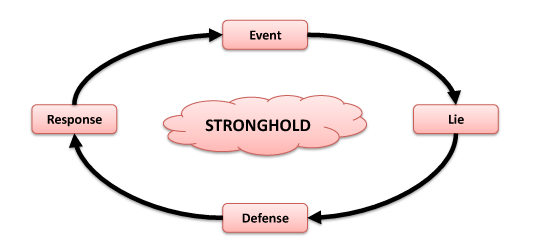
In my post, Who Are You Listening To?, I talked about finding freedom from strongholds. A stronghold is a reinforcing pattern in our lives that traps us in a pattern of thinking and behavior. It’s basically an area of our life that acts as an open door for Satan to influence us, torment us and have power through us. Strongholds give Satan the right–the legal authority–to enter our lives in that area. Because strongholds are reinforcing patterns of behavior, they develop over time. We have a negative experience. That negative experience leads us to agreeing with a lie of the enemy. As we come into agreement with that lie, we make a judgement. This judgement might cause us to harbor unforgiveness in our hearts. As a result of this judgement, we may make an inner vow. We choose a defense, a way of protecting ourselves from the negative event/experience. Others respond to our defenses. Their negative response can reinforce our original negative experience or become its own negative experience, and the pattern continues to repeat itself.
Anatomy of A Stronghold
I want to focus in on the judgement and inner vow portions of constructing a stronghold in our lives. Deconstructing these strongholds and breaking our agreements with the lies we have believed is the first step toward freedom in Christ. A part of that is renouncing our judgements and getting rid of any inner vows we may have made as a result of those judgements. Hebrews 12:15 (NASB) says: “See to it that no one comes short of the grace of God; that no root of bitterness springing up causes trouble, and by it many be defiled…” A judgement can often lead to this root of bitterness. It definitely causes us to fall short of the grace of God, so we want to be sure that we deal with this area of our lives as soon as we become aware of it.
What is a judgement? A judgement is a generalized negative decision and expectancy against something or someone. We can make judgements against an individual or against an entire group of people. We can make judgements against ourselves. We can make judgements against God. Luke 6:37 (NLT) warns us about the dangers of making judgements: “Do not judge others and you will not be judged. Do not condemn others, or it will all come back against you. Forgive others, and you will be forgiven.” Matthew 7: 1-5 (NIV) also talks about judging others: “Do not judge, or you too will be judged. For in the same way you judge others, you will be judged, and with the measure you use, it will be measured to you. “Why do you look at the speck of sawdust in your brother’s eye and pay no attention to the plank in your own eye? How can you say to your brother, ‘Let me take the speck out of your eye,’ when all the time there is a plank in your own eye? You hypocrite, first take the plank out of your own eye, and then you will see clearly to remove the speck from your brother’s eye.“
It isn’t that we aren’t to judge anything. Obviously, we need to make judgements every day. It’s the manner in which we go about making those judgement calls that are important. The Bible tells us that God is to be our source. He’s not only the source of everything we need, He’s also supposed to be the source of our determinations about right and wrong. John 9:39 (NLT) says: “Then Jesus told him, “I entered this world to render judgment–to give sight to the blind and to show those who think they see that they are blind.” When we think we know right from wrong and we look to ourselves as the final source of judgement, we are committing the sin of idolatry.
Idolatry sets anything else in God’s place. It doesn’t let God be God. When we form judgements from our own power of reasoning, we remove God’s place and replace it with our own thoughts and actions. When we pass a judgement on a person or a situation, we place a label on them. We put a label on that says who they are based on how we see them. When we’ve built a judgement about another person, we have closed the door to what God wants to say about them. When we look at a person or a situation, we only see a small sliver of the truth. We only know a small piece. God is the only one who sees the full context. As a result, God is the only one who has enough information to judge things rightly.
Proverbs 23:7 says, “For as he thinks in his heart, so he is.” When we place a label on another person, it affects how we see them. It changes us, and it changes how we live our lives. We can form these judgements/labels from our own experience, or they can be learned from others. A great example of this is racism. Racism is a judgement about a group that is learned from others. When we come into agreement with a judgement or label, we are really coming into agreement with Satan. Satan wants to sow division and discord, and an excellent way of doing that is through judgements. Breaking our agreement with judgements and labels puts us in a place to hear God. We hear how He views the person or the situation. Hearing God removes the power of the label to rule our view. Our yesses should be God’s yesses, and our no’s should be God’s no’s. Judgements can lead us to inner vows.
What is an inner vow? An inner vow is a determination set in our mind and heart to protect us from pain. It’s a promise that we have made to ourselves. An inner vow is absolutely swearing to yourself something that you feel and believe you are obligated to carry out. “Always” statements and “never” statements are an indication that an inner vow may be at work in our life.
An inner vow gives us:
A false sense of self-protection against future rejection or pain
A false sense of hope for the future
An agreement with the devil
When we make inner vows, we are partnering with the enemy and showing a lack of trust in God’s love for us and in His ability to comfort us, protect us, and be Lord in our life. Inner vows put all the burdens for transformation on us, and we are powerless to effect that level of change in our lives. Matthew 5:33-37 warns us about making vows: “Again, you have heard that it was said to the men of old, ‘You shall not make false vows, but you shall fulfill your vows to the Lord [as a religious duty].’ But I say to you, do not make an oath at all, either by heaven, for it is the throne of God; or by the earth, for it is the footstool of His feet; or by Jerusalem, for it is the city of the Great King. Nor shall you make an oath by your head, for you are not able to make a single hair white or black. But let your statement be, ‘Yes, yes’ or ‘No, no’ [a firm yes or no]; anything more than that comes from the evil one.” These are the places where we can unconsciously partner with the devil in our lives.
Identifiers of Inner Vows:
Can’t commit to relationships or other commitments
Can’t trust
Can’t accept help from others
Can’t relax
Have a strong desire to control others
Can’t break a pattern of behavior
Examples of Inner Vows:
I’ll never by like my father/mother.
I’ll never let anyone hurt me again.
I’ll never be poor again.
I’ll never be able to trust or have confidence in (insert person or group of people here).
So what do we do? We need to go to God and ask him to reveal to us any judgements or inner vows we may have made in our lives. Once God has shown us the existence of a judgement, we must repent for the idolatry of not leaving God in the position of controlling how we view things. We must repent for coming into agreement with the judgement. We also need to repent for the inner vow we have made. We need to ask God to reveal to us the truth of what happened or the truth about the person/group of people. We need to forgive any person involved in the circumstances surrounding the negative experience, where it all started. We also need to forgive ourselves for making these judgements and vows. Then we need to confess that we are coming into agreement with God’s truth about the situation and submit our emotions to Him.
Lord, You’ve helped me to identify the roots of judgement and inner vows. I want to repent for making these against myself, against others, and against you. I renounce those inner vows in the name of Jesus. Lord, I pray that You release Your grace, Your mercy, Your healing and a revelation of Your heart. Today, I put a stake in the ground of new beginnings; I am going to refuse to allow the Enemy to provoke me into hatred, bitterness, and a hardened heart. Lord, retrain my mind so I can hear your voice about what you say and about who I am in You. Please help me exhibit the fruit of the Spirit and not my flesh.
It’s important that as we approach negative experiences, we allow God to speak to us in the moment. Pause when you feel pain or hurt and ask God for an explanation of what is going on and what is at play. When you ask God, He will speak to you. He can speak in lots of ways, but it will be a way that you can hear and understand. If God doesn’t speak to you in that moment, it probably means that the issue isn’t yours. Don’t take responsibility for it. Remember that God won’t air other people’s dirty laundry, so if He doesn’t show you your part in the situation, then let it be.
Asking God for His take on things can de-escalate conflicts in your relationships, help you hold on to God’s righteous judgements and His truth, and prevent you from making judgements and inner vows of your own. We don’t want to build up strongholds in our lives or give territory to the enemy! We want to live lives of freedom and victory in Christ Jesus!
“Come,” he said. Then Peter got down out of the boat, walked on the water and came toward Jesus. 30 But when he saw the wind, he was afraid and, beginning to sink, cried out, “Lord, save me!” 31 Immediately Jesus reached out his hand and caught him. “You of little faith,” he said, “why did you doubt?”
We often read this story of Peter walking on the water as a rebuke of Peter for not having enough faith. We often rebuke ourselves for not having enough faith, but is that what’s really going on here? The Greek here for “little faith” is oligopistos. It’s a combination of two words that mean “small amount” and “faith.” It makes sense that it would be translated as “little faith,” then. But there’s something interesting about this word. It doesn’t exist outside the New Testament, and it doesn’t exist outside of Jesus talking to His disciples.
Of all the people in the New Testament stories, you’d think the disciples would have had faith. After all, they literally ate, drank, slept, and walked everywhere with Jesus. They listened to His teachings. They got insider interpretations of His parables. They witnessed nearly all of His miracles. They knew Jesus. Peter even identified Jesus as the Christ. So how could they not have enough faith?
Well, it turns out this word is used in very specific circumstances. It seems to be used in moments of crisis. So a better understanding would be that this is a faith that crumbles under pressure. It’s a faith that gives out in the midst of crisis. It’s a faith that’s short-lived. Let’s be honest, Peter had faith. It took a large amount of faith to step out of that boat and onto those waves. As long as Peter was focused on Jesus, he walked on water. He. walked. on. water. Did you catch that?
But look what happened. Peter took his eyes off Jesus. Instead of focusing on who Jesus was and what Jesus said, Peter started focusing on his surroundings. He started looking at the waves and feeling the wind. He started to doubt. So in the moment of crisis out there walking on water, Peter’s faith crumbled, and he began to sink. Look at how Jesus responds. He immediately (the Greek word here means instantaneously; without hesitation) reaches out, catches hold of Peter, and hold onto him until they are both in the boat.
Then Jesus says, “You of little faith, why did you doubt?” Do you hear a rebuke in Jesus voice? I don’t. I hear Jesus saying to Peter, “Peter, you know who I am. You know what I can do. Why did you let your eyes wander? Why did you allow doubt to steal the power of your faith?” This is how the Message translation puts it: “Faint-heart, what got into you?” I really like that.
You see we can spend our whole life trying to get more faith–searching for a larger amount or thinking that we don’t have enough–when the problem isn’t our faith, it’s our doubt. If you think of faith and doubt as opposite sides of a teeter-totter, you can see how either side can overpower the other. When we keep our focus on Jesus, on who He is, and on what He says, our faith overpowers our doubt, even in a time of crisis. When we take our eyes of Jesus, doubt wins and our faith gives out. It’s not that we don’t have enough faith, it’s that our faith isn’t as long-lasting as it should be.
Father, I thank you that you have given to each one of us a measure of faith. I thank you that as long as I keep my eyes firmly fixed on you, faith wins. I know that if I focus on who you are and what you’ve said, my faith will last through whatever storm or crisis I am in. I only get in trouble when I give place to doubt and take my eyes off you. Help me to keep my focus on you in the midst of crisis, Lord. Give me a long-lasting, enduring faith. In Jesus’ name, Amen.








 A Beautiful Mess