“Be alertandon your guard; stand firm in your faith (your conviction respecting man’s relationship to God and divine things, keeping the trust and holy fervor born of faith and a part of it). Act like men and be courageous; grow in strength!“
As the church, it’s our job to be on the offensive in spiritual warfare. We must be alert and vigilant because we are in a war. This isn’t a time to stand with our head in the sand, thinking that it’s enough to profess to believe in Jesus. As we get closer and closer to the return of Jesus, more and more last ditch efforts of the enemy will ramp up in an attempt to keep people from meeting Jesus for themselves and accepting Him as Lord of their lives.
Satan doesn’t want anyone to escape the punishment that God has in store for him. He wants to take each and every one of us with him. But God doesn’t want any of us to join Satan in eternal punishment. It’s God’s desire that each and every person meet Jesus, repent of their sin, accept Him as Lord, and be reunited with God for eternity.
In order to finish strong, we need to be vigilant, to keep hold of our faith, and work to keep the same fervor and excitement about Jesus and His mission that we had when we first came to know Him. We are to grow into maturity and to grow in strength. It’s God’s desire that we keep moving forward. While Paul tells the Corinthians to “act like men,” this could just as easily be read “don’t act like infants anymore. Grow up!” If we aren’t maturing in the Lord, we are missing out on His plan for our lives. We need to be strong, be courageous, stand firm, and keep moving forward!
Father, I thank you that you have a plan for each of us. You want us to grow in our knowledge of you and in our trust of you. You want us to become mature believers who are more and more like you. Help us, Father, to hold firm to the faith. Help us to grow in strength. Help us to keep that fire burning within us that we felt when we first believe. We are your ambassadors to the world around us. Help us to be good ambassadors and good examples of your love for all of us. In Jesus’ Name, Amen.
Scripture memorization is one of the best ways to hide the Word of God in our hearts. In the heat of the moment, when we’re under attack by the enemy, having an arsenal of verses at our beck and call can end the attack before it’s even begun. When I was younger, we called Scripture memorization “sword drills.” After all, the Sword of the Spirit is the Word of God. It’s the only offensive weapon that we possess. If we want our sword to be effective, we have to know how to use it, and we have to keep it clean and sharp and ready. Memorizing Bible verses is a great way to do that, and the best time to start memorizing Bible verses is as soon as possible.
As an adult, it takes a bit more for me to memorize things. It can be done, but it doesn’t come easily. For children, however, memorization is a bit easier. The sooner we form good habits, the better. When we start memorizing Scripture from a young age, it sticks with us as we grow. It becomes a habit that we can rely on, even when the world around us gets busier and busier. The Bible tells us that those who seek God early will find Him (Proverbs 8:17). I want to give my children the best start possible, so I made sure that our daily homeschool lessons included Bible reading and Scripture memorization.
One of the best techniques that I used involved teaching my kids a verse for every letter of the alphabet. When I was in preschool, our teachers taught us the same verses. I didn’t remember all of them as an adult, but it’s amazing how many came back when I set out to teach them to my children. We use the alphabet memorization program in Kindergarten. It’s actually included in Christian curricula like Abeka and Sonlight. Sonlight even includes a CD which puts the verses to music, a very helpful tool for memorization. My oldest homeschooled child is now in the 6th grade. She still remembers these songs and verses, and I’ve caught her humming them and singing them to herself when she’s doing chores or just bored.
Believe me, anything that gets my kids reciting/singing Bible verses when they’re bored is a great thing! With all of us suddenly being thrust into some form of school at home, I’d like to encourage you to think about adding some Bible study and Scripture memorization to your day. Not only will it help you cultivate an atmosphere of peace in your home during what is a very chaotic time, but it will give you and your children an arsenal of verses to use in future times of uncertainty and spiritual warfare. There’s no time like the present! While we’re all sheltering at home and self-quarantining, we can press into God, study His word, focus our prayer life, and strengthen our faith and the faith of our families.
Want to get a jump start? Here is the alphabet of Bible verses I teach my kids. If you can, I suggest purchasing the CD to make it easier to learn. We listen to one track a week before moving on to the next verse. I typically played the track once a day. The tracks repeat the verses about 3 times, and that level of repetition seems just right for memorizing a verse a week. There are a few verses that are a bit longer than the others. Our program stretched for 28 weeks total. Since there are only 26 letters in the alphabet, you can see that we gave a couple an extra week. Do whatever works for your family. If you need a bit longer, take a bit longer. If you want to speed up, speed up! Have fun with it!
A—All have sinned and fall short of the glory of God. Romans 3:23
B—Believe in the Lord Jesus Christ, and you will be saved. You and your household. Acts 16:31
C—Children obey your parents in everything, for this pleases the Lord. Colossians 3:20
D—Do to others as you would have them do to you for this sums up the Law and the Prophets. Matthew 7:12
E—Even a child is known by his actions, by whether his conduct is pure and right. Proverbs 20:11
F—Fear not for I have redeemed you. I have summoned you by name, you are mine. Isaiah 43:1
G—Give thanks in all circumstances for this is God’s will for you in Christ Jesus. 1 Thessalonians 5:18
H—Honor your father and your mother, so that you may live long in the land the Lord your God has given you. Exodus 20:12
I—I am the vine, and you are the branches. If a man remains in me and I in him, he will bear much fruit. Apart from me you can do nothing. John 15:5
J—Jesus Christ is the same yesterday and today and forever. Hebrews 13:8
K—Keep your tongue, and your lips from speaking lies. Psalm 34:13
L—Look to me and be saved, all the ends of the earth, for I am God and there is no other. Isaiah 45:22
M—Marvel not that I said unto you, you must be born again. John 3:7
N—No man can serve two masters for he will hate the one and love the other or hold to the one and despise the other. You can not serve both God and money. Matthews 6:24
O—Oh, Lord God Almighty, who is like you? You are mighty, Oh Lord, and your faithfulness surrounds you. Psalm 89:8
P—Put on the full armor of God so you can take your stand against the devil’s schemes. Ephesians 6:11
Q—Quench not the Spirit. 1 Thessalonians 5:19
R—Remember the Sabbath day by keeping it holy. Six days shall you labor and do all your work, but the seventh day is a Sabbath day to the Lord your God. Exodus 20: 8-10
S—Seek ye first the kingdom of God and His righteousness, and all these things shall be added unto you. Matthew 6:33
T—Trust in the Lord with all your heart and lean not on your own understanding. In all your ways acknowledge Him and He will direct your paths. Proverbs 3:5-6
U—Unto us a child is born. Unto us a Son is given, and the government shall be upon his shoulders. His name shall be called Wonderful Counselor, the Mighty God, the Everlasting Father, the Prince of Peace. Isaiah 9:6-7 (This one took us 2 weeks)
V—Vengeance is mine; I will repay, saith the Lord. Dearly beloved, avenge not yourselves, but overcome evil with good. Romans 12: 19 and 21 (this one took us 2 weeks as well)
W—Wait for the Lord. Be strong and take heart, and wait on the Lord. Psalm 27:14
X—Except ye be converted and become like little children, you shall not enter in to the kingdom of heaven. Matthew 18:3
Y—Ye are the light of the world. Let your light shine before men, that they may see your good works, and glorify your Father in heaven. Matthew 5: 14 and 16
Z—Zion hears and is glad, and the daughters of Judah rejoice, because of your judgments O Lord our God. For you, O lord, are high above all the earth; you are exalted above all gods. Psalm 97:8-9
No one enjoys waiting. In our fast-paced world, we’re used to instant gratification. Modern technology keeps the world moving at an ever increasing pace. We want what we want now, not later. We don’t want to have to wait. We definitely don’t want to have to wait long, and patience? Well, patience is something we wish God would just drop in our lap rather than something He demands that we earn by waiting. Waiting on the Lord is not an easy thing. Waiting is hard. But oftentimes, our growth comes in the times of waiting themselves.
God has a plan for my life. God’s plan is perfect, and it’s perfect for me. God’s plan for my life is unique. He knows the plans He has for me. He knows what I need to accomplish those plans. He knows my strengths and my weaknesses. He knows where I need to grow and stretch to become more like Him. He knows the parts of my flesh I need to die to in order to become more like Him. The thing about God’s plans are that they occur in His timing. God’s plan and God’s timing go hand in hand. He reveals His plans to us often one step at a time. Sometimes God delays giving us what we ask for because He wants to give us something better. Sometimes God delays in giving us what we ask for because He knows that we are asking with wrong motives and for the wrong reasons. Sometimes God delays in giving us what we ask for because He needs to prepare us to receive it. Sometimes God delays in giving us what we ask for because He needs to prepare other people.
When we rush ahead of God’s timing and try to do things on our own timeline, we step outside the will of God. We delay the blessings that He has in mind for us. We bring pain and suffering on ourselves. We may cause heartache and suffering in others. Failing to wait on the Lord will cost us. It will keep us from experiencing God’s best for our lives. When God brings us to a place of waiting we have a choice to make: 1) We can choose to attempt to manipulate our circumstances in order to get what we want in our time and on our terms. 2) We can give up and walk away. or 3) We can wait and watch God work.
Sometimes we think of waiting as just sitting around twiddling our thumbs and doing nothing, but waiting is not passively sitting around. Waiting on God is an active stillness. It’s an expectancy. God wants us to learn to wait on Him. He wants to be Lord of our life. He wants us to be humble, to give Him control. He wants us to be obedient and to only take the steps that He has given us to take as He gives them to us to take. He wants us to trust in Him and in His goodness. God wants us to wait; but even beyond that, God wants us to wait well. After all, patience isn’t just about waiting. It’s about the attitude we have while we are waiting.
HOW ARE WE TO WAIT?
We are to wait patiently. Psalm 37:7
We are to wait quietly. Psalm 62:1 and Psalm 62:5
We are to wait faithfully trusting in God. Psalm 37:7
We are to wait expectantly. Psalm 27:13
We are to wait steadfastly. Psalm 27:14
We are to wait by standing on God’s Word. Psalm 130:5
When I think about the fact that waiting on God is to be a time of expecting, I think about what it was like when I was pregnant with my children. When I learned that I was pregnant, I didn’t sit around doing nothing. Instead, I worked to get ready for the baby. I prepared myself. I prepared my home. When I had other children, I prepared them. The entire pregnancy was a time of preparation and excitement. When we are waiting on the Lord, it is also a time of preparation and excitement. When we are asking according to the will of God, we know that He hears us and that we will receive whatever it is we are asking of Him (1 John 5:14-15).
So what are some things I can do while I wait on God that will help me wait well?
I have to determine for myself that God is enough. Waiting is hard, and it gets difficult and discouraging at times. The longer I have to wait, the more often I have to fight those feelings of discouragement and those attacks of doubt that the enemy sends my way. When I determine beforehand that God is enough, I can cling to that in the hard times. If God answers my prayer, that’s a blessing, but even if He doesn’t answer my prayer, He is enough. I have victory already because of the things God has already done. Even if He never answered another prayer, I am beyond blessed. That attitude helps me wait well.
I need to pray. Sometimes when God is silent for a while or when He has asked me to wait for an answer to my prayer, it gets hard to keep praying. If I let them, feelings of resentment can creep in. I can get angry with God for not working on my timetable, and those feelings can make me distance myself from God. Those are the moments when I need to press in. The word “waiting” in Hebrew can mean “bind together.” When I am waiting, I need to pour into my intimacy with God. I need to be close enough to hear His voice, even if He chooses to whisper. The closer I am to God, the easier it is to hear His voice. The easier it becomes to know when He’s telling me to “go” and when He’s telling me to “stop.” I need to persist in prayer and in seeking after God’s guidance and wisdom while I wait.
I need to trust. Trusting can be difficult if I don’t know what I’m trusting God for or if I don’t know if what I’m asking is in God’s will or not. An easy solution to this problem is to spend time in God’s Word. God’s Word is where He reveals His will to me. It’s where I learn who He is, what He’s done for me, what He wants for me, and who I am in Him. When I spend time in His Word, God can give me a quickened word to stand on while I wait. I can cling to that promise and speak it out in the times when the waiting gets hard.
I need to serve. The word “wait” is a part of the word “waiter.” When we go to a restaurant, a waiter comes to our table and serves us. When I am waiting for God, it can be easy to focus on the things that I am waiting for and that I currently lack. Focusing on what I lack takes my eyes off of God. Serving, instead, puts my focus on something and someone other than myself. I can pour out the blessings God has already given me to others so that I free my hands to receive the new blessings God has in store for me. If I keep everything to myself, then my hands are too full to open up and receive from God.
I need to praise. When Paul and Silas were waiting in the dungeon, they didn’t sit around doing nothing. Instead, they used the time to sing and praise God. While they were singing, God showed up in a big way. Just like serving, praising puts my focus off myself and my lack and back on God. Praising can also include reminding myself of how great God is and all the things He’s done for me. The thing about God is that if He did it before, He will do it again. I can wait well knowing that God will never leave me or forsake me, and I know that by remembering the times in the past where He saw me through and praising Him for those times.
Every time that God asks me to wait is a time for me to do each of these steps a bit better and a bit faster. Every time that God asks me to wait is a time for me to learn something new about God, to see Him in a different way, to get a bigger picture of who He is and what He can do. God is moving me from glory to glory, changing me to be more and more like Him. When I walk in step with Him and in His timing, I get to experience His best in my life. Each period of waiting is a period where God is preparing me for the next thing He has for me. It’s a time where He is refining me, strengthening me, preparing me, growing me, and changing me. It’s a time to draw close to Him. It doesn’t get easier, but my attitude gets better the more I focus on the right things. The better my attitude gets the more I can see God’s work in the waiting…the things He is doing while I wait on Him to answer my prayers. The better I wait the more grateful I am when His answer finally comes.
“Paul, a bond servant of God and an apostle (a special messenger) of Jesus Christ (the Messiah) to stimulate and promote the faith of God’s chosen ones and to lead them on to accurate discernment and recognition of and acquaintance with the Truth which belongs to and harmonizes with and tends to godliness, [Resting] in the hope of eternal life, [life] which the ever truthful God Who cannot deceive promised before the world or the ages of time began. And [now] in His own appointed time He has made manifest (made known) His Word and revealed it as His message through the preaching entrusted to me by command of God our Savior;“
We sure don’t write letters the way they used to in the early church. The salutations and greetings in the letters that we have as part of our New Testament contain a wealth of information and truth, and if you’re like me, you’ve probably glossed right over them in your reading. It’s not often that we take the salutation on a letter and focus on what it’s saying, but I think this is a good text to take a deeper look at.
Paul is writing to Titus. Titus has been left as pastor of the church in Crete. Like Timothy, Paul writes to him with answers and guidance on some of the issues he is facing as a pastor, but look at what Paul says about his purpose in the opening of this letter: “to stimulate and promote faith”, “to lead to accurate discernment”, to lead to “recognition of Truth”, and “resting in the hope of eternal life.” There are so many good nuggets of wisdom in this passage!
All of the things Paul is about to tell Titus are there to stimulate and promote faith. They are there to help with discernment and recognition of truth. And all of these things rest (or are founded in) the hope of eternal life. Why can we base our entire doctrine on this hope? Because God promised it from the beginning, and God can not lie. Also because we have seen this promise come to pass in the person of Jesus Christ. Wow! Jesus Christ is the fulfillment of God’s promises. He’s the sure foundation that we can build our faith on. When we make sure that our lives and our faith are rooted and grounded on the person and work of Jesus Christ, we can rest in our hope!
Father, I thank you that all of your promises are fulfilled in Jesus Christ. I thank you that when I put my life in His hands, I can rest, knowing that the hope I have has a solid foundation. I thank you that you have given us these letters and words in the Bible to help grow our faith, to guide us in your Truth so that we can recognize it and know it for ourselves, and so that we can have that sure foundation that we need to walk out our salvation right now. In Jesus’ Name, Amen.
I think most people would agree that right now, we are in the midst of a crisis. It’s easy to think of things like world-wide pandemics as crises, but anything that is life-changing or that wears us out and exhausts us can be a crisis for us. We each handle things that come our way differently. What might be a crisis for me may not be a crisis for you and vice versa. It’s fairly safe to say, however, that each of us will face a crisis (probably more than one) at some point in our lives. In a crisis, we tend to focus on the things that are going wrong. We look at our circumstances and at the world around us, and our focus is on what we can do and how we can fix it and how we can get out of it or get through it. We forget that we are physical and spiritual beings. We tend to ignore the spiritual sides of things in a crisis, but God wants to remind us that in a crisis, we need more than ever to be able to listen to Him.
When we’re in the middle of a crisis, our focus tends to be on what is right in our face. We are experiencing that crisis with our five senses. It feels like an emergency. We are overloaded with sensory input about what is going on right in front of us or in the world around us at that very minute. It can be incredibly tempting to rely completely on that information as the source of truth about what we’re experiencing. It can be tempting to respond out of a sense of fear and panic that is associated with what our senses are telling us is happening. We tend to react to what is going on rather than to take a minute, seek God’s voice, and respond to what is going on.
The things that overwhelm us, the things that burden us, can become glued to us by our fear. Then our fear pushes us to seek control over the situation, to attempt to fix it or to find a way out. We focus on the problem instead of on Jesus. That focus on the problem can move us to work toward our desired outcome in the situation. We know how we want things to turn out, and we start working in our own power to try to push things in that direction. But God tells us to listen to Him, to turn to Him, to draw what we need from Him, and to rest in Him. It’s His choice that governs what happens in this situation, and it’s His power that makes it happen.
“The issue at hand is still to determine who or what is the source for the human soul. When Adam and Eve changed our source to the knowledge of good and evil, our primary and our only source of reality became our senses; and when our senses became our source of reality, knowledge and reason became our process. This, practically, put the god of this world in charge of how we learn and how we see. We live by evidence and reason, and Satan is in charge of evidence, primarily because he is in charge of our world. If self is our source, we will always tend toward empowering the wrong kingdom. A key issue in spiritual warfare, then, is not to let circumstances dictate which voice we will listen to. In the worst moments and in the best moments we must let God be our source and our way. We must use our will to choose His voice in every moment. We will win the war when, regardless of our circumstances, we allow God to be our source.”
Whenever we are in a crisis, God’s voice will speak truth to us, and His truth ministers peace. We can’t always change the crisis we’re in. We can’t always bring it to a resolution, fix it, or get out of it, like we would want to; but if we walk through it with God, we can have perfect peace in the middle of it.
In the midst of a crisis, we need to be able to listen to God to know: what the truth is/what’s really going on here, what weapons of warfare should we use, and how does God expect us to walk this out in our lives. If we rely on our self, we may misread the situation and take on responsibility for something that has nothing to do with us. We might choose the wrong spiritual weapon to use in this particular battle. There are a lot of spiritual weapons at our disposal: the Name of Jesus, the Word of God, the Blood of Jesus, Worship, Forgiveness, Speaking to our situation, Binding and Loosing, Obedience, and even Rest. Which one is the right one for right now? We won’t know if we don’t ask God and listen to what He says to us.
Let’s look at some Scriptural examples of people in the midst of a crisis and how they handled it.
Elijah (1 Kings 19: 1-18)
Elijah has just finished defeating the 450 prophets of Baal on Mount Carmel. He has challenged the false prophets to demonstrate Baal’s power, and he has called on God to display His power. Of course, Baal is proven to be powerless, and God shows up in a big way. You’d think that coming down from this moment of victory that Elijah would be quick to listen to God. You’d think that as a prophet, he’d be a bit more spiritually advanced than the rest of us, but here we find him at the beginning of 1 Kings 19 running for his life from the threats of Jezebel.
Jezebel has promised to kill Elijah, and instead of turning to God and listening to what God had to say about the whole matter, Elijah has listened to his five senses. The Bible says in verse 3 that “Elijah was afraid.” In some translations it says, “Elijah saw.” Elijah looked at his circumstances in the natural. Here was Jezebel, the queen. She had an immense amount of power as far as the natural realm was concerned. She was known for killing off prophets, and now her sights are set on Elijah. It was only natural that Elijah might feel intimidated and afraid. It isn’t until Elijah stops running, completely exhausted, that he prays to God.
God sends an angel to provide rest and refreshment and resources to Elijah in his time of need, and then God does something a bit strange. He sends a mighty wind, but He is not in the wind. Then He sends an earthquake, but He is not in the earthquake. Then He sends a fire, but He is not in the fire. Finally, Elijah hears a gentle whisper and knows that that is the presence of the Lord. You see when we are in the middle of a crisis, the natural world is very, very loud. The natural world is a world that shouts at us and tries to get our attention, but God’s voice requires us to be quiet. We can’t hear God’s voice with our physical ears. We have to hear it with our spiritual ears. We can’t always recognize God’s voice or Satan’s voice. It takes practice to learn the difference. We’ll get there, but most of us are still in the process of learning to recognize God’s voice.
Once Elijah is ready to hear God’s voice, God tells him that he has no reason to fear. He is not alone. God has 7,000 others who are faithful. You see God was not shaken by Jezebel. The truth of the situation was that God saw everything that was going on and had a plan to defeat Jezebel. Our crisis is never a crisis to God. But Elijah didn’t listen to God in his crisis. He relied on his own interpretation of what was going on, and a lot of the time this is what we do as well.
David and Saul
First Samuel contains the stories of Saul and David. Saul hated David and often tried to kill him. David was on the run a lot. Even after he became king, David had his moments where he had to flee for his life, as in the situation with his son Absalom trying to take over the throne. When we look at the book of Psalms, we see that a lot of the psalms were written during these periods of fleeing for his life. David wrote Psalm 57 on one such occasion. When we read this psalm, we see that David did not react to the circumstances around him. Instead, he sought the Lord. He asked the Lord for help.
The Bible tells us that David was a man after God’s own heart. No, he didn’t always get it right, but in the midst of crisis, David ran to God. He listened to God’s voice. He looked for God’s truth, and he obeyed what God told him to do. That’s how God wants us to respond when we are facing a crisis. He wants us to turn to Him and seek His resources and His help in the situation. He is our source, and we honor Him when we seek Him out first rather than trying to rely on ourselves.
Possible Responses
God answers us with guidance and direction. God wants to speak truth to us. He wants to give us guidance and direction. He has a plan for us. He knows exactly what we need to do in order to walk through the crisis that we’re facing. God is an expert communicator. When we go to Him, He will answer us. The best possible response when we seek God is that God answers us immediately and tells us what to do. When that happens, we need to obey whatever it is that God tells us to do.
Sometimes when we ask God for guidance, we may hear a voice of accusation. We may hear a voice that accuses us, that wants us to accuse others, or that accuses God. Accusations are always the voice of the enemy. He is the accuser of the brethren and the accuser of God. If you hear accusations when you pray, they are not the voice of God. Reject them.
God is silent. Sometimes when we seek God out in the midst of crisis it feels like God is silent. We don’t get an immediate word about what is going on or what we should do. This can happen for a couple of reasons:
We are asking the wrong question. We might go to God and ask things like, “Why is this happening to me?” or “Why aren’t you helping me?” or “Why aren’t you doing something?” etc. These questions blame God for what is going on in our life. God isn’t offended by our questions. He isn’t even offended that we are blaming Him, but if we’re blaming God, we probably aren’t in the right mindset to be open and receptive to hearing truth from God. God isn’t going to answer us if we aren’t receptive to hearing what He has to say.
This might be something God has already spoken to us about. Sometimes we encounter a situation where God has already spoken to us. It may be a crisis that is similar to a crisis we’ve gone through before where God already has given us direction on what to do. It may be a situation where God’s Word has spoken directly to our situation and tells us what to do. When we ask God about our situation and we are met with silence, we need to trust the truth of what we already know about who we are (our identity) in Christ, who God is, and what the Bible says about God. Sometimes in the silence, God is just asking us to stand on the truth we already know in order to get through.
ACTIVATION
Are you in the midst of crisis right now? Maybe a crisis beyond the COVID-19 pandemic? Here are some questions you can ask God as you seek to walk it out God’s way:
God, are there things in this crisis that we have believed that are actually lies?
Are there lies we are listening to and partnering with that we might be unaware of?
Will you show us what those lies are and where we’ve come into agreement with them?
(If this crisis involves a relationship) God, is there someone that I need to forgive?
Lord, please show us where we have made inner vows or decisions about how to respond to things that go against your way of doing it.
As God reveals to you the lies you’ve come into agreement with or the vows you’ve made or responses you’ve used that are contrary to what He wants you to do, repent for them. Repent for partnering with the enemy’s lies and for taking control of things yourself. Renounce it and break agreement with it.
God, what is your truth here about who I am, what you have for me, and what you see?
How would you have me walk through this situation?
Father, we declare over our lives your authority, your Name, and your dominion. We surrender our lives completely to you. We want you to fully walk out who you Are in our lives every day. We want to fully walk out who you created us to be every day. Thank you, Father, for your direction, your guidance, and your provision. Thank you for your Truth. You are our source. In Jesus’ Name, Amen.
“It is through him that you now believe in God, who raised him from the dead and glorified him, so that you would fasten your faith and hope in God alone.“
What have you fastened your faith to? Sometimes it’s hard to tell. We have faith in God. We have faith in ourselves. The world around us has faith in technology and science and a number of other things, but there is only one sure thing that we can fasten our faith to: God alone. If our faith is placed in anything else, that tether will snap when storms come. That anchor line will not hold because the foundation is unsound. It isn’t trustworthy. It isn’t solid. It isn’t enduring.
If our faith has been fastened to something other than God alone, it will be shaken when the storms of life come upon us. But when we fasten our faith to God alone, we are never let down. God will never leave us nor forsake us. God will never go back on His word. God will never change. The promises He has given us are yes and amen. They are sure and certain promises because God is the one thing that never changes. He is solid. He is trustworthy. He endures.
When life is chaos all around you and you feel little peace within your soul, check your anchor line and make sure your faith is fastened to God alone.
Father, I thank you for who you are. I thank you that your promises are yes and amen. I thank you that you are the same yesterday, today, and forever. There is nothing that can change you. There is nothing that can catch you off guard or unaware. There is nothing that surprises you, and there is nothing that shakes you. When I anchor my faith to you alone, I can not be shaken. Instead, I can experience your perfect peace, even when life around me is absolute chaos. Thank you for a firm foundation. Thank you for your perfect peace that passes understanding. In Jesus’ Name, Amen.
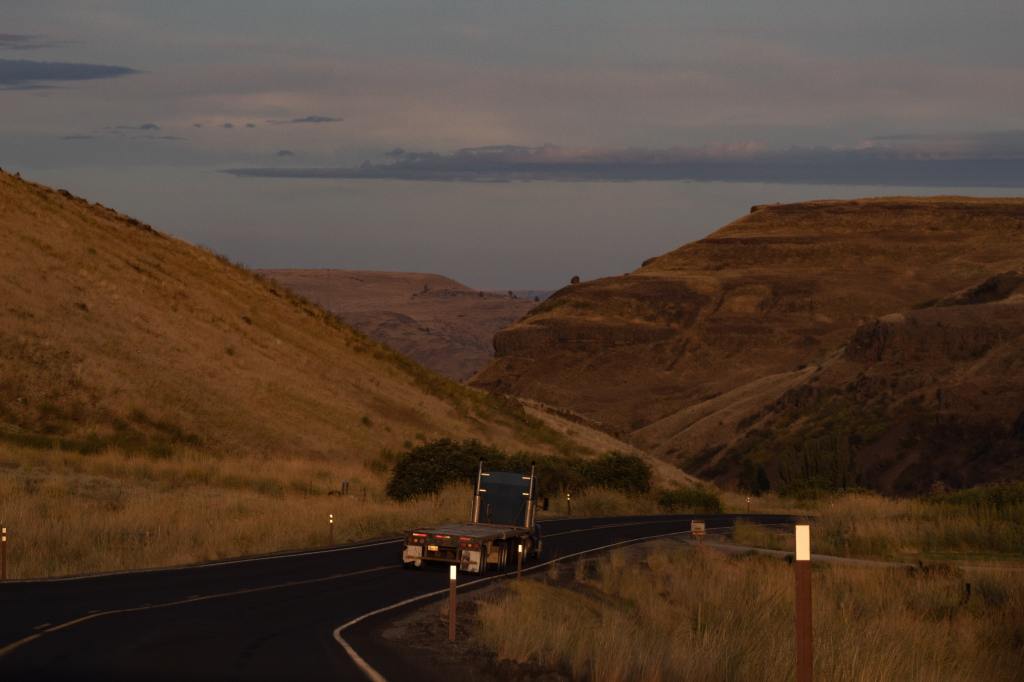
This past week, I joined my husband in his semi-truck while he did his job. We didn’t yet have a “shelter in place” order in Michigan, but we did have restrictions on gatherings and such. As a result, everything I was doing on a daily basis was cancelled. I work from home in property management, and our company had recently sent out a directive stating that all business was to be done by phone, text, or email. Aside from reading electrical meters (a job I easily completed the Saturday before we left), there was nothing for me to do in the office. All foster care visits are being done via Skype or phone call at the moment, and with unlimited WiFi on our phone plans and a tablet computer, not to mention an inverter which allows me to plug in a laptop to an automobile auxiliary outlet (or cigarette lighter if you’re as old as me), this was easily done from the truck as well. So I left behind the boring monotony of isolation on my own in order to spend some time with my husband.
There are a lot of marriages that are struggling right now. Couples having to isolate together and juggle working from home with all the childcare duties and housework is bringing out the worst in our relationships. More couples are filing for divorce because of the stress of being in confined spaces together. Truth be told, our marriage has been struggling off and on for the last 18 months. The stress of dealing with Inara’s mental illness along with the false allegations and CPS investigations and removal of our children and constantly living under the state’s microscope have all taken their toll. We have struggled to communicate, to appreciate each other, to be loving and kind….
If you were to listen to the prevailing wisdom of our society, what you’d hear is that we should divorce. After all, marriage is supposed to be all about us as individuals. If my marriage doesn’t fulfill me, if my marriage doesn’t make me happy, if my spouse doesn’t affirm my dreams, etc, etc, then the solution is to just pack it in, call it quits, and walk away. What a sad state of affairs we find ourselves in! And the sadder state of affairs is that couples caught up in the foster care system, if they were married in the first place, never stay married. To be fair, there are a lot of married couples who end up in the system due to legitimate abuse. In that case, a choice has to be made between the welfare and safety of the children and keeping the marriage intact. No one advocates for staying in an abusive marriage or continuing to live with a spouse who abuses you or abuses your children.
Our case is different. There is no abuse in our marriage. There was no abuse to our children. And as Christians, we made vows before God–we entered into a covenant–that we intend to keep. The system has never come across a couple that intends to stay married through all of this. They can’t seem to admit to making a mistake, so they’re looking for any and every little possible excuse to try to justify their actions. Unmarried young women with no children are making life-altering decisions and judgement call on the state of my marriage and my ability to parent. It’s scary when you come to think about it!
Does my marriage fulfill me? No. Not all the time. And you know what? It shouldn’t. My meaning, my fulfillment, my worth doesn’t come from my spouse. It doesn’t come from my relationship status. It doesn’t come from my circumstances. It comes from God! Does my spouse make me happy? No. Not all the time. And my happiness is not his responsibility. It’s mine. It’s a choice I make to be happy or not to be happy. Why should I put that burden on him? The truth is that both of us are incredibly human. We make mistakes. We sin. We have a lot of emotional baggage we haven’t completely dealt with. There’s a lot of refining work for God to do here in both of us individually and in us as a couple. For most people, that’s enough to call it quits, but marriage is supposed to be a visual representation to the world of what God looks like. Husband and wife are to have a close and intimate relationship just as Jesus has with the church…just as God the Father, God the Son, and God the Holy Spirit enjoys within the Trinity. If my focus is on my needs and my wants and myself, then I’m hardly going to be able to represent a selfless God.
Life as a trucker’s wife is hard. It’s almost as hard as the life of a soldier’s wife. Our husbands are gone. A lot. We develop routines to deal with the house and kids and all the responsibilities that normally fall on both parties in the couple when our husbands are gone. We handle all the appointments, all the scheduling, all the repairs, all the housework, all the finances (generally, speaking), etc. And then our husband’s come home, and we have to remember that they are a part of our lives and not resent them for throwing our schedules into a tailspin and for not knowing what’s going on and for being tired and not necessarily present–at least initially–and for struggling to integrate themselves into a household that for all intents and purposes runs successfully without them. That’s hard. It’s hard for me, and it’s hard for my husband.
I know my husband’s job is stressful. It’s dangerous, too. When we’re not at war, my husband’s job ranks as #1 dangerous job in America. And it’s a thankless job. My husband has to deal with people complaining about big trucks and dirty truckers. People assume he’s uneducated. They assume he’s ill-mannered. There are a lot of hurtful stereotypes out there about truckers. And there are a lot of temptations out there on the road. As a Christian, my husband is very aware that he may be the only Jesus the people he comes into contact with might see. A lot of his fellow drivers are amazed that he is faithful to me, and probably more amazed that I am faithful to him.
Knowing his job is stressful, I try to keep from talking to him about problems at home. Knowing that I’m doing a stressful job taking care of kids and running a house without him, my husband tries to keep from talking to me about problems on the road. As a result, there are times when there’s a lot of not talking. When you’re insecure and you have a lot of emotional baggage from past relationships, that not talking can make you suspect a lot of things. Suspicion can do a lot of damage. And that not talking can lead to other issues with communication. It’s hard enough to remember that we don’t all speak the same love language when we see our spouse every single day, but when we see them only on the weekends?….or maybe even every other weekend?….or once a month?
Getting away with my husband could be a risk. On his truck, we’re occupying a space that’s much smaller than a jail cell. We can’t get away from each other if tempers get heated. There are lots of other struggles on the road. Things like a lack of bathroom facilities, no safe parking, regulations about when he can drive/where he can drive/how long he can drive, and lack of healthy food options. With the COVID-19 precautions, these things are even harder to find. But for us, we always seem to do better in close proximity.
Here are some of the things I learned while on the road with my husband:
My husband really does love me, even if he doesn’t always know how to show it. I feel loved when my husband speaks affirming words to me, but my husband struggles with expressing his emotions verbally. Instead, my husband made sure that anytime he bought himself a drink, he bought me one too. He bought me candy bars. He agreed to eat at a more expensive take out place one night rather than his standard Subway just so that I could have fried okra. As much as he complained about it, he made sure that we parked somewhere safe and with a bathroom nearby that I could use. He held my hand whenever we walked from the truck to the truck stop, and he put himself between me and the big trucks.
My husband and I talk more freely when we’re together in his truck. Because I was on the road with him and sharing in the stress of driving and traffic and cars that tried to kill us by cutting us off, my husband was more relaxed in talking to me. He was willing to engage in deeper conversation with me, and he was less likely to take offense at my questions. We could have harder conversations about more controversial topics while we were driving, and that meant that we could leave the time right before bed for just vegging out and watching TV on his tablet together.
The road poses a lot challenges to faith. The road is busy. It’s noisy. It’s distracting. My husband does his best to counteract this by listening to Christian music while he drives. It works for him, but it doesn’t work for me. Some of it comes down to the fact that he likes rap music, and he likes it loud with a lot of bass. Some of it comes down to the fact that I need quiet in general and time to read my Bible. The road didn’t offer a lot of opportunity. We drove from the time we woke up until we had to stop for the night 14 hours later. At that point, it was just a matter of eating, relaxing for an hour and going to bed to do it all again the next day.
When I make sacrifices like this for my husband, I demonstrate my love for him. My husband didn’t believe that I really wanted to go with him. I think he worried that being on the truck would be too hard on me. He offered a lot of excuses before we left on why the plan to travel together might not work in case I wanted to back out. It was hard to take a step back and see this as a way of demonstrating his care and concern for me. From a fleshly perspective, I thought maybe he didn’t want me around. But we’ve traveled together before. I knew what I was getting into, and I was willing to go without a hot shower every day and running water just to spend time with him. This small gesture made my husband feel loved. I know because he took the time to right a Facebook comment to a friend about how wonderful a match we are. My husband doesn’t get romantic very often, so when he waxes eloquent about how wonderful a wife I am and how much he appreciates me, it matters a lot!
In marriage, it’s really easy to take the other person for granted. It’s easy to get caught up in our own needs and our own wants and our own head space. It’s easy to think that our spouse’s job is to make us happy or to fulfill us in some way. It’s really easy to forget that our spouse is human, just like we are. Sometimes, it’s really easy to get offended and think that the other person should think more like we think or communicate more like we communicate or be more like us. When that happens, we need to take a step back. We need to go back to 1 Corinthians 13 and remember what love really looks like. We need to look at ourselves and ask ourselves if we are being love to our spouse. We need to turn to God for fulfillment and for healing. We need to think the best of our spouse. And we need to forgive. Love covers over a multitude of sins…and without forgiveness, marriage is more of a struggle than it needs to be.
I challenge you to take a look at your spouse through God’s eyes. I challenge you to take a look at your marriage and ask yourself if it’s a good example of Jesus to the world. If it’s not, you might want to consider making whatever changes are necessary to get it there. And from this trucker’s wife, I challenge you to be a bit more considerate of those truckers out on the road. They are missing their families just so you can have the items you need for yours. Give them space on the road. Give them a kind word or maybe even a thank you when you run into them out and about.
“This gospel unveils a continual revelation of God’s righteousness—a perfect righteousness given to us when we believe. And it moves us from receiving life through faith, tothe power of living byfaith.This is what the Scripture means when it says: “We are right with God through life-giving faith!”
It’s amazing to me the plan of the gospel. In it, God offers me the opportunity to exchange my sinful rags for His own robes of righteousness, and it’s not based on any works or worth on my part. Instead, it’s based completely on the righteousness of God Himself through Jesus Christ. When I believe in Jesus’ work on my behalf and receive that work in my life, I receive His righteousness as my own. God no longer holds my sins against me. I am in right standing with God!
And then, God moves me from glory to glory, working in my life, and changing me so that I become more and more like him. It’s an on-going process of growth. I receive eternal life through faith in Jesus Christ, and then I am given the ability to live an abundant life now by that same faith in Jesus Christ. What an amazing plan and promise!
Father, I thank you that your plan all along was to bring me back into right-standing with you and to refine me so that I am more and more like you. When I place my faith in you, I not only get eternal life, but I also get power, authority, and blessings in my life right now! You are a good good Father, God, and your love for me is beyond anything I could ever imagine. Thank you, God. Thank you for exchanging my filthy rags for your robes of righteousness. Thank you for salvation and for blessings and for right standing with you! In Jesus’ name, Amen.
Exercise. Sometimes I feel like it’s a four-letter word. I really hate to exercise. At least I really hate to do exercise routines. Doesn’t matter if it’s at a gym or at home. I hate it. But if I want to have a healthy body, I need exercise. If I want to have a heart that’s disease free, I need to do some cardio. If I want muscles in good shape, I need to lift some weights. If I want joints that are as pain free as possible as I age, I need to stretch and work on my flexibility. And the truth is that if I want my spirit in tip-top shape, I need to exercise my faith!
Faith is like a spiritual muscle. If you don’t use it, it will shrivel up, and soon you won’t even be able to do the normal everyday stuff you took for granted before. If you exercise it, though, that muscle will get stronger so that the things that used to send you packing are now no big deal. The beauty of exercising our faith muscle is that God will put us into situations where we have no choice but to exercise it. We can’t sit as spiritual couch potatoes for long before God steps in. We can fight against what God is doing. We can actively refuse to grow in our faith or use our faith effectively, but we can’t skip the spiritual trips to the gym so to speak.
Spiritual training is important. 1 Timothy 4:8 (AMPC) says: “For physical training is of some value (useful for a little), but godliness (spiritual training) is useful and of value in everything and in every way, for it holds promise for the present life and also for the life which is to come.” God has given each of us a measure of faith (Romans 12:3). It’s His gift to us. When we use that measure to accept Christ, the Holy Spirit comes to live inside of us. Then we get access to the seeds of the fruits of the Spirit.
All the potential for the fruit of the Spirit is already present in our own spirits when we are born again. We have the seed form of: love, joy, peace, patience, kindness, goodness, faithfulness, gentleness, and self-control. Right now I have a packet of radish seeds in my kitchen cabinet. They’re a part of a science experiment that goes with our science curriculum for our 3rd grade homeschool science classes. They’ve been in my cabinet for quite a while now. I haven’t done anything with them. Now, how silly would it be for me to complain to God–or to anyone else for that matter–about my lack of radishes when I’ve left the seeds in the packet in my kitchen cabinet?
It’d be pretty silly, right? And yet, this is what we do when it comes to the fruits of the Spirit all the time. We complain to God about our lack of faith. We demand He increase our faith. We beg Him for more faith. When all the while we have that seed sitting in the packet on a shelf in our spirit and we’ve done nothing with it. That’s why exercising our faith is so important. Just like we need to plant a seed, water it, and cultivate it to see it grow to maturity, we have to use the faith God has given us, exercise it, and grow it in order to see it grow to maturity.
So how do we exercise our faith? Faith is exercised during trials. Faith is at work when we can not see the path ahead of us. When the way is clear and the sailing is smooth, faith is not being used. We’re walking through life by sight. We’re probably trusting in our own strength and ingenuity to get us through our day-to-day challenges. Hebrews 11:1 says that “Now faith is confidence in what we hope for and assurance about what we do not see.” If we can see it, then it isn’t faith. When we go through trials, though, that path ahead of us is not so clear. There might be a storm brewing up around us. There may be chaos and confusion. We may have to even walk through the Valley of the Shadow of Death. That’s okay. When we can’t see, we’re walking by faith.
2 Corinthians 5:7 says “For we live by faith and not by sight.” This whole not being able to see clearly in front of us but walking the path anyway? That’s the way we’re supposed to live our everyday lives. When we’re in the midst of a trial, we tend to pull into ourselves. We isolate. We shut down. We want to curl into a ball and pray for it to be all over. But that’s not exercising our faith. We have to keep walking. Psalm 23 says: “Yea, though I walk through the Valley of the Shadow of Death…” not “Yea, though I park” or “Yea, though I camp” or even “Yeah, though I attempt to avoid at all costs by refusing to go forward.”
And the thing is just like God allows life to bring the spiritual gym to us, God acts as our personal trainer and coach. 1 Corinthians 10:13 says: “No temptation has overtaken you except what is common to mankind. And God is faithful; He will not let you be tempted beyond what you can bear. But when you are tempted, He will also provide a way out so that you can endure it.” God is leading us through the entire process. You see faith is an absolute certainty and trust in God. Faith believes that God can and God will. That’s the only way to get through the Valley. Instead of isolating and turning into ourselves, we have to stretch out our hand, grab hold of God, and keep walking.
I’m terrified of snakes. Whenever my family went to the zoo or any type of animal park where these lovely reptiles might reside, I would avoid them at all costs. On one trip, however, my younger sister got tired of always having to skip the reptile house because of my fear. She insisted on going in, and that meant we all had to go in together. I didn’t want to go in. I was terrified of going in. I was sure those snakes were going to miraculously get out of their glass enclosures and come after me. But you know who I trusted to keep my safe? My father. My father was the one with us on that trip, and I knew that my father loved me. I knew he would never ever let anything harm me in any way. I trusted that my dad would never allow any snake to get near me, even if he had to fight them all himself. He was going to keep me safe. So I closed my eyes, grabbed a hold of my father’s hand, and I marched myself through that reptile house trying desperately to block out the sounds of hissing in my ears.
There are times in life when God asks me to do the same thing. He brings me to a really dark and scary place. It’s a place I don’t want to go into. It’s a risk I don’t want to take. It’s a calling I feel super unqualified for. Whatever it looks like on the outside, what it really is is an opportunity for me to stretch outside my comfort zone, exercise my faith, and grow. So when I’m standing at the edge of that path, I have a choice…just like I had a choice at that zoo.
1. I can stay where I am. Standing outside that reptile house, I could have refused to go in. I could have told my father that, although I absolutely trusted in his love for me and in his ability to keep me safe, and in the fact that he would keep me safe, I was not going to set foot inside that reptile house. I would have been expressing faith in my father, but I wouldn’t have been using that faith. I wouldn’t have been putting it into practice. Ultimately, that kind of faith is hollow. It’s fragile. It doesn’t hold up. It does me know good.
And the other thing? The reptile house was the only way to get to the things I really wanted to see and experience. If I chose to stay at the brink and not go through, I would miss out on the rest of the zoo. I’d have to spend the rest of the day waiting around and hoping that my family could find a way to circle back around at the end of their day to find me and take me home with them.
2. I can move forward. James 2:14-17 tells us that faith without works is dead. Faith isn’t a passive thing. It isn’t lip service. Faith requires us to act. It demands to be used. Faith wants to be tested and put to work. Standing outside that reptile house, I chose to put my faith in my father to use. I put it into practice. I knew my father. I knew his love for me. I knew his ability. I knew his will. I took all that knowledge, and I acted on it. I took hold of his hand. I shut my eyes. And I started walking.
And you know what? As uncomfortable as the experience was with all those hissing sounds and all that fear in the pit of my stomach, I was safe with my father. On the other side of that reptile house, when I opened my eyes, I felt a bit stronger. My father was proud of me for trying. My faith in him was solidified a bit more. And now I could go onto all the things I really wanted to do and see and experience.
1 Peter 1:7 tells us that trials come “so that the proven genuineness of your faith—of greater worth than gold, which perishes even though refined by fire—may result in praise, glory and honor when Jesus Christ is revealed.” Faith wants to be proven. It needs to be refined. It needs to be put to the test. Faith needs to be exercised just like our muscles need to be exercise.
But you don’t go from couch potato to running a marathon in a single day. There’s a process to getting physically fit, and there’s a process to getting spiritually fit. Before you begin to exercise, you need to warm up your muscles. Before you face a trial, you need to have to “warm up” your faith.
2 Peter 1:5-8 says: “For this very reason, make every effort to add to your faith goodness; and to goodness, knowledge; 6 and to knowledge, self-control; and to self-control, perseverance; and to perseverance, godliness; 7 and to godliness, mutual affection; and to mutual affection, love. 8 For if you possess these qualities in increasing measure, they will keep you from being ineffective and unproductive in your knowledge of our Lord Jesus Christ.”
Spend time in God’s Word. Reading scripture, studying scripture, and memorizing scripture form the foundation of your faith. How can you have faith in something you don’t know anything about? In order to have faith in God, you have to know who God is. You have to believe that He loves you. You have to believe that He is able. You have to know His will. The best way to do that is by reading His Word.
Spend time talking to God. In the foxhole is not the time to work on your prayer life. You need to form the habit of talking to God regularly. Prayer lets us tell God all about what’s going on in our lives, and it lets God speak to us about the things we’re going through. We need that two way communication when we’re walking through the Valley. We need to be able to hear His voice in order to know that we are following Him through the Valley.
Spend time speaking God’s Word. Faith comes by hearing and hearing by the Word of God (Romans 10:17). One of the ways we exercise our faith is by speaking. Faith talks. My pastor says, “Faith doesn’t speak to God about the size of our mountain; faith speaks to the mountain about the size of our God.” If you aren’t used to speaking out scriptures over your life when times are good, how will you be able to speak out scriptures that you need to take a stand on when you’re in the midst of a trial?
Spend time in worship. Worship is a great way to refocus our perspective. It’s the weapon God often asks us to use when He has us in a period of waiting. When we cultivate an attitude of worship, warfare gets a bit easier.
Just like a muscle requires regular use to get stronger, faith requires regular use to grow. We may not be able to bench press 100 lbs the first day at the gym, but as we keep stretching ourselves and keep working, one day we find that we can lift that amount easily. When we first face a battle in our lives, it’s going to be rough going, but as we push through and exercise our faith and keep walking, that temptation and trial will get a little easier and a little easier until we no longer even consider it a temptation anymore. The goal is to reach maturity in Christ, and the only way to do that is to keep walking and keep growing.
“Go,” said Jesus, “your faith has healed you.” Immediately he received his sight and followed Jesus along the road.
Blind Bartimaeus was a beggar long the road from Jericho to Jerusalem. We don’t know much about Bartimaeus. We don’t know if he was born blind. We don’t know if he became blind later. What we do know is that Bartimaeus had great faith. Being blind, Bartimaeus probably didn’t travel much. He probably never moved very far from his spot along the road, but Bartimaeus listened. He listened to the people who passed him as he sat begging, and he heard the stories about Jesus. He probably heard about the miracles Jesus was performing. He may have heard about His teachings.
Whatever he heard, Bartimaeus recognized something about Jesus that few of his fellow Jews recognized. Bartimaeus recognized Jesus’ identity. When he heard that Jesus was coming along the road, he began to cry out “Jesus, Son of David, have mercy on me!” By addressing Jesus as the Son of David, Bartimaeus was basically saying: “Jesus! I know you are the promised Messiah! Have mercy on me!” It was this cry that Jesus responded to. It was this acknowledgement of His identity that made Jesus stop. and ask Bartimaeus to come to Him.
When the people told Bartimaeus that Jesus was calling for him, he demonstrated faith again. The Bible story says that he threw aside his cloak, jumped to his feet, and came to Jesus. This man was blind. He couldn’t see with his physical eyes, and yet he jumps up and comes to Jesus. He is so sure that Jesus can heal him that he doesn’t even hesitate. He runs to Jesus. This is the faith that Jesus is talking about when He says: “Your faith has healed you.” Bartimaeus gains his sight and follows Jesus.
Do we have this kind of faith? Do we have the kind of faith that recognizes who Jesus is in spite of our spiritual blindness? Do we have the kind of faith that causes us to jump up and seek after Jesus for healing and sight? Do we have the kind of faith that endures once we receive what we’re looking for and follows after Jesus? That’s the kind of faith that heals us. In the Greek that word for “healed” means “saved.” It takes this kind of faith to gain salvation.
Father, I thank you for your Son Jesus Christ. Sometimes, Father, I can be spiritually blind. Help me to have the faith that jumps up and runs to Jesus. I want a faith that sees who Jesus really is, who runs to Him for healing and spiritual sight. I want a faith that endures and follows after Jesus. I don’t want to be the kind of person who only comes to you when I want something and then goes about my business as if nothing has changed. I want the kind of faith that seeks relationship with you. In Jesus’ Name, Amen.













 A Beautiful Mess