Holy Tuesday

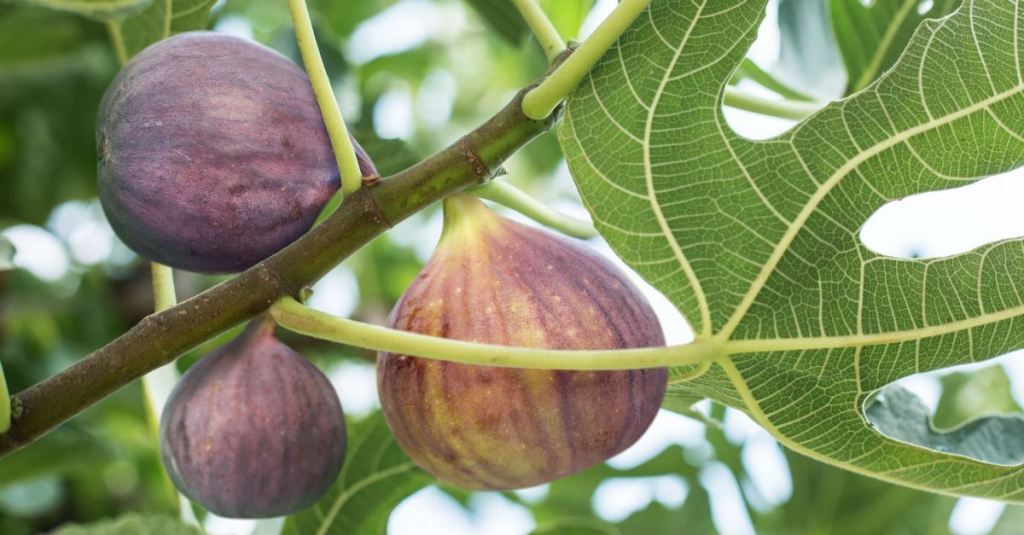
So today is Holy Tuesday. Lots of events happened on Tuesday of the last week of Christ’s life. The religious leaders questioned His authority while He was teaching in the temple. The disciples noticed that the fig tree He had cursed the day before had withered from the roots. He told many parables, including the parable of the Ten Virgins, the parable of the Two Sons, the parable of the Tenants, and the parable of the Wedding Banquet. Jesus was questioned about paying the Imperial Tax to Caesar. He taught on the signs of the end times and on whose son the Messiah would be. Lots of things to focus on today, but I am choosing to focus on the Cursing of the Fig Tree.

The story of Jesus cursing the fig tree is found in Matthew 21:18-22 and in Mark 11:12-14 and 20-25. There are a couple differences between the two accounts. For example, Matthew has Jesus going to Jerusalem, cursing the fig tree, and then cleansing the temple. The way he tells the story it appears that the fig tree withered instantly, and the entire episode occurred in one day. Mark has Jesus and the disciples seeing the fig tree on the way to Jerusalem. Jesus curses it. Then they notice after returning from Jerusalem the next morning that the fig tree has withered up.

What’s going on with this story? We have Jesus traveling along the road from Bethany to Jerusalem. He is hungry. He sees a fig tree in the distance and goes to see if it has figs. Mark tells us that it was not the season for figs. Jesus goes to the tree and finds only leaves. Then He curses the tree by saying “May no one eat fruit from you ever again.” The next day, Peter draws attention to the fact the tree has withered from the roots, and Jesus gives a small lesson on faith and prayer. So why a fig tree? Why curse it when it doesn’t have figs if it’s not the season for figs? And what does any of this have to do with faith and prayer?

As with any story in the Bible, you have to consider the original audience. What would the people in the story have understood from what was going on? What did it mean to them? In the Old Testament, fig trees were a symbol of peace and prosperity (Micah 4:4 and Zechariah 8:12). God often promised in various Old Testament prophecies that He would destroy the fig tree and the vine to punish Israel for their disobedience (Jeremiah 8:13), and that He would restore the fig tree and the vine in the Day of the Lord (Joel 2:22). Likewise, the fig tree often represented the nation of Israel itself (Isaiah 27:6). So when a story involves a fig tree, you can bet that those people present at the time are going to be aware that it might be a lesson about Israel itself and about Israel’s obedience to the Lord.

The other thing you need to know about fig trees is that they produce more than one crop. There is what is known as a “breba” crop. This is a crop that grows out of season. Breba crops occur early in the Spring. The fruit grows on the mature branches produced from the previous year’s growth. It is a small crop, but it produces the largest, sweet figs at a time when the other trees are no where near ripening. Also, fig trees produce fruit before their leaves unfurl. That is, if you see a tree with leaves all over it, then you can expect to find fruit on it. During the season, you might find the typical crop. This would be a numerous amount of fruit, but it would be produced on the new year’s growth, the green wood. Out of season, you could expect to find a breba crop on a tree that was full of leaves.

When Jesus sees the tree in the distance, He notices that it is full of leaves. He goes to the tree fully expecting to find fruit their. Instead, He finds nothing. If we look at the fig tree as a symbol, we can clearly see the link between the fig tree and what Jesus has just seen (or will just see if you are going with Matthew’s timeline) in Jerusalem. Israel is a fig tree. It should have mature branches: the Jewish leaders–the priests, Rabbis, Pharisees, Sadducees, scribes, and other teachers of the law. These men studied the Torah faithfully. If anyone should know what God is doing and who God is, it’s these men! So when Jesus enters Jerusalem, He expects to find righteous fruit on these mature branches, even though it’s out of season. Instead, Jesus finds a spirit of religion. These men have no idea what righteousness mean. They are not worshiping God. They are seeking acclaim and authority for themselves.

At the temple, they are encouraging buying and selling and profiting off of God’s worship. They are not feeding the people who come to the temple in search of God and His Word. They have lots of outward signs of piety….They wear their robes and phylacteries. They pray long prayers. They go about making a big show of their righteousness. They stay away from sinners. They ritually wash. They follow all the rules and requirements, even the ones they’ve made up for themselves, but their hearts are far from God. They are like the fig tree. Lots of leaves to look at….the expectation of good fruit…but barren and disappointing. The religion of these men will feed no one!

The next day, Peter notices that the fig tree has withered. Ordinarily, it takes a long time for a fig tree to wither. Even cut fig wood takes and especially long time to dry out, but this tree has withered from the roots up in the space of a single day. Jesus had displayed not only a prophetic act of judgement against the nation of Israel as a whole, and more specifically against the religious leaders of the nation of Israel, but He had also put on display the power of God. Prophetic examples are often accompanied by miraculous displays of power. Peter comments on this, and Jesus responds: “Have faith in God!” This seems like a complete non sequitur, but just as with the cleansing of the temple Jesus is making a larger point here.

If the fig tree with its leaves and lack of fruit represents the emptiness of the religious acts at the temple and the hypocrisy of the overly religious Jewish leaders, then the faith that causes the tree to wither represents a new way of doing things. The empty religious expressions of worship are being replaced by relational expression of faith through prayer and forgiveness. And it was absolutely faith that Jesus used in cursing the fig tree. Romans 4:16-22 tells us that God calls things that are not as though they are. God looks into the future and calls forth what He sees. We know that faith is the evidence of things not (yet) seen. It is faith that looks into the future and calls forth what God sees. When Jesus looked at that fig tree, He saw what no one else did. He saw the true heart of the matter–this tree was not producing. There was something wrong with it. He spoke that truth forth: “May no one eat fruit from you ever again.” And because Jesus did not doubt, the tree manifested what Jesus had already seen. It withered from the roots (the source of its nutrients) up.

When we operate in faith, prayer, and forgiveness, when we have the appropriate focus on God in our worship, we will have healthy roots. We will be strong and thriving, and we will bring forth fruit: love, joy, peace, patience, kindness, goodness, faithfulness, gentleness, and self-control. If all we have are good works (pretty leaves) but no fruit, we are in danger of withering away. That’s why Jesus told us in John 15:5 that if we remain in Him (connected in relationship) and He remains in us, we will bear much fruit. Without that connection to Jesus, we can do nothing.

So as we focus our minds on Holy Tuesday, looking forward to the sacrifice Jesus will pay on our behalf on Good Friday, let us evaluate our lives. Are we fig trees with mature branches producing fruit in and out of season? Do we have fruit as well as good works? Are we abiding in Jesus so that our roots are strong and firm and well fed? Or are we like the fig tree along the wayside? Have we lots of outward signs, lots of empty works, with no real substance? Do we put on a good show for others without producing fruit, even in season? Have we let our roots become damaged? God will give us mercy if we repent. He will work with us to get us healthy and producing fruit again (parable of the fig tree in Luke 21:29-33, but He will not wait forever.

A Masterpiece in the Making

Photo by Eddy Klaus on Unsplash

Philippians 1:3-6 (MSG)

Every time you cross my mind, I break out in exclamations of thanks to God. Each exclamation is a trigger to prayer. I find myself praying for you with a glad heart. I am so pleased that you have continued on in this with us, believing and proclaiming God’s Message, from the day you heard it right up to the present. There has never been the slightest doubt in my mind that the God who started this great work in you would keep at it and bring it to a flourishing finish on the very day Christ Jesus appears.”

You are a masterpiece. Did you know that? God says you are His masterpiece. You are a unique work of art. Sometimes it’s really easy to forget that that’s how God sees us. We look at ourselves and we see all the imperfections and all the things we wish we could change, but God looks at us and sees the finished product. He knows where we’re headed. He knows what we will become if we just let Him finish what He started.

This is especially true when we look at our lives in Christ. Because our eyes are opened to sin in the world, we can get discouraged. We can focus on how far we still have to go instead of looking at how far we’ve come. In this letter to the Philippians, Paul encourages them by reminding them that they’re on a journey. He knows how far they’ve come, and he knows that God will take them the rest of the way as well. They’ve come so far and done so much that he literally thanks God for them over and over again.

Someone out there sees the same in you. They see how far you’ve come. They are thankful for you where you are right now. Even with all your imperfections. And they know that God will get you to the finish line. You are a masterpiece that God is working on every single day until He gets you to perfection in Christ!

Father, I thank you that when you look at me you see a masterpiece. I’m thankful that you’ve had a plan in mind for my life from the start. I might look at my life and see how far I still have to go, but you look at my life and you see the finished product. Thank you for saving me. Thank you that as I look back on where I was when I began this journey with you, I can see that I’ve come along way. I may not be who I want to be yet, but I’m definitely not who I was. Thank you that I can trust you to be an artist that doesn’t leave His masterpiece undone. You won’t give up on me. You will work on me bit by bit until I become what you want me to be. Your finished masterpiece! In Jesus’ Name, Amen.

New Covenant

Image by Jondolar Schnurr from Pixabay

Hebrews 10:16-17 (MSG)

Every priest goes to work at the altar each day, offers the same old sacrifices year in, year out, and never makes a dent in the sin problem. As a priest, Christ made a single sacrifice for sins, and that was it! Then he sat down right beside God and waited for his enemies to cave in. It was a perfect sacrifice by a perfect person to perfect some very imperfect people. By that single offering, he did everything that needed to be done for everyone who takes part in the purifying process. The Holy Spirit confirms this: “This new plan I’m making with Israel isn’t going to be written on paper, isn’t going to be chiseled in stone;” This time “I’m writing out the plan in them, carving it on the lining of their hearts.” He concludes, “I’ll forever wipe the slate clean of their sins.” Once sins are taken care of for good, there’s no longer any need to offer sacrifices for them.”

The Old Covenant system of sacrifices for sins was never meant to take care of the real issue. It wasn’t a cure. It was just a treatment. The problem is our sin nature. Giving us the law pointed out all the myriad ways that we miss the mark and fall short of God’s high standard of living. The law drew our attention the real problem: sin. But the law didn’t solve our problem. It just put a band-aid on them. A sacrifice covered the sin for a period of time, but it couldn’t solve the problem because it didn’t change our nature. God had a bigger plan all along!

The New Covenant wasn’t going to be just a band-aid treatment for our problem. This time it was going to be different. Jesus died to offer the perfect sacrifice for our sin, and His sacrifice didn’t just cover our sin for a brief time. No! His sacrifice changed our very nature. Now, we are a new creature with a new nature–a nature that desires to do the will of God! This changed nature and renewed mind that we are offered as a part of the body of Christ means that the standards of God are now written on our hearts. Because Jesus kept the law perfectly, He had perfect righteousness. When we accept His sacrifice on our behalf, we exchange our sinful nature for Christ’s righteousness. Our sins are forgiven and remembered no more, and we are changed to be more like Him every day!

Father, thank you that you always intended to take care of the real issue of sin: our nature. You didn’t want us to sacrifice over and over, but you did want us to understand what sin was and how ugly a cost it took to cover it over and make it right. Then you did even more than that. You took the cost on yourself. You became sin for us. You paid the price we could not pay to change the nature that was the very heart of our problem. Now, I am righteous because you paid the price for my righteousness and bought me back from sin. You changed my nature and made me a new creature! Now your law is written on my heart. My spirit desires to do your will. Your word renews my soul. I become more like you every day. Thank you! In Jesus’ Name, Amen.

Holy Monday

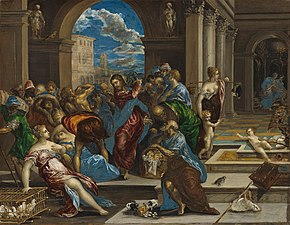
Christ Driving the Money Changers from the Temple (El Greco, Washington)

Today is Holy Monday if you’re one of the Christians who celebrates Holy Week. I have to be honest. In the past, I haven’t celebrated more than Palm Sunday, Good Friday, and Easter Sunday, but this year without all the hoopla that generally goes into these celebrations, I’m looking for a bit more. Normally this time of year there’s all the planning for big family gatherings for Easter. There are choir rehearsals and sometimes pageant practices. There’s the planning of Easter baskets from the Easter bunny (if you’re one of the families that do that sort of thing.) But this year, we have none of that. I won’t be attending a church service in a church building this Easter. There will be no huge choir number or big production detailing the life, death, and resurrection of Christ. I will not be seeing my children in foster care. I can’t even sneak a basket to them as I did last year, so this year is different.

I’ve decided to embrace the difference and focus myself differently as well. I celebrated Lent this year. I’ve done some Easter specific devotionals to gear up and make sure my heart is on what’s important rather than on what is missing. So this year, I’m embracing Holy Week. For those of you who are familiar with Holy Week, you know it is a celebration of the final week of Jesus’ life. It begins on Palm Sunday and culminates on Easter Sunday. Each day focuses on one or two events in the life of Christ in order to really bring home some precious truths about God and His plan for us. On Holy Monday, the focus is on the cleansing of the temple.

Now let’s just get this out in the open. Matthew, Mark, and Luke have a story about the cleansing of the temple that takes place during the final week of Jesus’ life. After his triumphal entry into Jerusalem, Jesus goes to the temple and drives out the money changers and merchants. John’s story of the cleansing of the temple occurs much earlier–at the start of Jesus’ ministry after He changes water into wine, but before He speaks with Nicodemus. John doesn’t mention another story about cleansing the temple in the final week of Jesus’ life. This has led some people to conclude that the Bible must be wrong. The more logical explanation is that Jesus actually cleansed the temple twice and that the different authors included the different stories for different reasons.

So let’s do some background on the temple and what was going on in this story of Jesus cleansing it. When God brought Israel out of Egypt and into the promised land, there was no temple. There was a tabernacle. The tabernacle was a tent structure that housed all the special articles associated with worshiping the Lord. It had a Holy of Holies, which was where the Ark of the Covenant was kept. Only the high priest could enter the Holy of Holies, and he could only enter it on the Day of Atonement to make atonement for the entire nation of Israel. Next was the Holy Place. This was the area where the priests did most of the service to the Lord. The Holy Place contained the altar of incense, the lamp stand, and the table of show bread. This area was separate from the Holy of Holies by a thick, heavy veil. Outside the tent was the courtyard, which was surrounded by curtains. The courtyard is where the sacrifices took place. It contained the Brazen Alter and the Brazen Laver. Any Israelite could enter the courtyard to bring sacrifices to the Lord.

Why is this important? Well, first because of the construction of the tabernacle itself. The tabernacle was a tent made out of various animal skins died different colors. The design for the tabernacle was given to Moses directly by God when he was on Mount Sinai for 40 days. This was God’s design for His house–the place where His name dwelt. Notice that it was covered in skins. I believe that’s very important. We know that the sacrificial system of atonement was supposed to foreshadow the ultimate sacrifice of Jesus. I believe the tabernacle itself pointed to Jesus as well. God’s Spirit–God’s Name–was always meant to dwell in a tent of skin among the people, and Jesus being fully God in a human body (tent of skin) dwelling among the people of Israel was the full manifestation of this design.

It wasn’t until David was King of Israel that he began to speak of building a temple for the Lord. God allowed David to draw up plans for a temple, but He wouldn’t allow David to build it. That job fell to David’s son, Solomon. Notice that the plan for a temple didn’t originate with God. Instead, it originated with man. So David designs the temple based on God’s original tabernacle design, and Solomon builds it. Solomon’s temple had that actual temple, which contained the Holy of Holies and the Holy Place, just as the tabernacle had. These were again separated by a thick, heavy veil. Again, only the High Priest could enter the Holy of Holies, and again he could only enter on the Day of Atonement. The Holy Place was exactly like the one in the tabernacle. Outside the temple were two courts. The inner court was called the “court of the priests.” It contained the same items as the courtyard of the tabernacle, but only the priests were allowed here. There was an outer court for the temple as well, and any Israelite was allowed to enter there.

Now we begin to see the issue with temple worship. God’s Name no longer dwells in skin. Instead, it dwells in a set location. It can not be moved. It is fixed and permanent. Worship is now separated from the people. They can no longer enter the area with their sacrifice and seek the Lord. They must stay further removed–in the outer court. As Israel moved more and more toward idol worship, statues of other gods were brought onto the temple site. A house for temple prostitutes who served these idols was built alongside the temple. The entire original plan of God has been corrupted. Eventually, the temple of Solomon was destroyed.

The temple is gradually rebuilt as the Jews return to Jerusalem, until the culmination of the extension of the temple under King Herod in Jesus’ time. Herod’s temple was the temple Jesus was familiar with. Herod’s temple took the design of Solomon’s temple and expanded on it. There was the temple itself which continued to house the Holy of Holies and the Holy Place. There was a porch containing the court of priests, but then there were some steps leading to a lower court called the court of men. In this area, only Jewish men were allowed. Outside of this was the court of women where devout Jewish women were allowed to enter. Finally on the very outskirts was the court of the Gentiles where anyone who was not a Jew might enter.

God’s plan of sacrifice was that the people would bring the very best offering they could from their own flocks and herds. Anyone who was too poor to have flocks and herds could bring an offering of a dove. In the time of the tabernacle, people obeyed God’s plan. They brought from their own flocks and herds, but when the temple was established at Jerusalem, many people opted for the convenience of buying an animal for sacrifice in the city of Jerusalem itself rather than bringing one of their own such a long distance. As time moved on the practice went from buying an animal in Jerusalem to buying an animal at the temple itself in the court of the Gentiles. Another change made was that the priests decided that only temple coins could be used within the temple. That meant you had to exchange the money of your region for special temple money before you could purchase your animal for sacrifice. Often the very act of changing your money required you to pay a fee. In addition, the animals sold were often of poor quality, and the rate for which they were sold was much higher than necessary.

As a result we have a temple where the worship of God is moved further and further away from the people and where the priests have set up a system to get rich. Of course, God would not be pleased with this idea. His house, where His name dwells, is not only no longer made of skin, but it has so many levels as to be removed from the common man. A poor man or woman can no longer bring of their own animals. Rather, they must exchange what money they have for temple money (at a price) to purchase a subpar animal at the temple itself (for a price) in order to send it up to the court of priests (where they are not even allowed to be present) in order to worship God.

And now enters Jesus. Now we see why Jesus is so angry at what is happening in the temple. He sees the separation of the people from the worship of God. He sees the money changing and the selling and the profit being made off the worship of God. As prophesied in Psalm 69:9, zeal for the Lord’s house consumes Him, and He drives out the animals and overturns the tables. He upends the temple system in more than one way. He even quotes Jeremiah 7:11 when He says, “My house shall be a house of prayer, but you have made it a den of thieves.”

So we see Jesus–the Word of God made flesh who dwelt among us–entering into the temple system of sacrifice for atonement, and turning out not only the money changers and extortionists but also the animals. Why the animals? One reason is because the quality of these animals was subpar. They were not the animals required for authentic worship. The other reason is that by doing so, Jesus is sending a clear message that the way God will be worshiped is about to change. To paraphrase St. Augustine, “he who scourged the sheep Himself was scourged for us.” The old temple system of sacrifice is about to be undone by Jesus’ crucifixion and sacrifice of Himself on Good Friday. The veil separating man from God is about to be torn, and all are about to be welcomed in. No more separation between Gentile and Israelite. No more separation between man and woman. No more separation between priest and common man. No! All are welcome at the altar of God. All. Every. Single. One.

Jesus sees that the Gentiles most in need of God’s mercy have been pushed to the outside court among the animals. How will they ever see God from there? He sees that the women of Israel have been pushed aside to an outer court. God has never viewed women as second class citizens. He is not okay with that. He sees the men of Israel have been pushed aside in favor of priests. But Jesus has come to say, “Enough! This is not what worship looks like. This is not what worship sounds like. This is not what worship is for.” And so we see again that God delights in obedience more than sacrifice and that the sacrifice God desires most is a broken heart and a contrite spirit.

There’s no doubt that the cleansing of the temple was an act that began the push of the Sanhedrin to punish Jesus and put Him to death. And not just any death. This man had upended the temple system. This man had acted as if He had the same authority as God, declaring the temple to be His Father’s house. This man must be put to death, and He must be put to death in such a way that no one would question His identity or His authority again. We know that Caiaphas as High Priest was in charge of the money changing in the temple, and now it all starts to fall into place–the sham trial before the Sanhedrin, the push to crucify. Jesus has put the world on its head.

Paul tells us that we are the temple of God. His spirit dwells within us. Once again in tents of skin among the people. As we approach Easter, what state are our temples in? Do we recognize the authority of Jesus? Do we worship Him with a broken heart and a contrite spirit? Are we offering ourselves as living sacrifices? Do we give him the sacrifice of praise and obedience? Or have we pushed Him far away from us, offering only a lip service of convenience to God? Perhaps this is the time for cleansing our own temples as we prepare to celebrate the atoning work of Jesus on our behalf and to remember the awesome resurrection power which He displayed….the same power that now lives inside of each and every one of us who bear His name.

Stepping Into the Light

Photo by Dewang Gupta on Unsplash

Ephesians 5:8 (MSG)

You groped your way through that murk once, but no longer. You’re out in the open now. The bright light of Christ makes your way plain. So no more stumbling around. Get on with it! The good, the right, the true—these are the actions appropriate for daylight hours. Figure out what will please Christ, and then do it.

When we first accepted Jesus, our life should have changed for the better. It should have been obvious to the people around us that things were different–that we were different. That’s what Paul was saying here to the Ephesians. When we first come to Christ, we come with a lot of junk in our lives. We come with a lot of wrong thinking. We’ve been trapped in the dark. We’ve been dead men walking. We haven’t known the difference between right and wrong or good and evil because we are fully immersed in the world’s system, and Satan is the god of this world.

But when we come to Christ, all that changes. Our eyes are opened. We are put back in touch with the Source–the One who defines right and wrong and good and evil. We are alive. We are a part of the light. Now, it’s our job to live in such a way that those still trapped in the dark can tell that we are different. No more muddling through life! No more stumbling along the path. We can see clearly. We can get wisdom and guidance and direction for our lives. There’s no need to stumble when we’re holding God’s hand and following after Him! So now it’s up to us, to learn what God wants and to do it!

Father, thank you that I can come to you when I need guidance. Thank you that you always lead me in the paths of righteousness for Your Name’s sake. As long as I’m holding onto you, there’s no need for me to stumble or struggle like I used to. I don’t have to muddle through as if I’m still living in a dark haze. I can turn my eyes to you and see things by Your light! Help me to find the things that you require of me and to do them…not because I need to earn your love and approval, but just because I want others to see the amazing work you are doing in me so that they are drawn to you as well. In Jesus’ Name, Amen.

Palm Sunday

Photo by Avel Chuklanov on Unsplash

Today is Palm Sunday. This holiday marks the start of Holy Week and commemorates Jesus’ triumphal entry to Jerusalem the week before His crucifixion. During a normal year, the church would celebrate by handing out palm leaves to all attendees of religious services today. In more traditional churches, there would have been parades, possibly involving children waiving the palm leaves in honor of the triumphal entry. In some cases, these palms would be taken home and woven into crosses to commemorate the day. The ashes of burned palms from this celebration would be the ashes used on Ash Wednesday the following year. But this is not a normal year.

This year, Palm Sunday passed with very little pomp and circumstance. It passed under shelter-in-place orders and closed church buildings. Oh, a few churches in scattered locations used the religious gathering exemptions to meet today. Most held services online. Even the Pope did an online service in honor of the day. For some of us, we may have wondered whether or not celebrating Palm Sunday was even necessary. Maybe without all the usual trappings, it just feels a little bit empty and meaningless, but this year more than ever we need to celebrate. The meaning of Palm Sunday is more relevant than ever this year!

We find the story of Palm Sunday in each of the four gospels: Matthew 21:1-11, Mark 11:1-11, Luke 19:28-44, and John 12:12-19. I’m going to use the text from the gospel of John.

“The next day the great crowd that had come for the festival heard that Jesus was on his way to Jerusalem. They took palm branches and went out to meet him, shouting, ‘Hosanna!’ ‘Blessed is he who comes in the name of the Lord!’ ‘Blessed is the king of Israel!’ Jesus found a young donkey and sat on it, as it is written: ‘Do not be afraid, Daughter Zion; see, your king is coming seated on a donkey’s colt.’ At first his disciples did not understand all this. Only after Jesus was glorified did they realize that these things had been written about him and that these things had been done to him. Now the crowd that was with him when he called Lazarus from the tomb and raised him from the dead continued to spread the word. Many people, because they had heard that he had performed this sign, went out to meet him. So the Pharisees said to one another, ‘See, this is getting us nowhere. Look how the whole world has gone after him!'”

Let’s look a little bit deeper. Jesus ride into Jerusalem on Palm Sunday was originally predicted by Daniel in Daniel 9: 24-27. Daniel predicted to the day when Jesus would enter Jerusalem and be crucified. In the text above, John quotes from the Old Testament to show that this ride into Jerusalem fulfilled prophecy. We find this quote in Zechariah 9:9: “Rejoice greatly, Daughter Zion! Shout, Daughter Jerusalem! See, your king comes to you, righteous and victorious, lowly and riding on a donkey, on a cold, the foal of a donkey.” A donkey was the symbol of peace. When a king rode into the city on a donkey, it symbolized that he was coming to bring peace to the people. A war-hungry king would ride into the city on horseback because a horse was the symbol for war. When Jesus came to Jerusalem, He did so as the Prince of Peace, riding as a king on the back of a donkey to let the people know that He was bringing peace to the nation.

As Jesus rode into the city, the people took off their coats and placed them on the ground. They waved palm leaves and shouted, “Hosanna! Blessed is he who comes in the name of the Lord.” Why did they do this? Well, the spreading of coats was a symbol of royalty. In 2 Kings 9:13, the people took off their coats and placed them on the bare steps in order to declare Jehu as King of Israel. Palm leaves were a symbol in Greco-Roman culture of triumph and victory. In ancient Egypt, the palm symbolized death and eternal life. It was often carried in funeral processions. Both of these symbols are appropriate for Palm Sunday. Palms were also included on the doors and walls of the temple (Ezekial 40-44) Jesus rode into Jerusalem as king of Israel. He came in triumph and victory, and he was headed for the cross, his death, and his resurrection–the ultimate victory over death and the grave. The palms also figured prominently into Jewish tradition. They were waived for rejoicing (Leviticus 23:40), and factored prominently in the festival of Sukkot, or the Feast of Tabernacles. We see the Jews using palms to celebrate victory and to rejoice in 1 Maccabees 13:51 as well.

The shout of Hosanna! comes from Psalm 118:25-26: “Lord, save us! Lord, grant us success! Blessed is he who comes in the name of the Lord. From the house of the Lord we bless you.” On the surface, this cry doesn’t appear to be the same, but the words translated as “Lord, save us!” and “Lord, grant us success!” are really the words “Yasha na” or “Hosanna.” Even the route that Jesus took was important. Jesus came from Bethany through Bethphage, where His disciples found the donkey and cold tied up and brought them to Jesus. Bethphage was where the paschal lamb would come from. The lamb would be brought from Bethphage to the temple mount to be sacrificed for Passover. Likewise, Jesus came from Bethphage to the temple mount to begin the week that would culminate in His crucifixion as the ultimate Passover lamb. In Zechariah 14:4, the prophet predicted that the Messiah would enter Jerusalem from the Mount of Olives. Jesus rode from the Mount of Olives down the Via Victoriosa (the Way of Victory) to Jerusalem and entered Jerusalem at the Eastern gate as prophesied in Ezekiel.

**Incidentally, in modern times the Eastern Gate or Golden Gate is sealed. This too was prophesied in Ezekiel 44:2: “The man then brought me back to the outer gate of the sanctuary that faced east, but it was shut.  And the LORD said to me, “This gate is to remain shut. It shall not be opened, and no man shall enter through it, because the LORD, the God of Israel, has entered through it. Therefore it will remain shut.” A Muslim ruler of Jerusalem had the gate sealed shut because the prophesies say that Jesus will enter by that gate again when He returns. The ruler didn’t want the prophesy fulfilled so he sealed the gate and had a Muslim cemetery put in front of it. He figured that a Jewish holy man would never pass through a Muslim cemetery in order to reach the gate; and, therefore, the prophesy would never be fulfilled. He did not realize that by sealing the gate, he was fulfilling prophesy and declaring Jesus to be God of Israel and Lord.**

Now let’s take a closer look at the symbol of the palms and the shouts of Hosanna because this is where we’re going to find the meaning we need to see this year.

As I said before, palm fronds factored heavily in the tradition of the Feast of Tabernacles as described in Leviticus 23. Now this was a festival celebrated at the time of harvest. The children of Israel would build temporary shelters or “booths” for themselves, often on the roof of their house. (This is why this feast is also called the Feast of Booths.) They lived in these shelters for seven days. This was to symbolize the time they spent in the wilderness. It symbolized their complete reliance and dependence on God while He led them through the promised land, and it symbolized God’s provision. This festival culminates in a day known as Hosanna Day.

The Feast of Tabernacles was the favorite feast of all the feasts. Everyone loved it! It was said that on the last day of the feast, Hosanna Day, God would impart supernatural joy and that no one could be sad or depressed on that day. Nehemiah 8:10 refers to this day: Nehemiah said, “Go and enjoy choice food and sweet drinks, and send some to those who have nothing prepared. This day is holy to our Lord. Do not grieve, for the joy of the Lord is your strength.” The “this day” that Nehemiah refers to is the Hosanna Day. Likewise, David talks about the Hosanna Day when he says in Psalm 18:24-26: “The Lord has done it this very day; let us rejoice today and be glad. Lord, save us! Lord, grant us success! Blessed is he who comes in the name of the Lord. From the house of the Lord we bless you.” We will celebrate this feast during the Millennial Reign of Christ. Revelation 7:9-10 says, “After this I looked, and there before me was a great multitude that no one could count, from every nation, tribe, people and language, standing before the throne and before the Lamb. They were wearing white robes and were holding palm branches in their hands.  And they cried out in a loud voice: “Salvation belongs to our God, who sits on the throne, and to the Lamb.” The white robe symbolizes righteousness and the palm branch symbolizes victory. In Christ, we have been given both: righteousness and victory.

As we said before “Lord, save us!” is really the cry “Hosanna” or literally “Yasha Na.” “Yasha” means salvation or victory, and “na” means now, but the meaning of the word is really deeper than this. “Yasha” carries the idea of being set free, rescued, delivered, saved, to be helped, victory, victory over enemies, prosperity, health, and freedom. It is everything you could possibly want. On Hosanna Day, everyone would have a palm branch. They carried it with them all day. They would get as close to the temple as they could and they would make a faith confession: “Yasha na” that proclaimed the coming Messiah. There are 15 steps to the temple, and the Levites would stand on these steps and sing the same songs all day long in a 24 hour cycle of praise to God. They would rejoice. The term used in the Hebrew text is the strongest word possible for joy. It means joyful, exceedingly joyful, with violent emotion, and it carried the idea of spinning like a top. The people would wave their palms and spin in all directions shouting “Yasha na” in all directions.

But when Jesus approaches Jerusalem it isn’t harvest time. It’s Passover time. What were the people doing by declaring “Yasha na” as Jesus rode into Jerusalem? They were saying that “yasha na” “salvation now/victory now” is no longer a day. It is a person! They were declaring Jesus as the Messiah, the one who comes in the name of the Lord and brings “yasha” with Him. In the midst of this pandemic, let us remember that God’s house is a house of victory. He has given us righteousness. He has given us victory. Victory over our enemies. Victory over the grave. He has set us free, saved us, rescued us, delivered us, helped us, prospered us, granted us health and freedom. We have “yasha” in Jesus Christ, and we have it right now! So on this Palm Sunday, let us wave whatever we have in every direction with exceeding joy in all the Christ has done for us, and let us make a faith declaration that whatever we need we can find it in Christ and we can find it now!

Praying Dangerous Prayers

Photo by Aaron Burden on Unsplash

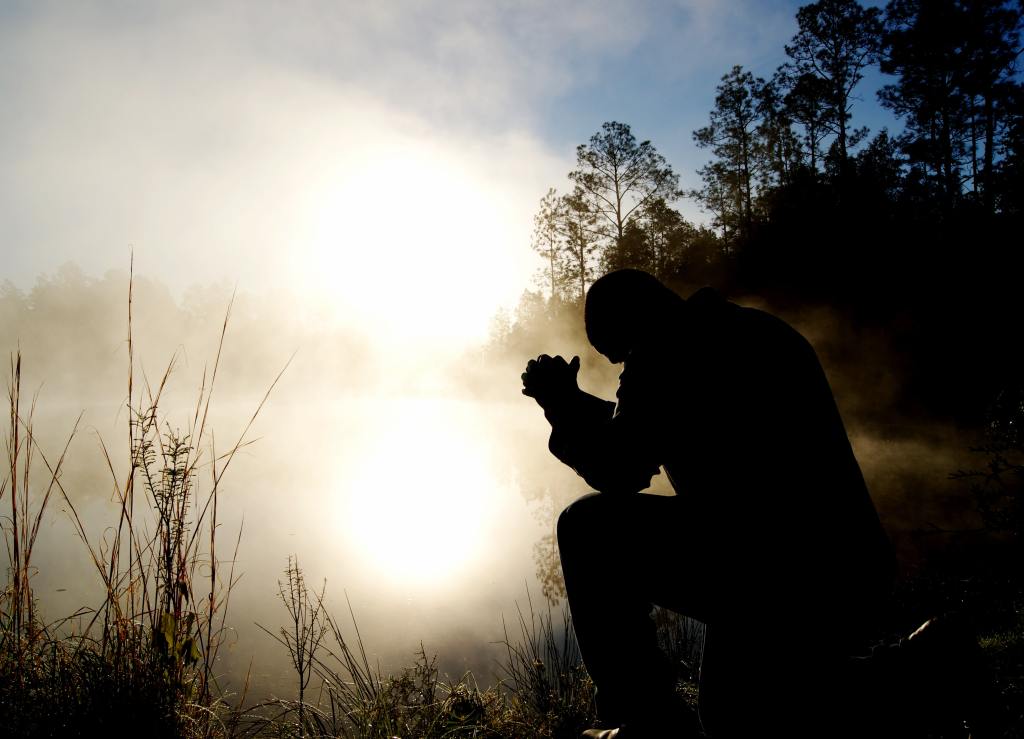
You may be looking at the title of this post and thinking “Dangerous prayers? There is no such thing!” But you, my friend, would be wrong. There are two kinds of dangerous prayers. The first kind is the obvious kind: prayers that are dangerous to the kingdom of darkness. Prayer is a powerful spiritual weapon. Paul even lists it in his famous text on spiritual armor: “And pray in the Spirit on all occasions with all kinds of prayers and requests. With this in mind, be alert and always keep on praying for all the Lord’s people.” (Ephesians 6:18). Just after telling us about the sword of the Spirit, Paul reminds us to pray all kinds of prayers on all occasions. Every single prayer on every single occasion is a dangerous weapon for the enemy to face because every single prayer of faith releases God’s power into the situation. But there’s another kind of “dangerous” prayer, and that’s the prayer that is dangerous to us. By that I mean it shakes up our status quo life and unleashes incredible things. This kind of prayer will dramatically change your life. It will open doors you never thought possible and radically change you from the inside out.

PRAYERS FOR GOD TO SEARCH YOU

This prayer is seen in Psalm 139 (specifically verse 23-24) and in Psalm 26:2: “Search me, God, and know my heart; test me and know my anxious thoughts. See if there is any offensive way in me, and lead me in the way everlasting.” and “Test me, Lord, and try me, examine my heart and my mind.” This prayer might seem harmless, but in actuality we are asking God for holiness. Holiness comes at a cost. It comes at the cost of dying to self. When you ask the Lord to test you and try you, you better be prepared for some discomfort. God may begin to reveal things about your character to you that you had kept hidden from yourself. Sometimes He does this gently with just a conversation. Sometimes, He places you in difficult circumstances to show you exactly what your heart is full of.

If you are carrying a cup full of coffee and someone bumps into you, you’re going to spill coffee all over them. That’s what the cup is full of, so that’s what comes out when pressure is applied. If you’re heart is full of God, when you undergo difficult and trying circumstances, the Fruit of the Spirit is what’s going to come pouring out of your mouth and all over the people around you. That’s the end goal anyway, but in my experience what often comes out first in trying and difficult circumstances is all the junk that has built up in our hearts along the way. The first words out of my mouth are not usually loving or patient or kind or gentle or even good…they are usually embarrassing and angry and impatient and, in some cases, unkind and harsh.

This is God’s way of examining our hearts. He opens us up and shows us exactly what’s inside of us. He humbles us and brings us to our knees to kindle a deep desire for His work of restoration in us. When God opens our eyes to our faults, it puts us in a better position to partner with Him in the process of sanctification. We recognize the junk that’s gotten into our souls, and we want to do whatever it takes to get rid of it.

PRAYERS DEMANDING ANSWERS

Sometimes we are going through something difficult and we don’t know why. It seems to come up on us all of a sudden, and so we turn to God with questions about why this is happening and what is going on. We want to know what He is doing in the circumstances we are in. In these times, we might pray a prayer like Job’s in Job 31:35: “Oh, that I had someone to hear me! I sign now my defense–let the Almighty answer me; let my accuser put his indictment in writing.” This prayer seems innocent as well. After all, we’re only asking God to tell us what’s going on, but this is a dangerous prayer. What you’re asking is either: a) for God to explain Himself or b) for God to reveal His plans and purposes to you.

If your reason for questioning God and demanding an answer is because you want God to explain Himself, then you better prepare yourself for the chastisement that Job received. When God was finished “answering” Job, Job repented. It wasn’t that God actually gave Job an answer to his question; he didn’t! He never explained to Job what was going on. He never told Job why all the calamities had entered his life. Job never knew about the meeting in heaven where God commended Job’s faithfulness and put such trust in Job as to allow Satan to test and torment him, knowing Job would not sin! Instead, God reminded Job of His greatness and His sovereignty! When He’s done, Job answers: “Surely I spoke of things I did not understand, things too wonderful for me to know.” (Job 42:3).

If you’re asking God to reveal His plans for you, you may receive the answer that Habbakuk got in Habakkuk 1. Habbakuk did not understand what God was doing. He was called to prophesy to the nation of Israel, but it all looked dark and violent and unjust. Habbakuk didn’t understand why the Lord would not save him from these revelations. The Lord answered him in verse 5: “Look at the nations and watch–and be utterly amazed. For I am going to do something in your days that you would not believe, even if you were told.” God is never obligated to answer our requests for answers. Praying this way is dangerous because God tends to either remind us directly of His power and sovereignty or else tease us that He has such big plans in store for us that even if He told us we could never believe Him. God obligates Himself to answer prayers for wisdom, but He does not obligate Himself to answer prayers for information or justification of His acts.

PRAYERS FOR SPIRITUAL GIFTS

Lest you think that dangerous prayers only exist in the Old Testament, there are quite a few examples of New Testament prayer that are just as dangerous. This prayer is one that Paul encourages us to pray! In 1 Corinthians 12: 27-31, Paul says: “Now you are the body of Christ, and each one of you is a part of it. And God has placed in the church first of all apostles, second prophets, third teachers, then miracles and gifts of healing, of helping, of guidance, and of different kinds of tongues. Are all apostles? Are all prophets? Are all teachers? Do all work miracles? Do all have gifts of healing? Do all speak in tongues? do all interpret? Now eagerly desire the greater gifts.” When we pray for God to give us the greater gifts we’re asking for gifts of teaching, prophecy, and apostleship.

Why is this dangerous? Well, teachers are held to higher level of responsibility than your average believer. James 3:1 tells us: “Not many of you should become teachers, my fellow believers, because you know that we who teach will be judged more strictly.” If we teach in error, we are not only responsible for our own sin and for the sin of false teaching, but we are also responsible for the sins of those who sinned by following our bad teaching. That’s a huge level of responsibility! Prophets have a similar level of responsibility. Prophets speak for the Lord. If they deliver a false message, they will be held accountable for it. And apostles are in charge of planting new churches and giving rulings on all matters for all churches under their leadership. I know this quote is from Spiderman, but it applies here as well: “With great power comes great responsibility!”

God wants us to willingly take on higher and higher levels of responsibility. Why? Because He wants us to operate in a place so far outside our comfort zone that we have no choice but to completely depend on Him. When we are in this level of dependence on His Spirit, we are in a position to grow more and more like Him. It’s a place of power and responsibility, but it’s also a place of humility, dependence, and discomfort. After all, it’s called a comfort zone for a reason. We like to stay in our comfort zone because it is easy and familiar, but God wants to grow us into the plans He has for us, and those plans generally require us to pick up a cross. A cross is anything but comfortable, but on the other side of that cross is resurrection power!

PRAYERS TO KNOW CHRIST

That brings us to the next dangerous prayer of the New Testament, the prayer to know Christ at deeper and deeper levels. This is the prayer that Paul prayed. He writes about it in his letter to the Philippians. In Philippians 3: 10-11, Paul writes: “I want to know Christ–yes, to know the power of his resurrection and participation in His sufferings, becoming like Him in death, and so somehow attaining to the resurrection from the dead.” You need only to take a look at Paul’s life to see why this prayer was dangerous. Paul desired to know Christ–to know Him intimately. Paul wanted to participate in the sufferings that Jesus had so that he could become more like Him, and suffer he did. Paul was beaten, stoned, shipwrecked, left for dead, imprisoned…. Paul underwent great suffering in his lifetime.

Ultimately, Paul was martyred. We don’t know how Paul died exactly, but tradition says that he was beheaded in Rome for the crime of being a Christian and preaching the gospel. Paul had done nothing worthy of death. In this, he walked the same road that Christ did, suffering for the message of Christ. There is no doubt that God used Paul greatly in his lifetime. After all, the bulk of our New Testament is the written work of Paul, but that understanding and power didn’t come without suffering and trials and tests of faith. When we pray to know Christ more, you can be assured that you will be put into positions that make you identify with Christ in ways you can not begin to imagine. You will experience chances to follow in His footsteps, to follow His example, in your everyday life. That includes experiences of suffering.

PRAYERS TO BE USED BY GOD

This is a prayer that I have prayed in my own life. It’s the desire of my heart to follow hard after God. I want to be a worthy servant of Jesus. Since I was young, I would pray dangerous prayers without knowing it. Often these prayers were about being used by God, being a willing vessel. I wanted to be a person who had faith like the people in the Bible. I would pray things like, “God, if the Bible were still be written today, I would want to be included. Make me into the kind of person you would write about. Give me great faith and help me be a good servant. I want to be a woman after your own heart.” Oh, my goodness, is this a dangerous prayer. God honored this prayer, but it was not easy. He has plunged me into so many uncomfortable situations. I’ve been stretched and shaped and molded into a new person so many times that I’ve lost count.

I also prayed once upon a time to be known like Paul was known. In Acts 19:11-20, we read the story of the seven sons of Sceva. These were Jews who went around driving out evil spirits by trying to invoke the name of Jesus over those who were demon-possessed. It seems fairly obvious by the story that these were Jews who didn’t believe in Jesus as the Messiah. They saw that His name had authority to cast out demons, and they were using it like a magic talisman of sorts. One day as they were going around saying, “In the name of Jesus whom Paul preaches, I command you to come out,” the evil spirit answered them and said, “Jesus I know, and Paul I know about, but who are you?” I prayed in my youth that I would be so fervent for the faith and for God that evil spirits would know my name like they knew Paul’s name.

Man, I’m sure no one doubts that this is a dangerous prayer. When you’re staying nicely in your comfort zone and not pressing forward in God or moving forward in your faith, you might be able to avoid Satan’s attacks. After all, if you aren’t taking territory for the Kingdom of God, you aren’t really posing a threat, but once you start moving out into new and miraculous ways that God has opened up for you, watch out! You’re going to face some serious opposition from the devil. After all, a fully willing servant of God is a vessel of God’s miraculous power and authority. They pose a huge risk to the kingdom of darkness.

I think we should all strive to pose a threat to the devil. Let’s be on fire for God, pressing into Him, following where He sends us, willing to do anything He’s called us to do. This kind of a yielded spirit is one that God can use for great things for the Kingdom!

PRAYERS IN THE FORM OF HYMNS

That brings me to my final category. We don’t often think of the hymns we sing as prayers, but they are…or at least they can be. The entire book of psalms is a collection of songs that David and other musicians wrote. They are also heartfelt prayers poured out before God, and they are dangerous! How many times do we sing hymns that say incredibly powerful things without thinking about it? It’s time we started paying attention to the words we are singing.

Here are a couple of my favorite dangerous hymns:

CLEANSE MY HEART (based on Jeremiah 18:3-17)

Change my heart, Oh God,
Make it ever true.
Change my heart, Oh God,
May I be like you.
Change my heart, Oh God,
Make it ever true.
Change my heart, Oh God,
May I be like you.
You are the Potter;
I am the Clay.
Mold me and make me.
This is what I pray.
Change my heart, Oh God,
Make it ever true.
Change my heart, Oh God,
May I be like you.
Change My Heart–Maranatha Music

REFINER (based on Romans 12:1)

If the altar's where you meet us,
Take me there; take me there.
If you're looking for an offering,
It's right here; my life is here.
I'll be a living
sacrifice for you.
You're a fire.
The refiner.
I wanna be consumed.
I wanna be tried by fire.
Purified.
You take whatever You desire.
Lord, here's my life.
If your glory wants to come in,
Let it fall; we want it all.
Lord, your fire is consuming.
Fill this place; set it ablaze.
I'll be a living
sacrifice for you.
Clean my hands.
Purify my heart.
I want to burn for you
Only for you.
Refiner Maverick City Music Tribl

I’d like to close with this poem which says so beautifully what I’m trying to communicate in this post:

IT'S DANGEROUS TO PRAY
I prayed, Oh Lord, bless all the world,
and help me do my part.
And straight away He commanded me,
"Bind up a broken heart."
I prayed, Oh bless each hungry child,
May they be amply fed.
Then God said, "go find a starving soul
and share with him your bread."
Oh, stir the hearts of men, I prayed.
And make them true and good.
God answered quickly, "There is one way.  
I stir men's hearts through you."
Dear Friend, unless you really mean
exactly what you say...
Until you mean to work for God,
It's dangerous to pray.
---Unknown

Boundaries

Photo by Amol Tyagi on Unsplash

Sometimes in Christian circles we struggle with boundaries. We might think that boundaries are meant to keep people out, or that by saying “No” we aren’t loving our neighbors, but boundaries are necessary if we want to be healthy, peaceful, loving people. Boundaries are not unloving, unhealthy or unChristian things. They can be unhealthy,however, if they are not within God’s limitationsYou may have heard the proverb, “Good fences make good neighbors.” This is a proverb based on the idea of healthy boundaries. A boundary is a limit that defines who we are apart from other people, guarantees us and others of certain rights, and puts responsibilities where they belong. Boundaries are necessary because they help us to be safe, preserve our self-respect and respect for others, clarify our interactions with others, and enable us to take risks to grow. A clearly defined boundary helps us know what we own (those things we are responsible for) and what someone else owns (the things they are responsible for).

Freedom is the ability for us to respond fully to God out of who He created and redeemed us to be. In order to do that, we have to know who God created us to be and who He redeemed us to be. We have to have healthy boundaries in order to do this properly. Think about a pet fish. That fish needs some things to live. It needs water, but what if we just put our pet fish in water without a tank? We’d have a fish flopping around in very little water on the floor. That would not be a life of freedom for that fish! It would be a life of struggle and suffering. The fish needs the tank as well. Water gives a fish life, but without the boundaries of the tank, the water can’t function. The boundaries of the tank allows the water to give life to the fish.

The Holy Spirit gives us life continually, but if we don’t have boundaries we may allow other people to take that life away from us. Healthy boundaries help us maintain and protect life. Self-control is one of the fruits of the Holy Spirit. It requires knowing how to exercise will power. Taking control of our life means knowing who God created me to be and then making choices to walk that out in my life and not allow others to take that identity and purpose from me. Consider Jesus. In John 2:23-25 we read: “Now while he was in Jerusalem at the Passover Festival, many people saw the signs He was performing and believed in His name.  But Jesus would not entrust Himself to them, for He knew all people.  He did not need any testimony about mankind, for He knew what was in each person.” Jesus did not seek identity or validation from the people around Him. He kept His focus on God as His source of identity and on the mission God had placed before Him. Jesus did not allow the judgements, opinions, or actions of others to cause damage to Himself. We want to have healthy boundaries that help us do the same thing.

Think of your life as a circle. Whatever I allow inside the circle becomes a part of my life. It is in the circle because I allow it to be there. Anything outside that circle belongs to someone else. We each have our own circles. Sometimes those circles touch, as in our relationships with our family and friends, but we do not have to allow others to dump their “junk” inside our circle. We can not blame the other person if we are allowing them to dump their “junk” into our life. We have to take action if we want to change the situation. If we do nothing the situation remains the same.

We learn boundaries as a child. We learn physical boundaries when we are properly touched and held. We learn emotional boundaries as we learn that our emotions belong to us and that it is okay to express them. We learn intellectual boundaries as we learn to have opinions and perspectives of our own. We learn sexual boundaries when we learn that it is okay to be a certain gender and that sexual parts of our bodies deserve to be treated with respect. When our families function in the way God intended them to, then we form healthy boundaries. If there is dysfunction in our family, we may have unhealthy ideas of boundaries. Family boundaries shape who we are. Our family relationships serve as a mirror of who we are and how we are seen. Family connectedness tells me the “truth” about who I am, even if that truth is ultimately a lie. If I constantly hear the message in my family that girls are not smart or not important, then I that will form my identity as a girl. It will be my “truth,” even though it is not God’s truth about who I am. If we are surrounded by these kinds of lies, they will take root in us and become a stronghold. We need to take our boundaries to God to check that they are healthy and appropriate and not a result of a stronghold in our life.

Boundary violations occur when others cross that inner or external “space” which defines us as unique human beings who deserve to be treated with equal value and respect. Our physical, emotional, intellectual, sexual, and spiritual well-being is tied up with how well our boundaries are enforced and respected. Will is one of God’s greatest gifts. He gave us a will so that we could choose. God valued the gift of will so highly, that He refused to interfere even when Adam and Eve misused their will and chose to go against God. It is important to realize that we have the right to choose. We choose what we allow into our circle and what we don’t allow.

Let’s take a look at three examples: Barb-wire Barbara, Jelly Jen, and Healthy Hannah to get an idea of the kinds of issues we can have with establishing boundaries.

This is barb-wire Barbara. Notice that Barbara has a fence around her, but it’s not just any fence. It’s covered in prickly barbed wire. Barbara’s boundaries say: “Don’t get too close to me.” Barbara says “No” to a lot of things. Her boundaries come from a place of hurt. She is responding to a stronghold.

This is Jelly Jen. Notice that Jen also has a fence around her, but her fence is full of holes. Anything and everything can get inside her fence. Jen feels like she is being a “good Christian” by helping people. She says a “definite yes!” to any opportunity that presents itself without considering whether she has the time or resources to actually accommodate the request. Jen is always exhausted and drained. She struggles with anger. She feels that her worth and identity is based on what she can do or accomplish. Jen is probably operating from an inner vow.

Finally, we have Healthy Hannah. Hannah has a fence around her. It is not prickly or uninviting, but it also does not allow everything inside. Hannah lives from a place of protection and love. She allows things in that align with her values and keeps things out that need to be kept out. She considers each opportunity to see if she has the ability and resources to meet it before she says “yes.”

What happens when a person “trespasses” what feel comfortable for us? How do we handle when someone does something that feels uncomfortable? We need to know what our boundaries are. What parts of our life are we responsible for? What parts of our life do we have control over? Then we need to ask these questions: 1) Is this within my boundary? 2) Is this my area of responsibility and authority? If the answer is “no,” then I don’t get a vote on the matter. It’s someone else’s issue to deal with. We can let it go. It does not affect us. If the answer is “yes,” then I have a vote, and if the answer to both questions are “yes” I may get the only vote.

To have healthy boundaries we need to be able to balance our identity and our call to servanthood. Sometimes, we need to let go of our “rights” in order to obey God and serve others. We see this with Jesus in Philippians 2:5-7: “In your relationships with one another, have the same mindset as Christ Jesus: Who, being in very nature God, did not consider equality with God something to be used to his own advantage; rather, he made himself nothing by taking the very nature of a servant, being made in human likeness.” Healthy boundaries allow us to serve others by making sure that we are serving from a place of peace and rest rather than from a place of obligation and resentment. We need God to define these boundaries in us.

The area where we may struggle most is when it comes to indirect communication. We may not know how to handle it when someone gives us mixed signals by saying one thing while doing another. We can remedy this by making what is indirect, direct. For example, say you are talking to your child and you say: “The trash is full.” That’s indirect communication because what you really mean is: “Take out the trash.” Your child could respond by agreeing: “Yeah, the trash is full.” They don’t do any more than that because you didn’t actually clarify your message. When a message is unclear, we need to make it clear. When people use nonverbal communication as criticism, we can bring it out to the open so that ownership was taken? “Are you saying ______________________?” They have the ability to clarify their message and take ownership of it. Once ownership is taken we can move forward.

How do you know if you have healthy boundaries? Try asking yourself these questions. Rate yourself as “never”, “rarely”, “sometimes”, “often,” or “always.” The more often you move away from “rarely” and “never,” the more you need to take a new look at your boundaries.

  • Do you feel stressed out, overwhelmed, burnt out?
  • Would you do most anything to avoid hurting others?
  • Do you feel as if your kids (spouse, parents, others) run your life?
  • Do you feel as if you are never caught up, or as if your life is not your own?
  • Do you feel taken advantage of by those you love?
  • Do you resent others for being so demanding and inconsiderate?
  • Do others’ needs seem much more urgent than yours?
  • Do you see yourself as the only one who can help, and that you therefore should say yes?
  • Do you tent to meet other’s needs before your own?
  • Do you question the legitimacy of your own need?
  • Do you hate to disappoint others’ expectations?
  • Are you secretly afraid that if you don’t do what others ask of you, that they will leave you?
  • Do you say “Ok” or say nothing when you would rather not do something for someone, because you don’t want a confrontation?
  • Do you deep down believe that if you don’t anticipate people’s needs and provide services for them, they won’t want to be with you?
  • Do you try to convince yourself that your feelings aren’t real, or that you shouldn’t have those feelings, or that your feelings don’t matter compared to the other person’s feelings?
  • Are you very distressed if someone disapproves of you?
  • Are you very distressed if someone seems as if they don’t like you?
  • If someone criticizes you, do you automatically believe that their criticism is true?
  • Do you let other people define what your behavior means (ie “you really don’t love me if you won’t______ )?

God can take unhealthy boundaries and make them healthy. We need to pursue our freedom and identity in Him if we want to have healthy boundaries.

ACTIVATION

Ask God:

  • Are there things in me that I am trying to make someone else responsible for?
  • Am I trying to make someone else own my problems, my fear, or my pain?

If God shows you something here, then repent for that and ask for His help in dealing with your emotions.

Ask God:

  • Am I taking responsibility for someone else’s troubles?
  • Am I taking ownership of their pain or fear?

If God shows you something here, then you can say something like “I am bringing this person back to you, God. I release them to you. I know that I can’t be Jesus for them. You are their help.”

Ask God:

  • Is there anything about the family that I grew up in that you want to show me?
  • Is there someone that I need to forgive?
  • Have I put judgements on my family or on someone in my family?
  • Have I labeled them in some way?

If God shows you something here, repent. Forgive. Do the work that God shows you to do.

Father, when we received the gospel of our salvation, we were sealed in Jesus with the Holy Spirit of promise. We invite you in, Lord Jesus, to seal any area where our boundaries were not developed and not established. We ask you, Holy Spirit, that you will fill every area where there is emptiness, and that you will teach us what it means to make choices and to exercise a healthy boundary and a healthy will with you–a will that is surrendered and submitted to your authority.

Watering The Seed

Photo by Pedro Kümmel on Unsplash

Have you ever planted a garden? Maybe it was a flower garden, or maybe it was a vegetable garden. When we were young, my family purchased a mobile home with about 2 acres of land around it. My dad planted roses in the front of the house along our long driveway. Then he decided to plant a small vegetable garden at the back of our home along with a small orchard of various varieties of fruit trees. This would give us affordable access to fresh food during the year. I remember helping my father map out the area. After we had the area mapped out, my father began tilling the soil, turning it up and taking out any stones that might cause a problem for tender roots. Once we had tilled the soil, we fertilized it. Then came the work of planting.

We carefully chose the seeds for the vegetables we wanted to plant. Then, we set about making neat rows and planting the seeds, making sure they were properly spaced. We watered and weeded and tended those seeds for what seemed like a long time before tender shoots began to sprout. We kept tending them until the plants were fully matured and we had a rich harvest of all the seeds we had planted. I think it was a testimony to our diligence and determination that each seed produced a plant, and each plant produced a harvest. We definitely had plenty to eat that year. We even had some to share with our neighbors, and every year after that our plants produced abundantly. All because we took the time to tend those plants carefully.

God has a lot to say about sowing and reaping in His Word. In Matthew 13, we read the parable of the sower. Jesus compares God to a farmer planting seed. He talks about the seed falling on various types of ground: hard, rocky, thorny, and good. Later, He explains to His disciples the meaning of the parable. We learn that the seed is the Word of God. The hard ground is a person who is unwilling to accept any of God’s message at all. Satan comes and steals away the seed immediately. The rocky ground is the person who is willing to accept the message, but doesn’t root themselves in the word. They only accept God’s message on a surface level. They don’t allow it to change their lives. The thorny ground is the person who willingly accepts God’s message and tends the seed long enough for it to grow roots, but this person lacks endurance. When trials and cares come up in life, they neglect God’s Word, and as a result the seed is choked off before it can produce a harvest in their life. Finally, the good ground is a person whose heart has been prepared. The stony ground has been turned up, the soil has been fertilized, and they are ready to receive. They willingly and joyfully accept God’s message. They allow it to change them–to grow roots. They carefully tend it, watering it and weeding around it, until it produces a full harvest in their lives.

When we hear this parable in sermons, we’re often told about how to prepare our hearts to receive God’s word. We learn how to pray that God would prepare us and make us good soil. We may talk about the pain that’s sometimes involved with plowing up the stony ground of our hearts. We may even talk about weeding around the seed once it’s been planted or about ways that we can develop our roots and dig deep, making sure the seed is firmly rooted in our lives. Something we don’t hear a lot about is how we can water the seed planted in our lives. Without water, a seed will fail to sprout. Seeds need water and sunlight in order to gain the nutrients it needs to live. So how do we water the seed?

The Bible speaks a lot about water, usually about living water. Jesus is the living water. The Holy Spirit is the spring of living water in each of us. Isaiah 44:3 says: “For I will pour water on the thirsty land, and streams on the dry ground; I will pour out my Spirit on your offspring, and my blessing on your descendants.” The Holy Spirit is water poured out on each and every one of us. When we allow the Holy Spirit to do His work within us, we are watering the seeds of God’s message that have been planted through our reading of His word or through the sermons that we hear at church. Psalm 72: 6 says: “May he be like rain falling on a mown field, like showers watering the earth.” Sometimes we think we need a Bible scholar or a pastor to help us grow, but really all we need is the Holy Spirit. It is amazing what God can show us in His Word when we approach it with the Holy Spirit as our guide.

Paul gives us another key to watering the seed of God’s Word in our life. In 1 Corinthians 3:6-8, Paul says: “I planted the seed, Apollos watered it, but God has been making it grow.  So neither the one who plants nor the one who waters is anything, but only God, who makes things grow.  The one who plants and the one who waters have one purpose, and they will each be rewarded according to their own labor.” Paul says that he planted the seed in the church at Corinth. Paul came first with the gospel message and led people to faith in Jesus Christ, but then Paul moved on to other places in his missionary journeys. The people needed someone else to help them grow in their faith. That person was Apollos. Apollos came to the church at Corinth and preached to them as well. He would have told them the same message that Paul preached.

Paul says it was Apollos’ job to water the seed. How did he do it? By repeating the message! Think about the sermons you hear on Sundays. Many times, they may seem to cover the same ground over and over again. They might look at the same topic from different angles, but there is a level to repetition in the preaching that you hear. That’s watering the seed. We need repetition in order to get the truth of the word from the realm of our knowledge in our head to the seat of faith in our heart. I know this is definitely true in my own life. For much of my life since my teen years, I struggled with anxiety. I heard message after message on trusting in God and letting go of anxiety. In my head, I had a lot of knowledge about the verses that encouraged me to “fear not” and to put my trust in God, but it didn’t stop my struggle. Then one day, my pastor spoke about anxiety. At some point in the message, it felt as if a key entered into a lock on my heart. The key turned and it felt as if a chain dropped off. I haven’t struggled with anxiety since that moment.

It wasn’t that this was the first time that I heard a message on anxiety. It wasn’t even the second or the third time I’d heard it. But it was the first time that the message finally made its way into my heart and did the work God sent it to do. The seed was planted the first time I heard the message, but it needed repeated watering with repeated messages about the topic. It needed weeding in my life where God took out other things that were hindering me: things like unforgiveness and anger. As I allowed the Holy Spirit to work on the soil of my heart and on the weeds, I also allowed the Holy Spirit to water the seeds through the repeated messages I was hearing, and when the time was right that seed produced a harvest of an end to my anxiety.

That’s how the message of God works! When we are faithful to press into God, to listen to the messages He sends us through His Word and through his messengers (pastors and teachers) and through the revelations He gives us during our prayer time, when we allow the Holy Spirit to uproot the weeds in our life (unforgiveness, bitterness, rejection, etc) we tend the seeds He’s given us. We plant them in good soil. We allow the Son to shine on them. We allow the Spirit to water them. We allow God to pull up the weeds. In the fullness of time, we reap a harvest. Galatians 6:9 says, “Let us not become weary in doing good, for at the proper time we will reap a harvest if we do not give up.” That’s what we want–a harvest of the fruits that God’s word produces in our life.

Restoring My Soul

Photo by Tadeusz Lakota on Unsplash

I love rehab shows. You know the ones that take an abandoned derelict old house and fix them up to be the best looking house on the block? I also like those restoration shows. The ones where they take antique and vintage items and restore them to like new condition. I am amazed at the kind of magic that a real master contractor or master restorer can work on what most people would consider trash. If I’m honest, there are times in my life when I feel like one of those old relics. I feel like my best days are behind me, and I’m just sitting empty and abandoned, waiting for someone to do some serious restoration work on me. David apparently felt the same way. In Psalm 23, he talks about the Lord as his shepherd. In verse 3, he says “He [the Lord] restores my soul.” Ahhh….restores my soul. That sounds amazing! When I read those words I feel hopeful that the Lord is about to start an amazing work in my life.

Restore means to repair, to renovate, or to return to a former condition. When it comes to our lives, we can see our need for repair and renovation. When it comes to our souls, what we all long for is a return to the Garden of Eden. That’s the former condition we all wish to embrace. It’s a place of unbroken fellowship with God. It’s a place of perfect rest and peace. God is the master workman, and the work He can do in my life is unparalleled. It’s a work of art. God says that we are His workmanship (Ephesians 2:10), and we are workmanship that He is constantly at work on. He has begun the work of restoring our souls, and He will one day complete that work as well. He is the author and finisher of our faith, after all (Hebrews 12:2).

Sometimes we make the mistake of trying to do this work of restoration for ourselves. We read self-help books. We book spa retreats. We take yoga classes. We make a vision board. Anything and everything within our power to change what we do not like about our lives, and while some of these things can be relaxing and helpful, none of them touch our soul (our mind, will, and emotions). Restoring our soul takes the hand of a Master. God is the only one who can restore a soul. We can’t do this work ourselves, and sometimes that’s incredibly frustrating for us. Because a real Master takes time. Restoration is a detailed process. It requires precision tools and time to get something back to mint condition. It’s not an overnight thing, but often we try to manipulate circumstances around us to try to speed up the process. It’s hard to wait on God to do the work for us. We want to take control ourselves and rush it through.

Often when we’re waiting on God’s restoration work to be complete, we think about all the things that have gone wrong. We think about what we’ve lost before the restoration work started–the opportunities we missed out of fear or hurt. But God is a Master workman. He doesn’t leave us in our neglected condition, and He doesn’t waste anything. God promises not only to restore our souls, but to restore those things we lost in the process. In Isaiah 61:7 He says that He will give us a double portion in place of our shame. Zechariah 9:12 says that as prisoners of hope, God promises to restore twice as much to us. Joel 2:25-26 says that He repay us for the years the locusts have eaten. Wherever there is loss, God gives back double for those who wait on His restoring work.

God’s work of restoration requires three things:

  1. Rest. We have to find rest in the Lord. In Matthew 11:28-30, Jesus invites all who are weary and heavy laden to come to Him and receive His rest. When we’re in need of serious restoration work, we need deep and abiding rest. Sometimes this is a place of physical rest. There are times when we’ve run ourselves ragged trying to get ahead, and we need to let go and rely fully on God. Sometimes this is a place of spiritual rest, where we hand all our cares to God because He cares for us.
  2. Reflection. When we reflect, we are trying to look at life through God’s perspective. We are seeking to see things the way He sees them. That requires time in His Word. It’s with the renewing power of His word that our souls are restored. We get a perspective shift. We get our worldly filters and lenses replaced with lenses of truth. Psalm 19:7 says, “The law of the LORD is perfect, refreshing the soul. The statutes of the LORD are trustworthy, making wise the simple.” When we open our souls to God’s Word, we open the door to His work of restoration in our lives.
  3. Replenishment. When we are focused on God and on His greatness, God renews us with hope and with joy. He fills us up again. Jeremiah 31:25 says, “For I will satisfy the weary soul, and every languishing soul I will replenish.” God knows just what we need to be in tip-top shape. As our designer and creator, He knows our purpose, and He knows the plans He has in mind for us. When we rest in Him, when we turn our focus to Him, He not only restores our souls, but He replenishes us with all the things we’ve used up. He gives us hope. He gives us joy. He gives us peace. He gives us rest.

As our Shepherd, God takes care of us. Sheep don’t stay in one place. They wander all over the place. As our Shepherd, the Lord seeks us out. He is mindful of us. He leads us into green pastures where we can find provision and sustenance. He brings us by the still waters where it is safe for us to drink until we are full. And He restores our soul. He repairs the wounded/broken places. He renovates the empty and neglected spaces in our lives. He returns us to the Garden of Eden, where we have unbroken fellowship with God. He restores us to like new condition with a touch of His hand. He is the Master, and we are His workmanship. No matter how bad a condition I find myself in, God is faithful to restore me. He makes me a beautiful work of art, so that everyone who sees me find it amazing and recognizes the Master’s hand at work in me.