Happy Easter!

Photo by Bruno van der Kraan on Unsplash

Today is Easter Sunday. Some churches call it Resurrection Sunday. The day when the entire church celebrates the resurrection of Jesus Christ. Friday was all about atonement and forgiveness. Without Friday, we would all stand condemned by our sins and separated from God forever. It is Friday that gives us the opportunity to have a relationship with God and to be forgiven for our sins. But today is Sunday, and Sunday is all about life! Friday took care of our sins and separations, and Sunday gave us resurrection power to invade our everyday lives. We need the message of both. On Friday, I identified most with Jesus’ disciples–the men who walked with Him and talked with Him for three years, the men who had formed expectations for what it meant that Jesus was the Messiah, the men who were known thrown into a world of chaos that made no sense. On Sunday, I identify most with Mary Magdalene.

Mary Magdalene was from the town of Magdala. We don’t know where she met Jesus. We don’t even know when. It’s possible that she met Jesus at the recently discovered first century synagogue on the outskirts of Magdala, a place where Jesus may have done some of his teaching. What we do know about Mary Magdalene is that Jesus delivered her from demons. Mark tells us that seven demons were driven out of Mary Magdalene. Some people theorize that she had to have seven separate exorcisms because the previous exorcisms were only partially effective. Some people theorize that the number seven is symbolic and simply means that Mary was overwhelmed by demonic power. I’m not sure it really matters.

Mary was wealthy. She supported Jesus’ ministry financially, and some scholars suggest that she played a pivotal role among Jesus’ female believers in the same way that Peter played a pivotal role among Jesus’ male followers. Contrary to popular opinion, there is no evidence that Mary Magdalene was a prostitute. She was not the sister of Martha (that was Mary of Bethany). There is considerable debate about whether or not Mary Magdalene was the “sinful woman” who anointed Jesus’ feet at the home of Simon the Leper. These are all church tradition. But the gospels do tell us that Mary was present at Jesus’ crucifixion, at his burial, and at his tomb on the first Easter morning.

That’s where I find myself in the character of Mary. Mary arrives at the tomb just after dawn on Sunday morning. The Sabbath has ended. It’s the first day of the week, and Mary leads a group of women to the tomb with spices to finish the burial rituals that were curtailed and rushed because of the Sabbath. There is a guard stationed at the tomb. There is a stone placed in front of it, and the women discuss how in the world they’re going to get that stone out of the way in order to properly wash and anoint the body.

It surprises me that the first people told about the resurrection of Jesus are women, and at the same time it doesn’t surprise me at all. Yes, the principle mourners in Jewish custom were women. It seems to be the only time that any restrictions on their speech and movement were suspended. Jesus has always given women a prominent place in His kingdom. The women funded the ministry–nothing new in first century Israel–but Jesus seems to go beyond that. He shows care and consideration for His mother. He talks to the Samaritan woman at the well. He heals the daughter of the Gentile woman who came to Him. Jesus embodies the fact that God is no respecter of persons. He does not play favorites. All are welcome.

And women….we get things done. We’re detailed oriented. We’re relational. When something happens, who organizes meals for the family? Who is there taking care of things? It’s the women. When someone is ill, who tends them? Who stays up all night praying and worrying? Women. So it’s no surprise that the women are the ones who are on the way to the tomb just after dawn on the first day of the week. Perhaps they all decided to journey there after a sleepless night. Either way, they go to the tomb. When they arrive, they find the stone has been moved and the body is gone.

Now the other women disappear from the narrative, and Mary Magdalene stays. It is Mary who looks into the tomb and initially mistakes the angels for gardeners. She wants to know who stole Jesus’ body. It is Mary who doesn’t recognize Jesus at first and thinks He is a gardener as well. It is Mary. She loves Jesus. After all, Mary has felt Jesus’ resurrection power at work. Mary was filled with demons. Her life was nothing but torment and chaos…until Jesus. Jesus didn’t just restore Mary’s health and sanity and life. No! He resurrected it. He took what was broken beyond repair, and He made it new. That’s what resurrection power does. It breathes new life. New life in such abundance that the old life isn’t even recognizable anymore. Mary knew resurrection power in her own life, but delivering someone from demons and raising them from the dead are very different things.

So, it is Mary who cannot let go of the Lord. It is Mary who is desperate to have just one more minute with the Lord. She begs the angel and Jesus to tell her where the body is. She will move it herself. She will handle everything. Just one more minute. Just one more look. Just one more conversation. I think because Mary understands resurrection power already, the Lord let her see resurrection power at its fullness. Mary doesn’t recognize Jesus at first. He has new life. He has been resurrected, not restored, and there is something there that makes Him appear a bit different, but Mary recognizes His voice when He speaks. Jesus has shown her that there is no limit to His resurrection power. He has been raised from the dead.

And now, the cry of Mary’s heart has been answered in a way she could never imagine. That prayer for one more minute with the Lord’s body is transformed. It’s no longer a wish for time with the dead. Now it has been changed. It has undergone resurrection power. Mary can have time with a living Lord! There are lots of times when my heart cries out for one more minute. One more minute in Your presence, Lord. One more touch from Your hand. One more answered prayer. One more glimpse of Your glory. And my prayer can be answered for eternity because the Lord lives! Death has no power here. It has no power over my prayers. It has no power over my dreams. It has no power over the places in my life. It has no power over my spirit. One day, it will have no power over my body because Jesus has released resurrection power into the world.

I have an eternity ahead of me of “one more minutes” with the Lord. I have an eternity of relationship with God open to me. My prayers are given new life. My dreams are given new life. The dead places in my life hold the promise of new life….resurrection life. My spirit has been given new life, and when the Day of the Lord comes, my body will be given new life as well. It’s a treasure far beyond anything I could ever imagine, and it’s available because of Easter Sunday.

Jesus told the disciples who He was, and they believed Him in a limited way. He healed the sick. He raised the dead. He taught the Word of the Lord with authority. He was the Messiah. But there were many men in Jerusalem at this time claiming to be the Messiah. The Bible tells us that in the last days, there will be men claiming to be the Messiah, performing miracles, healing the sick, and raising the dead. So what makes Jesus different? The resurrection. The resurrection was God’s seal of approval on Jesus’ ministry. It was a “certificate of authenticity.” Mohammed may have been a prophet for the Islamic faith, but Mohammed died and was buried. His body lies there still. You can take a pilgrimage and visit his grave. The same is true of Siddartha Gautama, the first buddah. The same is true of Joseph Smith or David Karesh or any other charismatic leaders of various faith traditions. But it is not true of Jesus. There is no tomb holding the body of Jesus.

God resurrected Jesus. He released divine power and brought forth new life. It’s a miracle of creation just like in the beginning. Now that miracle is available to each and every one of us. What places will we receive resurrection power in our lives today? Will I receive resurrection power in my family? God can do more than restore my children to me. He can breathe new life into our family structure. Into my every day. Will I receive resurrection power in my marriage? I can already see the glimmers of it. God is breathing new life. In my finances? There, too. I see a stirring of resurrection power. Not just restored life….NEW life!

Where ever you are, whatever you need, no matter what kind of dead places you may have in your life, God is holding out resurrection power to you. If you have never given Jesus your life, if you have never known Him as Lord, He stands before you holding out resurrection power to you, too. Resurrection power. The promise of New Life. And that’s what we celebrate on Easter. A promise of new life that isn’t limited to a single day in history. A promise that is available to anyone…anywhere…every day!

Black Saturday

Photo by Karim MANJRA on Unsplash

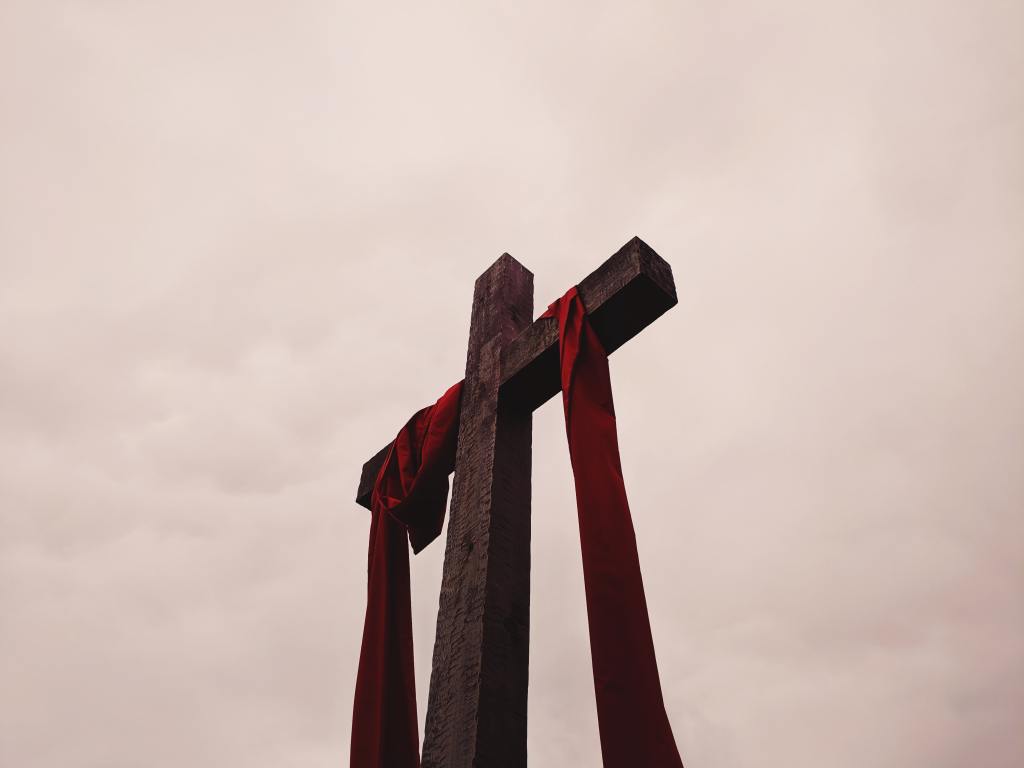
Today is Black Saturday of Holy Week. Jesus was crucified yesterday, and today His disciples are left to try to figure out what God is doing here. It’s a day when the churches that celebrate Holy Week hold a special vigil.

Today, I am reminded again just how much the COVID-19 pandemic has put the days of Holy Week and Passover into clearer focus. In my state, many people are afraid. Our governor has extended the lockdown order until the end of the month, when it was originally set to expire on Monday. In addition, she has added a bunch of executive orders that crack down even harder on people’s civil liberties and rights as US citizens. All done, of course, in the name of public health and safety. We are unable to gather in our church buildings to celebrate Easter. We were unable to gather together in those buildings to take communion and celebrate Good Friday as well. For some people, this is a time of intense anxiety and a sense of general chaos going on in the world around us.

And that’s exactly how the disciples felt today. Jesus had been crucified. He didn’t call down angels to save Himself and set up the Kingdom of God here on earth. He didn’t even defend Himself at trial. Peter had denied Him three times in the moments leading up to the cross. Mary, His mother, was heartbroken. She had watched her son suffer and die an agonizing and humiliating death, and she more than anyone else knew that He was the Son of God. Yet, He was gone. Now the disciples gathered together in fear. Would they be next? Would a group of temple guards or Roman soldiers come to kill them as well? What about Jesus’ teachings about who He was? What had all those Old Testament prophecies about the coming Messiah meant?

We have the benefit of hindsight. You see, we know how the story ends. We look on the pain and agony and humiliation and darkness of Good Friday, knowing that Sunday is on the way. So we often gloss over the actual feelings of the disciples. We neglect to meditate on the chaos and the confusion and the complete abandonment they must have felt, and yet I know those feelings. Even as a disciple of Jesus, I know them. There are many times when I feel abandoned…when God seems silent. There are many times when He does not answer my prayer, or rather, He does not answer the way I want Him to answer or in the time frame I want Him to answer. Yet, He is there. I am not truly abandoned. It is dark and lonely from my perspective, but Sunday is on the way.

God never lost focus of Sunday. He wasn’t silent. He wasn’t absent. He wasn’t negligent. He wasn’t idle, either. God was still working. God IS still working. Even when it’s dark. Even when we feel abandoned. Even when it seems as if the world around us is consumed by utter chaos, and we have no idea what God is doing, He is working. He has a plan, and that plan is coming into focus, even as our own focus is completely lost.

There are lots of theological discussions about what happened between the time Jesus died and the time He raised from the grave. Maybe I’ll explore those at another time. I think this year, I’ll just focus on the day from the disciples point of view because that’s a point of view I can easily understand. As I sit today, sheltering at home, with chaos going on all around me, I will remember that this is exactly how they felt, not knowing what was going on or what would happen next. Just as then, the world as I know it is suddenly upended, and I can not see what God is doing. But I know something they did not know. I know Sunday is on the way.

As the world around me rushes around and panics, I will choose the path of faith. Faith that God is here. Right now. Faith that God is working. Right here. Right now. Even though I can not see what it is that He is doing. He has a plan. A wonderful, marvelous plan that is even greater than anything I could ever hope for or imagine. Just like then. The disciples thought it was all over. Jesus was dead. Life was over. Their hopes…their dreams….gone. Just like that. But God was saving the entire world. The entire human race from the dawn of time to the end of time, saved and redeemed and set free in that one act of sacrifice. It was finished. They didn’t know it then, but I know it. I know it because I am on the other side of the Easter story.

One day, when this has run its course and life has assumed its new normal, that will be my testimony. I will stand on the other side of the COVID-19 story, and I will tell the world how God was moving even on the darkest days. I will testify to the wonderous work that God performed…the miracles He made out of chaos…because that’s who God IS. Just as the disciples would stand on the steps of the temple on the day of Pentecost and boldly proclaim what God had done on Good Friday and Easter Sunday, I will proclaim the work of God when I, too, am on the other side.

Friday is over……BUT SUNDAY IS ON THE WAY!!!

Good Friday

Photo by Alicia Quan on Unsplash

Today is Good Friday. It’s the culmination of God’s plan of redemption. Today, Jesus will be flogged, beaten, ridiculed, spat upon, and ultimately crucified between two thieves. He will die before the other two, and He will be buried in a borrowed tomb before sunset. He has undergone multiple betrayals. He has undergone suffering that most of us will never know or understand, and it is in these final moments that His greatest lessons for us, His followers, are taught.

The thing is that as much as we contemplate what Jesus did for us on this cross, we will probably never grasp the full impact of it. Even the very fundamental basics of this work are difficult to grasp. It will take a lifetime of contemplation and revelation to even come close, and maybe that’s the point. It’s definitely why Paul prayed in Ephesians 1: 17-19: “I keep asking that the God of our Lord Jesus Christ, the glorious Father, may give you the Spirit of wisdom and revelation, so that you may know him better. I pray that the eyes of your heart may be enlightened in order that you may know the hope to which he has called you, the riches of his glorious inheritance in his holy people, and his incomparably great power for us who believe.”

So what happened on Good Friday? Why do we call it good when it’s the darkest day in history–a day when the most innocent man to ever walk the earth was killed for His righteousness, abandoned by His friends and cut off from God? What makes a day like that “good”?

ATONEMENT

Fundamentally, Jesus’ sacrifice on the cross was an atonement for sins. You see, sin separated us forever from God. God is holy. Nothing that is unholy can occupy the same space as holiness. Holiness is an all-consuming fire. If we, being unholy, entered the presence of God, we would instantly be consumed by His holiness. Now many people view this as a reason to distrust God. They get an image of this huge fire that shoots out from God’s throne and consumes people left and right for no other reason than that they are human and maybe made a few mistakes. That’s what Satan wants you to think. Just as he twisted the truth in the Garden of Eden to trick Eve into violating God’s law and ushering in sin, he continues to twist the truth of who God is in order to keep us separated and at a distance from God.

You see, God didn’t choose to be holy. He can’t choose holiness. Holiness is who He is. God knows that. He knew that Adam and Eve would be unholy if they ate of the tree of the knowledge of good and evil. That’s why He told them not to eat from the tree. They could eat of every other tree in Eden, but not that one. They could even eat of the tree of life as often as they wanted–just not the tree of the knowledge of good and evil. And when you think about it in those terms, it suddenly seems ridiculous that Adam and Eve would give up abundance for a bite from that one forbidden tree. Still, they ate from it, and that meant they were cut off from God. They could no longer have a relationship with Him like they did before. It was too dangerous for them. At any moment, His holiness could consume them.

So God removed them from His presence. We look at this as punishment, when in fact, it’s a great act of love. God loved them too much to risk them being consumed. He loved them too much to leave them cut off forever. That’s why He removed them from Eden as well, and why He blocked the way to the tree of life. If Adam and Eve had eaten from the tree of life now, they would be locked into this state of unrighteousness forever. There would be no opportunity for redemption. So God made sure they could not seal their fate. He made sure there was a way out.

That way out involved sacrifice. It involved the shedding of innocent blood. The law required blood to be shed for the remission of sins. Blood is a representation of life. So whose life would be valuable enough to cover over and pay for the sins of the entire world, past present and future? Whose life would hold enough power to undo all the wrong? Whose life would hold enough power to create a new life? Only God’s.

Only God’s life was valuable enough to cover over and pay for the sins of the world. Only God’s life could be exchanged to recreate the world to the way it was before sin entered. Only God’s. And so God put on flesh and dwelt among us. He experienced our condition. He knew what it was to be tempted to make the wrong choice. He knew what it was to love imperfectly and to love perfectly. He knew what it was to be hungry and thirsty and exhausted. He knew what it was to be hurt, physically and emotionally. Every possible experience of human life, God walked through as Jesus Christ. Yet, He maintained connection with the Father. He did not sin. So that He could be the ultimate sacrificial lamb.

You see, Jesus knew what God had put Him here to do. He knew that this path He was on, calling disciples and doing miracles and teaching about God, would culminate in that walk to the cross and in that crucifixion. It’s one of the reasons in His most human moment in the Garden of Gethsemane that He cried out to God asking that the cup be removed, and yet His desire to do God’s will–His love for us–was so much greater than the request being asked of Him. You see, if Jesus hadn’t hung on that cross, if He had never been punched and spit at and mocked, if He had not suffered every single lash from the Roman cat of nine tails, if He had not been nailed to the cross to die….well we would have been separated from God forever. We would never be able to be in the Father’s presence. Not ever.

Jesus loved us so much that He could not let that happen. He laid down His life so that we would have a chance to return to God’s presence and not be consumed by His holiness. Beyond that, He laid down His life so we would not just be creations of God, we would not just be worshipers of God, we would not just be servants of God…we would be God’s sons and daughters. Do you see how great the Father’s love for us? Jesus who knew no sin became sin for us. He didn’t just take our sins upon Himself….He literally became sin. He experienced ultimate and complete separation from the Father–the fate that we all were destined for. It caused Him to cry out “My God! My God! Why have you forsaken me?”

At this moment, the price for our sin was paid in full. All the sin we would ever commit. All the sin we could ever commit. All of it. Paid in full. No more debt owed. No more separation. We were able to be “at one” with God again. We could experience at-one-ment…..atonement….through Jesus Christ.

FORGIVENESS

So Jesus’ death paid for our sins, but He also offered us forgiveness. When Jesus hung on the cross, He cried out: “Father, forgive them, for they know not what they do.” Jesus, Himself, beyond His work to pay for our sins, offered us forgiveness. Forgiveness is about relationship. You seek forgiveness because you want to keep the relationship or re-establish a relationship. God wanted relationship with us, and that meant offering us forgiveness for the things we do to damage that relationship.

In doing so, He offered us the power to forgive others. You see, when compared to the things we have done to Jesus and to God Himself as a result of our sin, there is nothing that anyone could ever do to us that would be outside the realm of forgiveness. It can all be forgiven. We can take any offense and hurt and place it under that blood at the cross. We can cover it totally with that blood. And in doing so, we remove the power of that act to damage us. It’s been said that holding on to unforgiveness is like drinking poison and waiting for the other person to die. The only person harmed is ourselves.

God didn’t want harm to come to us in any form. His love sought to protect us, even from ourselves. So He gave us the road of forgiveness, that we might offer that forgiveness which we have received to others. And by offering forgiveness to others, we keep ourselves from harm.

FREEDOM

It is for freedom that Christ set us free. Whether you believe it or not, before you made Jesus Lord of your life, you were a slave to sin. You lacked the ability to overcome sin or temptation. You might avoid the big sins in life, but at some point you were going to miss the mark. Our sin nature makes it impossible for us to be holy, but Jesus’ death allowed the Holy Spirit to come into our lives and dwell within us. As a result, we have the Holy Spirit’s ability to resist sin. We are free because of Jesus.

There is nothing that has power over us any longer. Nothing. Think of it! Jesus lived a life of true freedom. He understood who He was and what His purpose was. That is freedom, and Jesus offers that freedom to us. Now, we have the ability to understand who we are and what our purpose is because Jesus has given us spiritual sight. He has given us relationship. He has given us redemption. He has bought us back. We are no longer slaves to sin or fear or any of the other things that seek to control our lives. We are daughters and sons of God–co-heirs with Jesus. We are seated in heavenly places.

HEALING

The Bible says that “Surely He took on our infirmities and carried our sorrows; yet we considered Him stricken by God, struck down and afflicted.  But He was pierced for our transgressions, He was crushed for our iniquities; the punishment that brought us peace was upon Him, and by His stripes we are healed.…” Every stripe on His back was for our healing. And not just for our spiritual healing. He offers us physical healing as well. The power necessary for our healing was released right then at the moment of Jesus’ death.

You see the work of Jesus’ on the cross was a work of restoration. He put everything back into the order that was there in the beginning. He restored all of it to the point of creation. At least, in the spiritual realm. We are still waiting for some of these things to be manifested in the physical world on a daily basis. That will happen at the second coming of Jesus, when His victory over the devil is complete and a new heaven and new earth come into existence.

Often we think of Jesus death as being at the hands of someone else. It’s been an excuse for anti-semitism and all manner of evil thoughts. We say, “the Jews killed Jesus”, or we say “the Romans killed Jesus.” But the truth is that no one killed Jesus. To be able to kill Jesus they would have had to be able to exercise authority over Him. They would have had to have the power to take something from Him–His life. But Jesus made it clear that no one had that power or authority. In John 10:18, He tells His disciples: “No one takes it (my life) from me, but I lay it down of my own accord. I have authority to lay it down and authority to take it up again. This command I received from my Father.

And this is why just before He dies on the cross, Jesus said “It is finished.” It is finished! All of it. All the work needed for complete and total restoration was done. There is nothing more that needs to be done on our behalf. There is no further work for God to do. It is done. All of it. Now the work is for us to receive it. God has rested from His work.

Then Jesus committed His Spirit into the hands of God and died. He gave up His life willingly. He gave up His life consciously. He laid it down. For you. For me. Unspeakable pain and suffering. For you. For me. So that it could be finished. So that we could be made new. So that we could be free from sin. So that we could have relationship. So that we could be saved. And that’s why we call this day Good Friday….not because the acts themselves were good on the surface, but because as a result of what happened we can be made new. It was for our good. All of it. Done out of God’s great love for us. So that we would never have to live separated from Him.

Confession is Good For the Soul

Photo by Priscilla Du Preez on Unsplash

James 5:16

Therefore confess your sins to each other and pray for each other so that you may be healed. The prayer of a righteous person is powerful and effective.

Did you ever wonder why Catholics go to confession? It’s because of this verse right here. James tells us to confess our sins to each other and to pray for each other. Why? So we can be healed. Turns out confession is good for our souls. Perhaps you’ve heard the adage, “Secrets make you sick,” and that’s true of sin as well. When Satan convinces us that our sin is somehow so great that no one can forgive us or that no one would accept us if they knew, he gets a foothold in our lives that he can use to saddle us with shame and sickness and anything else he wants to put on us. When we believe his lie that no one can accept us because of our sin, we also accept all the other junk he wants to put on us.

But God gave us a way out: confession. You don’t have to confess your sins to a large group of people. You don’t have to confess your sins to a priest. While confessing your sin to God is enough for forgiveness, sometimes confessing to a trusted confidante is good for us to. Why? Because our confidante can help keep us accountable. Their acceptance of us and love for us can also help us receive the forgiveness, love and acceptance that God offers. The truth is that sin is sin. There is no sin so great that God can not forgive it, and no sin so terrible that God can not love you in spite of it.

When we speak out our struggles, we take away Satan’s power to shame us and isolate us. We close that door into our life, and with it we close the door to shame, sickness, and whatever else Satan would like to saddle us with. We are no longer slaves. We are accepted and welcomed daughters and sons. Our sins are already forgiven–those we’ve committed and those we have yet to commit. It’s human to struggle, but God has already covered our sins with the blood of Jesus if we have accepted Christ as our Lord.

So don’t be afraid to talk to a friend about your struggle. Don’t be afraid to get an accountability partner and a prayer partner. Things brought out to the light are more easily healed. So don’t hide in the dark with your sin. Don’t let Satan sicken your soul with shame and condemnation.

Father, I thank you that you have already paid the price for my sin. You paid it in full before I was even born. You paid for the sin I’ve already committed and the sin I have yet to commit. None of it comes as a shock or surprise to you, and none of it could ever separate me from your love. I have made Jesus the Lord of my life, and that means that I am accepted. I confess my sins to you, Lord. Help me find a good confidante that I can trust as well to hold me accountable before you. I don’t want Satan to have a foothold in my life through shame or condemnation. I close that door to him now. I will not be afraid to share my struggle with others and open the door to your light and your healing. In Jesus’ Name, Amen.

Maundy Thursday

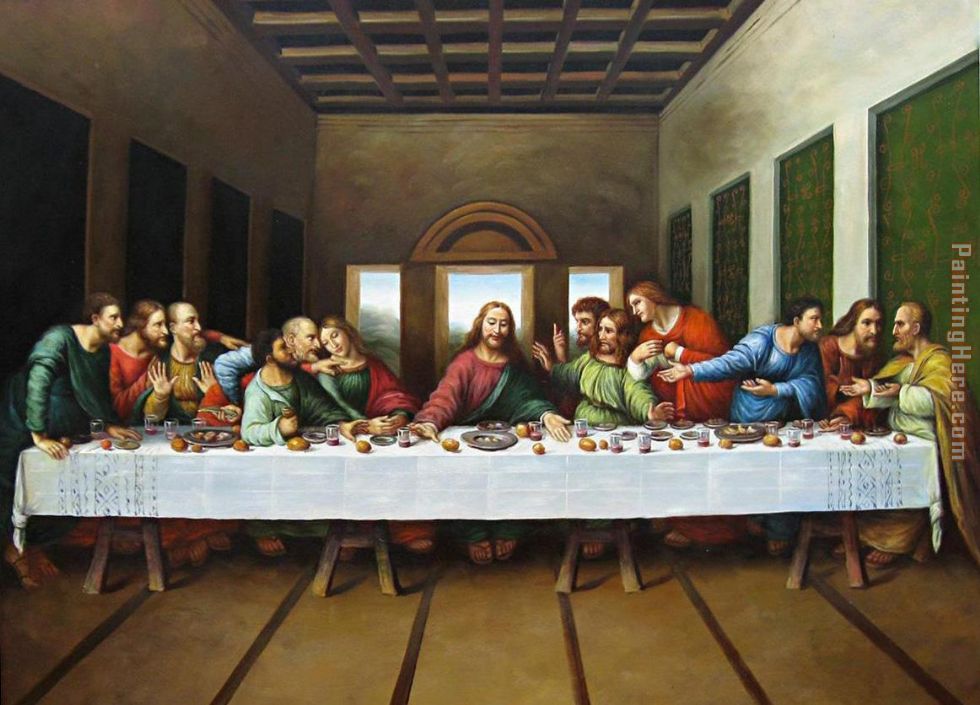
The Last Supper by Leonard DaVinci

We’re coming to the end of our Holy Week celebrations. Today marks the start of the Easter Triduum, the three day celebration of Maundy Thursday, Good Friday, and Black Saturday, with the culmination of Easter. This is the end of Lent–a time of celebration. Maundy Thursday commemorates the Last Supper, the washing of the disciples feet, and the command to love one another. It ushers in the scenes at the Garden of Gethsemane, which will lead to the crucifixion on Good Friday. The term “maundy” comes from the Latin mandatum and refers to the command that Jesus gave His disciples in John 13:34, “A new command I give you: Love one another. As I have loved you, so you must love one another.” Because Thursday’s events usher in the New Covenant, we refer to this day as “Maundy” Thursday in honor of the commandment of the New Covenant.

The primary focus of Maundy Thursday, however, is the Last Supper. The Last Supper is important because it symbolized the change from the Old Covenant to the New Covenant and instituted the sacrament of communion. Communion is also known as the Lord’s Supper, the Eucharist, or simply “the sacrament,” depending upon what denomination you are from. Interestingly, the word “communion” means “intimate fellowship,” and that’s exactly what we are symbolizing when we participate in this ritual. We are reaffirming an intimate fellowship with Jesus Christ.

The Last Supper was really a Passover Seder. It was a feast to celebrate the miracle of Passover, when the angel of the Lord passed over the Israelites as he brought death to the firstborn of the Egyptians. The symbol for the Passover was the blood of a lamb. The Israelites took the blood of the Passover lamb and smeared it on the lintels and doorposts of their doors. When the angel saw the blood, he passed by the house. After the exodus from Egypt, God told the Israelites to observe the festival of Passover in remembrance of their salvation in Israel. They no longer placed blood on the doors of their houses, but they did have a special ritualized meal to commemorate the various aspects of the Passover story. It was the way they remembered what God had done for them by bringing them up out of Egypt to the promised land, and it was the way that they passed that knowledge on to their children and their children’s children.

On the Thursday of His final week, we find Jesus celebrating the Passover Seder with His twelve disciples in an upper room in Jerusalem. The room has been prepared for the Passover meal, and the disciples and Jesus would have followed the tradition of this meal. I think sometimes we miss some wonderful elements of the story of Jesus when we leave out the Jewish roots. For example, we all know the story that Jesus took the bread, broke it, and handed it to His disciples saying, “Take this. Eat. This is my body which is broken for you.” But was this just a dinner roll that was handy? Was there more to this symbol than what we know from these few verses? What about the wine? Was it just because wine was what they drank at meals back then?

It turns out there is some beautiful symbolism to the Passover meal that fits right in line with what Jesus wanted to communicate to His disciples, and it explains why they continued to celebrate this meal in the early church, even without a direct command from Jesus. After all, none of the gospel accounts have Jesus telling the disciples to repeat this ritual. We know that the early church did so as a regular habit from Paul’s letter to the Corinthians, where Paul wrote to correct their celebration of the Lord’s supper because they were abusing the practice.

The Passover Seder has many moving parts. It includes the telling of the story of the Passover and the exodus from Egypt, discussing the story with questions and answers, drinking four cups of wine, eating matzah, partaking of symbolic foods placed on a Passover Seder plate and reclining at various points in the meal in celebration of freedom. The four cups of wine consumed during the feast represent four statements of God: 1) I will bring out. 2) I will deliver. 3) I will redeem. 4) I will take. In the early part of the meal, during Yachatz, there are three matzah on a plate. The middle piece is removed from the plate and broken in half. The larger half is hidden in a cloth and referred to as afikoman. The smaller piece is returned to the plate with the other two matzah. These pieces are now referred to as “the bread of affliction.” During the meal itself, two of the four cups of wine are consumed. The story of the exodus has been told with questions and answers; the bread of affliction has been eaten along with the bitter herbs, and the Passover lamb itself has been consumed as well. The guests recline. This is Tzafun, or “the eating of afikoman.” The leader of the Passover meal distributes broken pieces of the bread to each guest. This is just before the third cup of wine, “the cup of blessing” is consumed.

It makes sense that this would be the time when Jesus took the bread, broke it, and gave it to his disciples. They have eaten the bread of affliction. They have eaten the bitter herbs. They have even eaten the lamb, whose blood has saved them from the angel of death. Now they take the bread, and Jesus tells them, “this is my body which is broken for you.” Then they lift the cup of wine, the cup of blessing, and Jesus tells them, “this is my blood which is poured out as a new covenant.” The cup of blessing also corresponds to the phrase “I will redeem.” The entire meal is meant as a remembrance, and now the disciples have a new covenant to remember as well.

John tells us that previously Jesus had made statements that were shocking to the Jews, statements about eating his flesh and drinking his blood. In John 6:51-57, Jesus is talking to the people around him about eternal food. He tells them not to work for food that spoils, but for food that endures to eternal life (John 6:27). The people do not understand and are still looking for a sign. They ask about the manna that Moses gave them, but Jesus corrects them by saying that Moses didn’t give them manna. Manna came from God. After much argument from the Jews we arrive at verse 51:

I am the living bread that came down from heaven. Whoever eats this bread will live forever. This bread is my flesh, which I will give for the life of the world.”  52 Then the Jews began to argue sharply among themselves, “How can this man give us his flesh to eat?”  53 Jesus said to them, “Very truly I tell you, unless you eat the flesh of the Son of Man and drink his blood, you have no life in you. 54 Whoever eats my flesh and drinks my blood has eternal life, and I will raise them up at the last day. 55 For my flesh is real food and my blood is real drink. 56 Whoever eats my flesh and drinks my blood remains in me, and I in them. 57 Just as the living Father sent me and I live because of the Father, so the one who feeds on me will live because of me.

John tells us that after he said this, many of his disciples said, “This is a hard teaching. Who can accept it?” and that many turned back and no longer followed him. The idea of eating flesh and drinking blood was repulsive to the Jews. The Jewish dietary laws made clear that blood was unclean. Touching a dead body would also make you unclean. Yet, here was Jesus telling them that they must eat his body and drink his blood in order to have life in them! Notice that many could not accept this. They could not let go of what they thought they understood about God–what they thought of as righteousness. They could not let go of the law, and embrace Jesus.

Jesus was explaining to them that He was ushering in a New Covenant. This covenant wouldn’t include dietary laws and regulations. It wouldn’t include the ideas of clean and unclean. It would require the breaking of his body and the shedding of his blood as the ultimate Passover lamb. He would take away the sins of the world. He would give them eternal life. He would make them righteous before God. He would provide all that they stood in need of. He would save them from the angel of the Lord. He would bring them freedom. If they would go all in. If they would seek Him the way they sought food and water. If they would learn to abide.

So now, it’s easy to see why this moment stuck in the disciples minds and why they continued to celebrate the Lord’s Supper, remembering the New Covenant. They feasted together, remembering the Lord’s sacrifice on their behalf. They remembered the breaking of His body and the shedding of His blood. It was a celebratory feast, rather than the small cup of wine/juice/water or the small bite of bread/wafer that we use today. Paul told the Corinthian churches to make sure they came together to celebrate so that no one missed out because those who were early were getting fed and getting drunk and those who came late were going hungry! He reminded them that this was a sacred remembrance, not just a party. Don’t celebrate unworthily! Paul admonished them, but take the time to focus on what you are remembering.

So today, as we head into Good Friday, let us focus as well on what we are celebrating. Let us examine ourselves. Are we remembering the Lord with solemn honor? Are we truly embracing His sacrifice on our behalf? Do we remember often? Do we give thanks often? Or are we just going through the motions? Are we really eating his flesh and drinking his blood? Are we looking for Him the same way that we would look for food and drink? Are we all in–100% committed to whatever He asks of us? Let us consider these things and make whatever adjustments are necessary to be doing it correctly. Now is the day of repentance. This teaching is hard, and to some this teaching is offensive. But to those that the Spirit calls, this teaching is eternal life.

Off and Running

Photo by Braden Collum on Unsplash

Philippians 3:13-14 (MSG)

I’m not saying that I have this all together, that I have it made. But I am well on my way, reaching out for Christ, who has so wondrously reached out for me. Friends, don’t get me wrong: By no means do I count myself an expert in all of this, but I’ve got my eye on the goal, where God is beckoning us onward—to Jesus. I’m off and running, and I’m not turning back.

It is amazing to think that the men who wrote the Bible were no different from you and me. They didn’t have any spiritual blessing that you and I don’t have. In fact, we have the added blessing of having all of the teachings written down for us where we can read them over and over again. They had to go from what God had revealed to them and what they had memorized. Even so, sometimes it’s easy to think that these men were somehow better than we are or that they had special blessings that we can not have. Sometimes we think that they did what they did simply because they were apostles.

Nothing could be further from the truth. Jesus told His disciples that they would do the works they had seem Him do…and GREATER things! Any disciple of Jesus, any person who dedicates their life to following after Jesus and doing His will, can do these things and more. That’s why Paul reminds the church at Philippi that he’s nothing special. He doesn’t have it all together. He doesn’t know all there is to know. He isn’t the person to be followed after. That’s Jesus! And Paul let’s them know that all he has going for him is his intense desire to truly follow after Jesus with all his heart.

We can do the same thing in our own lives if we sell out to God. Let us run the race set before us with our eyes on the prize. We can be off and running, reaching out to Jesus who is reaching out to us, and not looking back. When we run this way, we will reach the finish line, and we will do great things for the Kingdom of God!

Father, I thank you that you have already blessed me with every spiritual blessing through the work of your Son Jesus Christ. I thank you that when I give my life over to you and truly follow after you, I can experience the same blessings that the early disciples experienced. I can hear from you. I can learn from you, just like they did, and I have the added blessing of your written Word to lead and guide me along the way. Thank you that if I keep my eyes on you, I will run this race well. I won’t have to worry about falling to the wayside as long as I press forward to you. I don’t have to be held back by my past either. I keep my eyes on you, not looking back. I’m off and running after you, Jesus. In Jesus’ Name, Amen.

Spy Wednesday

An illustration from a mid-19th century print showing Judas bestowing the betrayer’s kiss on Jesus while Roman soldiers look on

Today is Spy Wednesday. Spy Wednesday commemorates the betrayal of Christ by Judas Iscariot during Holy Week. “But wait!” you say. “Judas didn’t actually betray Jesus until Thursday night.” And you would be correct. Thursday is when Judas actually approached Jesus in the Garden of Gethsemane and, identifying Him with a kiss, allowed Him to be arrested by the temple guards and brought to trial, which ultimately led to His crucifixion. But Judas made this decision the day before. It was on Wednesday, according to Matthew 26:14 that Judas approached the chief priests looking for a payoff in exchange for handing Jesus over to them. Mark 14:10 agrees, saying that the plan to betray Jesus was formulated just after Mary anointed Jesus with a costly perfume.

What do we know about Judas? Not a whole lot. Judas was one of the twelve disciples. He was known as Judas Iscariot, and no one can really agree what Iscariot means. It could have been a designation of his hometown, Kerioth, since the Bible tells us that he was the son of Simon Iscariot. With his father going by the same designation, it makes sense that this could refer to the area where they were from. If that’s true, it makes Judas the only apostle who was not from the region of Galilee. Kerioth is in the southern part of Judea. Some scholars belief that it aligns him with the group known as the Scarii, a terrorist group that sought the overthrow of the Roman government. That would give Judas a reason to betray Christ, but there’s nothing else that would link him to the group. The group also didn’t appear in records until 10 years later, so chances are that Iscariot does not mean a member of this group.

We do not have a story of Judas’ calling to apostleship. I don’t know whether or not that’s significant or not, after all, we don’t know how Thomas, Thaddeus, or Bartholomew were called either. It might indicate that instead of Jesus actively choosing Judas like he did with Peter, Andrew, James, John, and Matthew, that Judas approached Jesus and began following Him. Whenever the twelve disciples of Jesus’ inner circle are named, Judas is always named last. Some scholars find significance in this. After all, Peter, James, and John are always listed first, and they seem to have the closest relationship with Jesus. Perhaps Judas being listed last means that he wasn’t as close to Jesus as the others were. Whatever the case may be, we know that Jesus was among the twelve who were sent out with power and authority and that he walked closely with Jesus for three years.

We know Judas’ occupation within the group of disciples. John tells us in chapter 13 verse 29 that Judas was in charge of the money. In chapter 12, John tells us that Judas was in the habit of stealing money from the group. It may also be significant that we have no real conversations between Judas and Jesus. We have only his complaint about the waste of money when Mary anoints Jesus with perfume. Other than that, the only conversation they exchange is at the time of Jesus’ betrayal. Judas doesn’t call Jesus “Lord” the way the other disciples do. He merely refers to Him as “Rabbi” or teacher, and that may be a reflection of the fact that Judas did not really believe in Jesus the way the other disciples did.

Judas leaves the gathering of the twelve just after Jesus hands him the bread at the last supper, and so he misses being included in all the words Jesus gives the disciples in John 14-17. In Matthew 26:15, we are told that Judas agrees to hand Jesus over to the chief priests and religious leaders for 30 pieces of silver. This is in fulfillment of the prophecy of Zechariah 11:12-13: “I told them, “If you think it best, give me my pay; but if not, keep it.” So they paid me thirty pieces of silver. And the Lord said to me, “Throw it to the potter”—the handsome price at which they valued me! So I took the thirty pieces of silver and threw them to the potter at the house of the Lord.” It’s the price of a slave according to Exodus 21:32, and accepting that price may indicate just exactly how highly Judas valued Jesus–as no more than a slave.

Why did Judas do it? Was it just for the money? It’s possible. After all, we are told that Judas was a thief. A love of money and position may have been his motive. He followed Jesus, thinking that Jesus was going to establish Himself as king over Israel and that His followers would surely get a reward, but lately Jesus had been talking about His death. Judas may have believed that Jesus would not become king and so decided to see what offer he could get from the religious leaders of the day. He may have done it for political reasons. He may have thought that offering to hand over Jesus to the religious leaders would force Jesus’ hand, so to speak, and prompt Him to start the revolution Judas wanted.

The Bible tells us that Satan put it into Judas’ heart to betray Jesus. People have a hard time with this one because they wonder how Satan could possess Judas if Judas was a follower of Christ. We’ve already discussed the possibility that Judas followed Christ is word only, believing He was a good teacher, but not believing that He was the Messiah or the Son of God. There’s also the fact that Judas’ sin of stealing money opened a door to allow Satan into his life. It doesn’t appear that Judas ever repented for his sin of stealing money, nor does it appear that he ever really repented for betraying Christ. An unrepentant heart belongs to Satan. We also know that any words that are not in agreement with God’s words are from Satan. When Peter rebukes Jesus for discussing His upcoming death, Jesus responds, “Get behind me, Satan.” Now, that could mean that Satan had literally possessed Peter as well, or it could just refer to the fact that Jesus was rebuking a message that was in direct contradiction to God, something that Judas’ plan to betray Jesus for money would also have been in contradiction to.

Whatever the reason, Judas agrees to do it and carries out his plan at night in the Garden of Gethsemane. This is perhaps the final sorrow that Jesus faces that makes Him a high priest who understands sorrow. Betrayal happens to all of us at one time or another. In Psalm 41:9, David laments a similar betrayal, “Even my close friend, someone I trusted, one who shared my bread, has turned against me.” Again in Psalm 55:12-14, David laments: “If an enemy were insulting me, I could endure it; if a foe were rising against me, I could hide. But it is you, a man like myself, my companion, my close friend, with whom I once enjoyed sweet fellowship at the house of God, as we walked about among the worshipers.” Job says something similar in Job 19:19: “All my intimate friends detest me; those I love have turned against me.” There is no doubt that the pain of betrayal at the hands of a friend is great indeed.

Judas betrays Jesus with a kiss. A kiss was a sign of affection and honor. A kiss on the cheek was a greeting of equals, and here we see again that perhaps Judas did not really understand who Jesus was. He saw Jesus as his equal. Proverbs 27:6 says: “Wounds from a friend can be trusted, but an enemy multiplies kisses.” The Greek tells us that this was indeed a multiplying of kisses–this final act of betrayal. So Jesus is handed over to the temple guards to stand trial and ultimately be crucified, and Judas, seeing what he has done tries to return the money to the religious leaders and ultimately goes out and hangs himself.

All throughout the story of Judas, we sees shadows of the things that the rest of us struggle with. There is hidden sin, unrepentant sin. Do we have sin in our own lives that we justify and excuse? Are we “helping ourselves to the bag” like Judas did? Are we truly repentant for our sins? There is a misunderstanding of who Jesus is… a desire to follow after His teachings and to be a good person, but not to give 100% of ourselves in service to Jesus as Lord. Is that where we are? Are we all in with Christ? Have we handed over Lordship of our lives to Jesus, or do we just think of Him as Rabbi? There is the possibility of unmet expectations. Do we, like Judas, want Christ to fit our definition of who He should be? Do we try to manipulate our circumstances to force God’s hand to act in the way we want Him to act? Do we value Jesus as more than just a slave? More than the price of a field?

Aside from this, we can take comfort in the fact that Jesus did suffer this betrayal. As we face the betrayals in our own lives–betrayals at the hands of friends, neighbors, co-workers–we know that Jesus has felt our pain and understands it. Very few of us will be betrayed to death by a friend or neighbor, and yet even that is not outside the realm of possibility. After all, the Jews of the Holocaust were betrayed by their friends and neighbors. No matter the situation, we will find Jesus there in the moment of our betrayal. He is a high priest who understands His people because He has stood where we stand and walked where we walk.

The story of Jesus’ betrayal is a story of caution to the disciple of Christ, to be sure that they are truly following after Jesus and guarding against the temptations of sin. It’s a story of comfort for those of us who are betrayed in this life. It’s a story of tragedy because it appears that Judas’ unrepentant heart has kept him from enjoying forgiveness and restoration.

So I close with this English adage:

Still as of old, man by himself is priced. For 30 pieces of silver, Judas sold himself, not Christ.”

Where is Your Trust?

Photo by Aaron Greenwood on Unsplash

2 Timothy 1:12-13

That is why I am suffering as I am. Yet this is no cause for shame, because I know whom I have believed, and am convinced that he is able to guard what I have entrusted to him until that day. What you heard from me, keep as the pattern of sound teaching, with faith and love in Christ Jesus.

In 210 BC, Emperor Qin Shi Huang, the first emperor of China died and was buried. Buried with him were 8,000 terra cotta soldiers. Each one was given the face of a real soldier that served the emperor. The statues were buried with the emperor in the hopes that they would protect him in the afterlife. People put faith in many different things. Some put their faith in science. Some put their faith in soldiers and in military power. What we put our faith in says a lot about who we are.

Paul put his faith in Jesus Christ. He had so much faith in Jesus that he was more than willing to suffer as a result of it. Paul was often imprisoned. He was beaten. He was stoned and left for dead. But still Paul persisted in his faith. Nothing could take his faith in Jesus and in Jesus’ atonement away from him. When Timothy was in danger of persecution for the same faith, Paul encouraged him by saying, “I know whom I have believed and am convinced that he is able to guard what I have entrusted to him until that day.” Paul trusted his soul and spirit to Jesus. He trusted that no matter what would happen here on earth, Jesus would take care of the most important part of him: his spirit and soul.

Where are we keeping our treasure? Are we trusting Jesus with the most important part of us: our spirits and our souls? Are we more concerned with what happens to our bodies? It’s time to put our trust in the only thing that has eternal security: the Name of Jesus Christ.

Father, I thank you for your Son Jesus Christ. I thank you that neither life nor death, nor things present nor things to come could ever separate us from your love. You are faithful. You are trustworthy. I can place all my trust in you, knowing that you are able to protect me. There is nothing else that has that security. Only you. You are the only thing that will endure forever. So, God, I give you my heart, my soul, and my spirit. They are yours forever. In Jesus’ Name, Amen.

New Heavens and New Earth

Photo by Davide Cantelli on Unsplash

2 Peter 3:13-14 (AMP)

But in accordance with His promise we expectantly await new heavens and a new earth, in which righteousness dwells. So, beloved, since you are looking forward to these things, be diligent and make every effort to be found by Him [at His return] spotless and blameless, in peace [that is, inwardly calm with a sense of spiritual well-being and confidence, having lived a life of obedience to Him].

Sometimes we think of God’s promises of renewal and restoration as only applying to us, but we are not God’s only creation. God promises renewal and restoration to all of His creation, and that means the heavens and the earth as well. When God’s promises are fulfilled, everything will be made new. There will be a new heaven and a new earth to go along with all of the new creations He has made of each and every one of us. Righteousness will dwell in this place, the way He intended it to from the beginning. It will be like living in Eden again.

We know this is God’s promise; therefore, we know that we can hold to that in faith. If we hold to a promise in faith, we need to live as if that promise is on the horizon. We need to live in such a way that if the new heaven and new earth appeared today, we would be able to fit in without any problem. That’s why Peter tells us to live righteously now. We can’t sit around waiting on some day to happen, paying no attention to the state of our lives or what God wants from us and think that some day it will all fall into place. How comfortable do you think you would be if you were living a life without righteousness and then suddenly found yourself in a place where only righteousness exists?

Probably not comfortable at all! That’s why we need to prepare ourselves to be in the constant righteous presence of God now. The more we are prepared now, the easier that transition will be when the time comes. That’s what gives us peace and confidence, knowing we are ready to be with the Lord. We haven’t wasted a single minute. We are already obeying. We are already living in freedom. We are already living in righteousness. We don’t have to wait for the new heaven and the new earth to do it!

Father, I thank you that all your promises are “yes” and “amen.” I thank you that we can hold firm to those promises, and we can live as if those promises are just around the corner. Help me not to waste a single minute of my day doing anything other than what you want me to do. I want to live a righteous life. I want to live a life of peace. I don’t want to give Satan one second of my life. I want my focus to be on you and on what you have in store for me. That way, when you return, I can stand before you in confidence, and I can comfortably take my place in your new heaven and new earth–a place where righteousness dwells. In Jesus’ Name, Amen.

It’s About Community

Photo by Annie Spratt on Unsplash

Galatians 6:1-5

Brothers and sisters, if someone is caught in a sin, you who live by the Spirit should restore that person gently. But watch yourselves, or you also may be tempted.  Carry each other’s burdens, and in this way you will fulfill the law of Christ.  If anyone thinks they are something when they are not, they deceive themselves.  Each one should test their own actions. Then they can take pride in themselves alone, without comparing themselves to someone else,  for each one should carry their own load.

We raise our kids to be community-minded. In a country that’s highly individualistic in its thinking, this is a pretty revolutionary idea. We’ve been taught to “look out for number one,” and to ask “what’s in it for me?!” I think this mindset was at play in Cain when he answered God, “Am I my brother’s keeper?” In our family, we turn that thinking on its head. We teach our children that we only succeed as a group. It’s great when one of us does well, but if one of us struggles, it’s our job to lift them up. It’s our job to sound a warning if we see someone going off path. It’s our job to look out for each other. “Look out for number one” has been replaced by “see a need; fill a need.”

But we do have to be careful. When we’re out there looking out for one another, it can be easy to fall into a judgement frame of mind. Instead of our hearts being turned to cry out a warning to our brother before he stumbles, we could be motivated to stand in judgement feeling that we are morally superior. Nothing could be further from the truth! We all sin. We all fall short. We just don’t all do it at the same time. We can’t allow ourselves to become prideful.

Father, I thank you that you put us in community. I thank you that when I need a hand, I can count on my brothers and sisters to offer one. Help me to watch out for my brothers and sisters around the world. Help me to lift them up when they are struggling, to call out a warning when they are in danger, and to do whatever I can to help them out. Don’t let me become prideful, thinking I’ve got it all figured out, but help me to be humble, remembering that one day I will be the one on the receiving end in need of help. In Jesus’ Name, Amen.